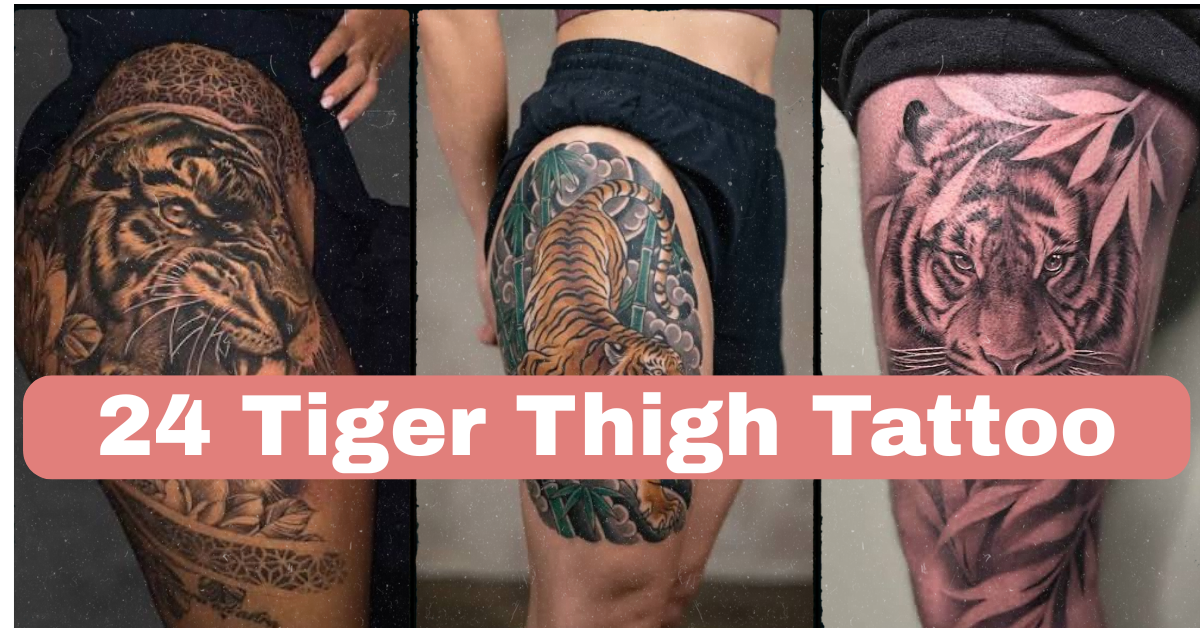
24 Tiger Thigh Tattoo Ideas Worth Booking a Consultation For
Nervous about committing to a tiger thigh tattoo you might second-guess later? That’s a fair worry — a tiger piece on the thigh is usually big, detailed, and not something you casually cover up on a Monday morning at the office.
I’ve spent enough time in and around tattoo studios to know the difference between a design that photographs well on Pinterest and one that actually holds up on skin for the next twenty years. This article is built from that experience, not recycled from someone else’s mood board.
So what makes a great tiger thigh tattoo? The thigh offers a wide, mostly flat canvas, which suits large tiger portraits, full prowling scenes, or Japanese traditional pieces with waves and bamboo. It heals with less friction than joints, holds fine detail well, and can be sized up or down depending on how bold you want the final piece to read.
Stick around, because I’m also going to walk you through realistic pain expectations, rough healing timelines, how to brief your artist so you don’t end up with a muddy design, and the placement tradeoffs nobody mentions until you’re already in the chair.
Why Tigers Work So Well on the Thigh
Tigers are one of the few animal designs that genuinely benefit from a large canvas. Their stripe pattern, muscle definition, and facial detail get lost when squeezed into a small space, but the thigh gives an artist room to work with proper line weight — meaning the thickness and confidence of each linear stroke — and layered shading that gives the cat depth instead of flatness. The thigh also curves naturally with muscle, which experienced artists use to make a tiger look like it’s actually moving across the leg rather than sitting on top of it like a sticker. Below are 24 specific directions you can take this, each with real guidance on placement, pain, sizing, and how to talk to your artist about it.
Realistic Tiger Portrait in Black and Grey
This is the tiger tattoo most people picture first: a photorealistic face rendered in black and grey shading, with soft gradients built from tightly packed needle passes rather than harsh outlines. Skin tone affects contrast here — lighter skin tends to show subtle grey tones more clearly, while deeper skin tones often look best with slightly higher contrast and bolder black saturation. This design wants at least 7 to 9 inches to hold the whisker detail and eye shading properly. Expect three to four hours in the chair and roughly two to three weeks of visible healing. Bring high-resolution reference photos of an actual tiger, not just other tattoos, so your artist can study real fur texture. Front-thigh placement over muscle tends to be more tolerable than inner-thigh skin, which sits closer to bone and nerve clusters.
Traditional Bold Tiger with Heavy Black Outlines
Traditional American tattooing relies on thick, consistent outlines filled with saturated, flat color — usually orange, red, and black for a tiger. There’s no gradient blending here; the shading is done in solid blocks, which is part of why traditional tattoos age so well over decades compared to fine detail work. This style suits people who want something that reads clearly from across a room, which makes it a strong pick for a first tattoo since mistakes in linework are less likely to show. A 6 to 8 inch outer-thigh placement works well because the flat color needs consistent skin tension to lay in evenly. Ask your artist about their color saturation technique specifically — some pack pigment more heavily than others, which affects how vibrant the reds stay after five years.
Fine-Line Minimalist Tiger Outline
Fine-line work uses a single thin needle line, often no thicker than a strand of hair, to outline the tiger’s shape without any shading or fill. It’s the opposite approach from bold traditional — subtle, quiet, and often mistaken for a simple sketch rather than a “real” tattoo, which is exactly the appeal for people who want something meaningful without loud visual weight. This works nicely at 3 to 5 inches on the upper outer thigh, where skin is fairly flat and the design won’t distort with movement. Fine-line pieces heal fast, typically within 10 to 14 days, but they also fade faster over the years and often need a touch-up around the eight to ten year mark. Bring a simple, low-detail reference so the artist doesn’t try to cram traditional-level detail into a linework-only piece.
Watercolor-Style Tiger with Color Splash

Watercolor tattoos fake the look of loose, dripping paint using soft color blending without hard outlines, usually layered behind or around a black linework tiger. It’s a visually distinct style because the color looks unstructured — pinks, oranges, and blues bleeding outward from the tiger’s silhouette. The tricky part is longevity: unshaded color washes are more prone to visible fading than solid saturation, so this is worth discussing honestly with your artist before booking. A 6 to 7 inch placement on the front or side thigh gives the “splash” room to spread convincingly. This style photographs beautifully fresh but is not the best choice if you want a design that looks identical in fifteen years — go in with that expectation already set.
Geometric Tiger Head with Negative Space
This design blends a tiger’s face with straight-edged geometric shapes — triangles, hexagons, or a diamond frame — using negative space, meaning bare, untattooed skin, as a deliberate design element rather than leaving gaps by accident. The tiger’s features are often built from angular linework instead of curved, organic strokes, giving it a modern, almost architectural feel. It suits people who want symbolism without a fully realistic animal image staring back at them. Best sized around 5 to 7 inches on the outer thigh where skin is tightest, since negative space geometric work needs a stable surface to keep lines crisp. Ask your artist whether they specialize in geometric linework specifically, since shaky proportions are more obvious in this style than in loosely shaded realism.
Dotwork Tiger Silhouette
Dotwork builds an entire image from thousands of individual dots instead of solid lines or shading, creating a stippled, textured look that reads almost like a fine engraving. A tiger silhouette done this way often skips full color entirely, relying on dot density to suggest shadow and form. It’s slower to tattoo than most styles — a detailed dotwork piece can take four or more hours even at moderate size — and healing can look a bit uneven for the first week before the dots settle. A 5 to 6 inch placement on the thigh works well since the flat surface helps the artist keep dot spacing consistent. This is a strong option if you want something that looks noticeably different from typical tiger tattoos you’ve seen online.
Blackwork Tiger with Solid Fill
Blackwork uses solid black ink with little to no shading gradient, often creating bold silhouettes or heavily inked sections that contrast sharply against bare skin. A blackwork tiger might show the animal mid-leap with its whole body filled solid black, stripes suggested only through small negative-space gaps. This style holds up extremely well over time because solid black saturation resists fading better than fine gradients, according to general tattoo industry consensus. It suits bigger placements — 8 inches or more — since the solid fill needs room to read as a recognizable tiger shape rather than a blob. Pain-wise, heavily saturated blackwork sessions tend to run long, and repeated needle passes over the same area can make this one of the more demanding tiger styles to sit through.
Japanese Traditional Tiger with Waves and Bamboo
Rooted in Irezumi, Japanese traditional tattooing pairs the tiger with symbolic background elements like ocean waves, bamboo stalks, or clouds, all rendered in bold outlines and flat, saturated color. The composition typically wraps around the form of the leg rather than sitting as an isolated image, which is part of why this style is so popular for thigh placement specifically — it’s designed to flow with the body’s natural shape. This is a large undertaking, often 8 to 12 inches or a full thigh wrap, and usually requires multiple sessions spaced weeks apart to let the skin heal between passes. If you’re drawn to this style, look specifically for an artist experienced in Japanese traditional composition, since the background elements need to balance the tiger rather than compete with it.
Tiger and Lotus Flower Combination
Pairing a tiger with a lotus flower blends strength symbolism with themes of growth or rebirth, and visually it gives the artist a chance to contrast the tiger’s sharp linework against the lotus’s soft, rounded petal shading. The flower is often placed near the tiger’s shoulder or paw, using lighter line weight so it doesn’t overpower the main image. This combination works well at 6 to 8 inches on the outer thigh and tends to heal evenly since both elements use similar shading depth. It’s a solid choice for anyone who wants their tiger tattoo to carry personal meaning beyond just looking powerful. From here, let’s look at a piece built for people who want their tiger to feel less like a portrait and more like a scene.
Tiger Prowling Full Thigh Wrap

Instead of a static portrait, this design shows the tiger mid-stride, body curving around the thigh so the composition follows the leg’s natural shape rather than sitting flat like a framed picture. It’s typically done in black and grey or muted traditional color, with heavier shading along the muscle lines to suggest movement. This is a serious commitment — realistically 9 to 14 inches, often requiring two or more sessions. Healing takes longer simply because more skin surface is involved, generally three to four weeks before it looks fully settled. This isn’t a first-tattoo pick; it’s better suited to someone who already knows their pain tolerance and has sat through longer sessions before.
Tiger Face Close-Up, Snarling Expression
A tight crop on just the tiger’s snarling face, filling most of the visible frame with eyes, teeth, and fur texture, creates a more intense and confrontational image than a full-body design. Shading here needs to be precise since the expression carries the entire composition — sloppy work around the mouth or eyes reads immediately as off. This works at a moderate 5 to 6 inches on the front thigh, which keeps the face large enough to hold detail without needing a huge canvas. Bring specific reference on the exact expression you want, since “angry tiger” alone gives an artist too much room to interpret it differently than you imagined.
Tiger Cub with Mother Tiger

A smaller cub positioned near a larger tiger, often the mother, is a popular way to add personal or family symbolism without spelling it out literally. Artists usually differentiate the two through size and slightly softer shading on the cub to suggest youth. This composition needs a bit more width than a single tiger, around 7 to 9 inches, to keep both figures proportionate and readable. It suits people looking for a design with quiet personal meaning that doesn’t require public explanation — a plus if you want something visible at the beach but private in meaning.
Tiger Skull and Bone Motif

A darker, more symbolic take, this design incorporates a tiger skull instead of a full living face, sometimes paired with subtle bone details along the composition. It leans into blackwork or heavy black-and-grey shading, with less color saturation than a traditional piece. This style tends to suit people drawn to memento mori themes — art reminding the viewer of mortality — rather than pure animal admiration. A 6 to 8 inch placement on the outer thigh keeps the skull’s proportions accurate without cramming detail. Because skull designs rely heavily on shading contrast, ask your artist directly about their black and grey shading experience before booking.
Tiger Eyes Macro Close-Up
Rather than showing the whole face, this design isolates just the eyes and surrounding fur, using tight shading gradients to make the gaze the entire focal point. It’s a smaller, more intimate design, often 3 to 4 inches, and works well for people who want symbolic meaning — focus, awareness, instinct — without a large or obvious animal tattoo. Healing is relatively quick given the smaller size, generally under two weeks. This is a good option if you like the idea of a tiger tattoo but aren’t ready for a large-scale commitment yet.
Mandala-Framed Tiger Face
This design places a tiger’s face at the center of a mandala pattern, a symmetrical geometric design often associated with balance and meditation, blending the wild subject with a highly controlled, orderly frame. Fine-line work is typically used for the mandala’s outer details, while the tiger face itself may carry slightly heavier shading for contrast. It needs a decent amount of room, around 6 to 8 inches, since the mandala pattern loses its symmetry if compressed too small. Symmetrical designs like this are unforgiving of stencil placement errors, so ask to see the stencil applied to your actual leg before the needle starts.
Neo-Traditional Tiger with Muted Color Palette
Neo-traditional tattooing takes the bold outlines of classic traditional work but swaps the bright primary colors for muted, dustier tones — think faded oranges, deep greens, and soft blues instead of pure red and yellow. It often includes more illustrative shading than old-school traditional, giving the tiger a slightly more painterly look while still holding strong contrast. A 6 to 8 inch placement on the thigh suits this well. This style tends to age gracefully since the outlines stay bold even as color mellows further over the years, which is worth mentioning if you’re worried about long-term fading.
Tribal-Inspired Tiger Silhouette
This abstract approach reduces the tiger to bold black shapes and sharp points inspired by tribal tattoo traditions, prioritizing striking silhouette over realistic detail. There’s no shading gradient involved — just solid black against skin, relying entirely on shape recognition. It reads well from a distance, making it a solid pick for larger thigh placements, roughly 7 to 9 inches, where a busier detailed design might get visually lost. Because it’s shape-driven, ask to see multiple stencil drafts before committing, since small proportion shifts change the whole image’s balance.
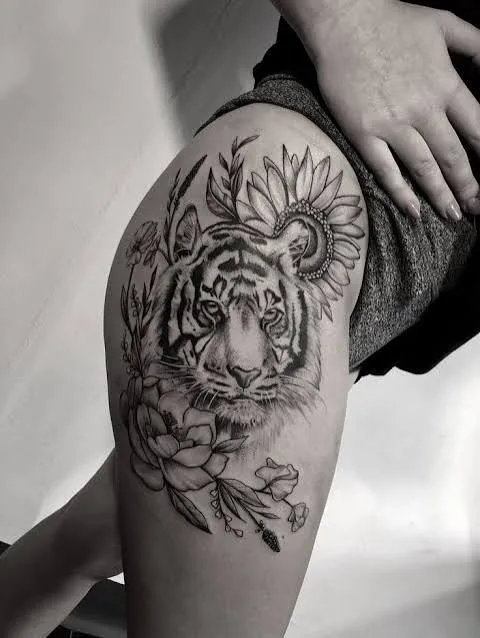
Tiger and Rose Thigh Piece
Combining a tiger with a rose gives an artist contrasting textures to work with — sharp fur detail against soft, layered petal shading. The rose is typically smaller and placed near the tiger’s shoulder or paw, adding a touch of softness to an otherwise fierce image. This pairs well at 6 to 7 inches and suits people wanting a slightly more decorative, less purely aggressive tiger design. It’s a popular direction for a first larger tattoo since the rose gives the eye a resting point beside the more intense tiger imagery.
Abstract Tiger Stripe Pattern
Rather than a literal tiger, this design uses just the stripe pattern itself, rendered in bold black brushstroke-style lines across the thigh. It’s less about depicting an animal and more about texture and movement, often appealing to people who want the symbolism of a tiger without a literal face or body. This works at almost any size, from a small 3 inch accent to a sweeping 10 inch wrap, making it flexible for different budgets and pain tolerances. It’s genuinely one of the lowest-commitment ways to reference a tiger without needing hours of detailed shading work.
Tiger Walking Through Bamboo
This scene-based design places the tiger within a small bamboo grove, giving the artist a chance to build depth through layered background elements rather than an isolated subject. Bamboo stalks are usually done in simpler linework to keep visual focus on the tiger itself. Because it involves a background scene, it needs more room than a solo tiger — expect 8 inches or more. This suits people who like storytelling compositions rather than a single static image, and it photographs particularly well given the natural framing the bamboo provides.
Tiger with Script or Calligraphy

Pairing a tiger with a short word, phrase, or calligraphy character adds a personal or symbolic layer, though it requires careful spacing so the script doesn’t crowd the tiger’s detail. Fine-line lettering tends to pair best with realistic or fine-line tigers, while bolder lettering fits traditional or neo-traditional styles better. A 6 to 8 inch placement gives both elements breathing room. If you’re including script in another language, verify translation accuracy with a fluent speaker before your appointment — this is one of the most common regret-tattoo mistakes people mention afterward.
Small Single-Needle Tiger Paw Print
For something far more subtle, a single-needle paw print — done with one very fine needle for extremely thin, delicate lines — offers tiger symbolism without any large-scale commitment. This is one of the most workplace-friendly options on this list, easily sized at 1 to 2 inches. Healing is fast, often complete within 10 days, though single-needle work is known to soften and blur slightly faster than standard fine-line over the years. It’s a genuinely good low-commitment starting point if you’re unsure about tigers but want to test the waters.
Tiger Roaring Under a Crescent Moon
This high-contrast composition places a roaring tiger against a dark background with a crescent moon, using heavy blackwork shading to create dramatic depth. The dark background means more overall tattooing time and a longer, more intense session than a design with more negative space. It suits 7 to 9 inch placements where the contrast has room to read clearly. This is a striking choice for anyone comfortable with a longer sitting and wanting something visually bold rather than subtle.
Tiger and Dragon Combination
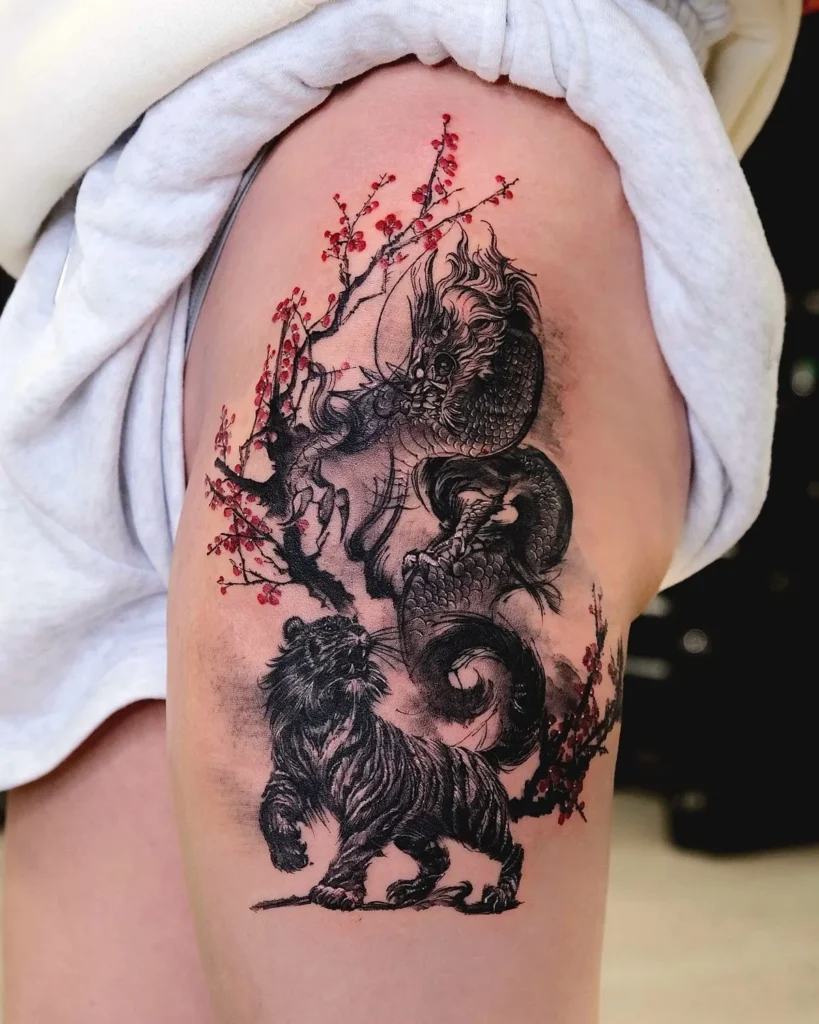
Pairing a tiger with a dragon draws on a well-known symbolic contrast — often read as balance between two powerful forces — and gives the artist two very different textures to work with, fur against scales. This is typically a larger, more advanced composition, realistically 9 inches or more, and often best handled by an artist experienced specifically in combining animal figures rather than a generalist. Multiple sessions are common. It’s a strong pick for someone who already has one tattoo and wants to commit to a more ambitious second or third piece.
Definition List: Common Tiger Tattoo Techniques Explained
- Fine line — Extremely thin, single-needle strokes with no shading, used for minimalist or delicate designs. Fades faster over time than bolder linework.
- Bold traditional — Thick, consistent black outlines filled with flat, saturated color. Ages slowly and stays legible for decades.
- Blackwork — Solid black ink fill with little to no gradient, often used for silhouettes or heavily shaded sections.
- Dotwork — An image built entirely from small individual dots rather than continuous lines, creating a textured, stippled effect.
- Black and grey realism — Layered shading built from many needle passes to mimic photographic depth and light.
Best Placement Ideas
- Outer thigh — Best visibility-to-pain balance; flat muscle surface handles detailed shading well.
- Inner thigh — More discreet, but sits closer to sensitive skin and nerve-dense areas, so expect a more intense session.
- Front thigh — Good for portrait-style designs since it stays visible even in shorts, but also more exposed at work.
- Full thigh wrap — Best for scene-based or Japanese traditional compositions that benefit from following the leg’s curve, though it requires the longest healing window.
Tips for Success
Start by reviewing an artist’s portfolio for consistency, not just one flashy photo — look for multiple healed tiger or animal pieces, not just fresh ones, since healed photos show you how their linework and shading actually hold up. Book a consultation instead of a walk-in for anything larger than a small accent piece; custom designs need real conversation about placement, sizing, and your skin’s specific texture. Bring clear reference images, be honest about your pain tolerance, and ask directly what needle configuration and shading technique they plan to use.
Common Mistakes and How to Avoid Them
- Sizing too small for the detail requested — Realistic shading and fine fur texture need adequate room; going smaller than recommended leads to blurred detail within a few years.
- Choosing a placement that fights the design’s flow — A prowling, full-body tiger looks awkward crammed onto a spot too narrow for its natural shape.
- Skipping aftercare instructions — Rushing back into intense workouts or sun exposure too early can affect how the tattoo settles.
- Copying a design exactly without personalizing it — A generic reference photo copied stroke-for-stroke often looks flat; ask your artist to adjust proportions or details for your specific leg shape.
Similar Variations
Nearly every design above can be resized down for a more subtle statement or scaled up into a full thigh piece for something bolder. Color saturation can shift a traditional bold tiger into a more muted neo-traditional feel, or a black and grey realistic piece can be recolored with subtle orange undertones for warmth. Combining two smaller ideas — say, a tiger eye close-up with a small bamboo accent — is also a common way to create a custom design that doesn’t feel identical to a flash sheet you found online.
Aftercare Basics
General tattoo aftercare typically includes keeping the area clean, avoiding direct sun exposure while healing, and staying out of pools or soaking baths for the first couple weeks. Avoid picking at any peeling skin, since this can affect how evenly the ink settles. Always follow the specific aftercare sheet your artist provides, since products and timelines can vary studio to studio, and check in with them directly — or a dermatologist — if anything looks unusual during healing.
Quick FAQ
How much does a tiger thigh tattoo cost?
Smaller accent pieces might run a few hundred dollars, while large-scale realistic or Japanese traditional thigh pieces spanning multiple sessions can run well into the thousands. Cost depends heavily on size, detail, and the artist’s hourly rate or per-piece pricing.
How painful is a tiger thigh tattoo?
Pain tolerance varies by individual, but the outer thigh is generally considered one of the more tolerable placements due to the muscle padding, while inner-thigh skin tends to feel more sensitive. Longer sessions for large designs naturally feel more draining overall.
**How long does