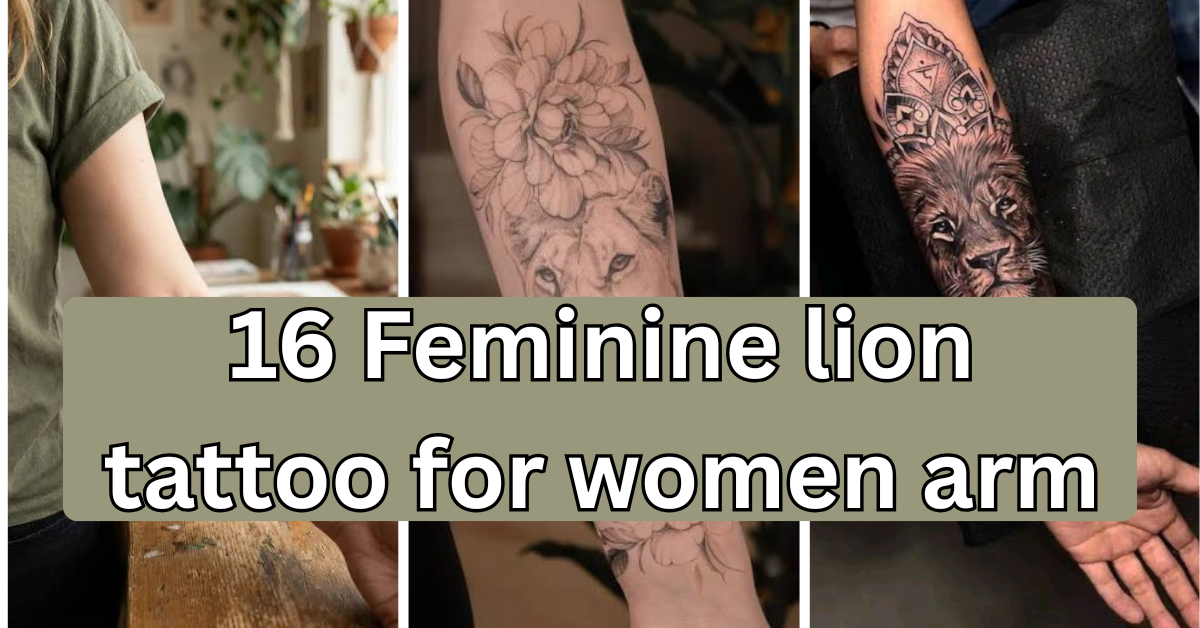
16 Feminine Lion Tattoo Ideas for Women’s Arms (Plus Everything You Need Before Booking)
Nervous about picking a lion tattoo design you’ll actually love in ten years, not just ten days? You’re not alone — this is one of the most requested arm tattoo themes right now, and for good reason. I’ve spent enough time hanging around tattoo studios, watching consultations and healing check-ins, to know what actually works on skin versus what just looks good in a Pinterest screenshot.
So what are the best feminine lion tattoo ideas for the arm? Fine-line lioness portraits, dotwork mane shading, and negative space lion silhouettes tend to work best because they balance detail with softness, hold up well on the forearm or upper arm, and age gracefully compared to heavy, overly saturated designs. Smaller minimalist versions also heal faster and hurt less than large, densely shaded pieces.
Keep scrolling and I’ll walk you through 16 specific design directions, plus the placement tradeoffs, realistic pain levels, healing timelines, and the exact things to say to your artist so you don’t end up with a design that looked great as a sketch but falls apart on skin.
Why Lion Tattoos Work So Well for Feminine Arm Designs
Lions carry a lot of visual and symbolic weight — strength, courage, protection, quiet confidence — but the arm gives artists room to soften that weight instead of making it look aggressive. A forearm or upper arm has enough flat, visible surface for an artist to play with mane texture, facial detail, or negative space (areas left unshaded so the natural skin tone becomes part of the design) without cramming everything into a tiny space. That combination of meaning and flexibility is why this theme keeps showing up in tattoo portfolios, and why it translates so well into fine line, dotwork, and blackwork styles alike.
1. Fine-Line Lioness Portrait
This is probably the most requested version, and it’s built around thin, consistent line weight — usually done with a single needle configuration — that traces the lioness’s facial features without heavy shading. The mane gets suggested through a few soft, feathery strokes rather than dense fill, keeping the whole piece delicate instead of bold. It works beautifully on the inner forearm or upper arm where there’s a flat canvas for the face to sit proportionally.
For sizing, 3 to 5 inches keeps detail readable without needing constant touch-ups down the line. Pain-wise, the inner forearm is fairly tolerable since it’s mostly soft tissue, though bonier spots near the wrist or elbow crease will feel sharper. Healing typically runs 2 to 3 weeks for surface peeling, though full settling can take longer — always confirm your specific timeline with your artist. Bring a clear reference photo of an actual lioness (not just cartoon art) so the artist can study natural fur direction and eye shape.
2. Watercolor-Inspired Lion with Floral Crown

This style layers soft, blended color washes — think dusty pinks, golds, or muted blues — behind or around a linework lion, mimicking the loose, bleeding look of watercolor paint. The lion itself usually stays in solid black or dark brown linework so it doesn’t get lost in the color, while the floral crown adds a feminine, almost storybook quality. It’s a striking choice for the upper arm or shoulder where there’s enough space for the color to spread without feeling cramped.
Because color saturation fades faster than black linework, this design needs realistic expectations — you’re likely looking at a touch-up within a few years to keep the washes vibrant. Pain is moderate; shading and color passes tend to feel more intense than pure line work. This isn’t the best pick for a first tattoo if you’re pain-shy, but it’s a strong statement piece for someone ready for a longer session.
3. Geometric Lion Silhouette

Here the lion’s outline gets broken into clean triangles, straight lines, and sharp angles instead of natural curves — a style that leans heavily on precise linework and often skips shading entirely. The appeal is in the contrast between a wild animal and a rigid, almost architectural structure. It reads as modern and a little edgy without losing femininity, especially when the mane is simplified into a few angular shapes instead of full detail.
This one suits the outer forearm or bicep well since the geometry benefits from a slightly curved but visible surface. Because there’s no shading to blend, healing tends to be quicker and touch-ups are rare if the linework was clean initially. Ask your artist about line consistency in their portfolio — geometric work lives or dies on straight, evenly weighted lines.
4. Blackwork Lion Mane

Blackwork uses solid, saturated black ink for bold shapes and heavy fill — in this case, usually concentrated in the mane while the face stays in fine detail. The contrast between dense black and delicate linework is what makes this design pop, and it photographs incredibly well against most skin tones. It’s a heavier commitment than fine line alone, both in session time and inked-in appearance.
Upper arm or shoulder placement gives the mane room to flow outward dramatically. Solid black fill tends to hurt more than thin outlines since the needle passes over the same area repeatedly — expect a longer, more intense session on fleshier areas being more tolerable than bony ones. Long-term, blackwork holds its shape remarkably well and resists fading better than lighter gray-wash shading.
5. Minimalist Single-Line Lion Outline
This is about as pared-back as lion tattoos get — one continuous or near-continuous thin line forming the lion’s profile, with zero shading and minimal detail. It relies entirely on line confidence and negative space to suggest form. This is a great entry point if you want the symbolism without a big visual statement.
It fits almost anywhere — wrist, inner arm, ankle — but the inner wrist or forearm keeps it visible without being loud. Size can go as small as 2 inches since there’s no fine detail to lose. Pain is generally lower here simply because sessions are shorter. This is a solid first-tattoo option, and it also works well as a matching design between friends or sisters.
6. Dotwork Shaded Lion Face
Dotwork builds shading and texture using tiny, individually placed dots instead of solid shading or line hatching. Applied to a lion face, it creates a soft, almost sculptural gradient across the mane and cheeks that feels more textured than flat black shading. It’s slower to tattoo than blackwork but gives a distinctive, almost engraved look.
Because dotwork requires precision, ask to see close-up healed photos in the artist’s portfolio, not just fresh ink — dotwork that isn’t packed correctly can look patchy once healed. Upper arm placement works well for the added surface area. Expect moderate-to-higher discomfort since the repetitive needle contact adds up over a longer session, and healing can take a bit longer than simple line work due to the density of the shading.
7. Lion and Moon Negative Space Design
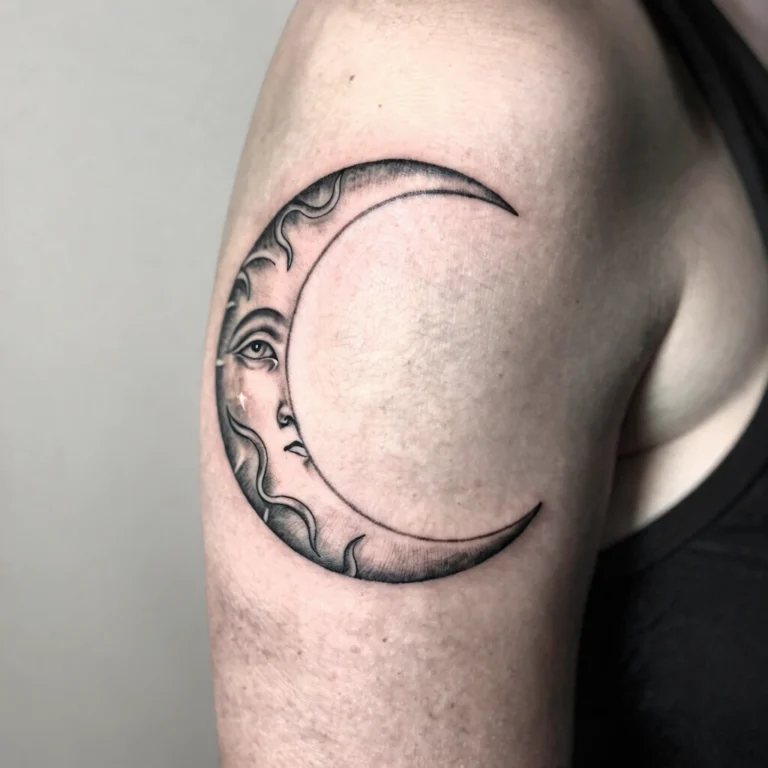
Negative space tattooing means the artist deliberately leaves parts of the skin unshaded so it reads as part of the image — here, often used to carve a crescent moon shape out of a solid black lion silhouette, or vice versa. It’s a striking technique because the “empty” area does as much visual work as the ink itself.
This works best on lighter or evenly toned skin where the contrast between ink and bare skin reads clearly; talk to your artist honestly about how negative space will look on your specific skin tone, since results vary. Forearm placement gives the design a clean backdrop. This is a strong option if you want something that looks less like a “typical” lion tattoo and more like a piece of graphic art.
8. Lion with Script Quote Wrap
This combines a smaller lion motif — often just the face or a simplified silhouette — with a thin script quote wrapping around the wrist or forearm. The lion becomes a visual anchor while the lettering does the emotional storytelling. Line weight on the script needs to stay thin and even, since thick lettering tends to blur faster over the years.
Forearm wraps offer good visibility for both design elements without overlap. Ask your artist about letter spacing before the stencil goes on — cramped script tends to blur first as it ages. This design suits people who want a personal phrase alongside the symbolism, and it also works well as a subtle, workplace-appropriate option if sized modestly.
9. Small Lion Cub Tattoo
A lion cub design softens the symbolism into something playful and a little more approachable, often used to represent motherhood, new beginnings, or a specific milestone. It’s typically done in fine line or light dotwork shading, kept small and simple rather than detailed, since cub features are naturally rounder and less textured than an adult lion’s mane.
This is one of the easiest designs to place discreetly — behind the ear, on the wrist, or tucked on the inner arm. Being small, it’s also one of the faster, less painful sessions on this list, making it a good first-tattoo candidate. Bring reference images of the specific expression or pose you want; cub faces can read as generic without a clear reference to work from.
10. Realistic Lion Eye Close-Up

Instead of the whole animal, this design zooms into just the eye, rendered with detailed shading to mimic depth and texture — think layered grays and soft highlights rather than flat black. It’s a bold, symbolic choice often tied to themes of intuition or inner strength, and it demands an artist experienced in realism shading, not just line work.
This one needs a slightly larger canvas — 3 inches minimum — to keep the shading gradients readable, so upper arm or shoulder placement works better than wrist or ankle. Realism shading sessions run long and tend to be more uncomfortable than outline-only work since the needle passes over the same area multiple times for depth. Review the artist’s healed realism photos specifically, not just fresh shots, since shading can look different once it settles.
11. Lion Silhouette with Sunset Shading
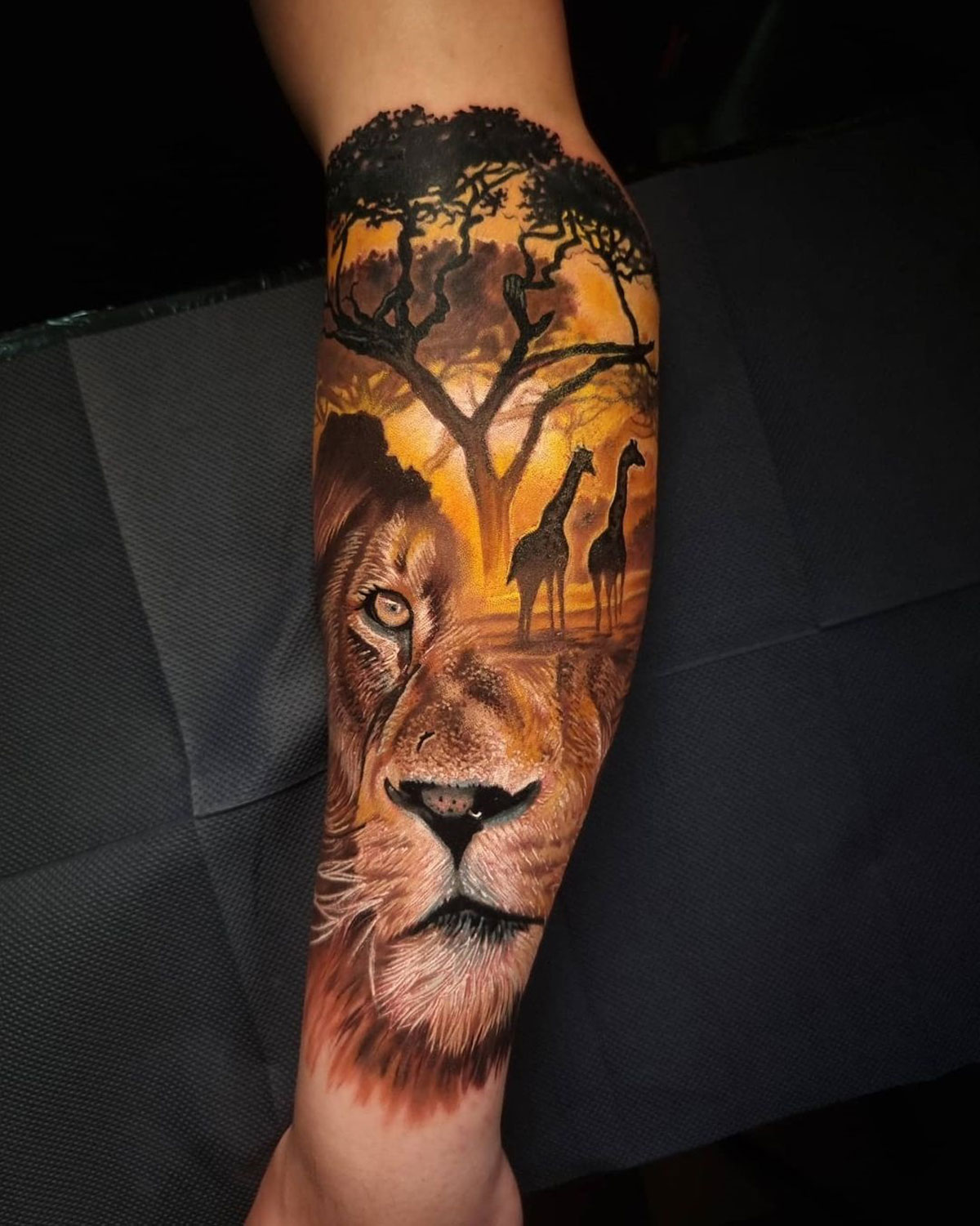
This pairs a solid black lion silhouette with a gradient background — usually warm oranges, pinks, or purples blended to mimic a sunset. The lion stays flat and graphic while the background does the color work, creating strong visual contrast. It’s a design that leans decorative and picture-like rather than purely symbolic.
Because color gradients fade unevenly compared to black ink, this is a design to go into with realistic expectations about future touch-ups. Upper arm or shoulder blade-adjacent placement gives the gradient room to breathe. Ask your artist about their color healing process specifically, since pigment retention varies by ink brand and individual skin.
12. Tribal-Inspired Lion Mane

This style simplifies the mane into bold, sweeping black shapes inspired by traditional tribal linework — thick curves and pointed tips rather than naturalistic fur texture. It’s graphic, high-contrast, and reads well from a distance, which makes it a strong choice for larger arm placements like the outer bicep or shoulder cap.
Because the shapes rely on smooth curves, ask your artist about their freehand versus stencil approach — tribal-style work often benefits from freehand adjustments to fit your arm’s natural curve. This design holds its crisp look well over time since it’s solid black rather than fine gradient shading, making it a lower-maintenance option long-term.
13. Lion Crown Combo
This pairs a lion’s face or profile with a small crown resting above or beside it, symbolizing leadership or self-respect. The crown is usually kept simple — a few clean lines and small dot or gem details — so it doesn’t compete with the lion for visual attention. Fine line work suits this combination well since both elements stay delicate.
Inner arm or wrist placement keeps the pairing readable at a smaller size, generally 2 to 4 inches. This is an easy design to personalize — ask your artist about swapping the crown style (simple lines versus a more ornate design) to make it feel less like a flash tattoo you copied and more like something specific to you.
14. Delicate Lion Paw Print Trail
Rather than the lion itself, this design uses a trail of small paw prints, sometimes leading into or away from a tiny lion silhouette, often chosen to represent a personal journey or a loved one. It’s minimal, usually fine line, and easy to scale up or down depending on placement.
This works well trailing along the forearm or wrapping toward the wrist. Because the elements are small and repetitive, healing is generally quick and pain stays on the lower end of the scale. It’s a gentle option for a first tattoo or for someone wanting symbolism without a large, detailed centerpiece.
15. Abstract Linework Lion Mane
This design breaks the mane into loose, overlapping abstract lines rather than a literal, textured rendering — think of it as an impression of a mane rather than a realistic one. It relies on confident, varied line weight to suggest movement and energy without any shading at all.
Because there’s no shading to anchor it, placement on a visibly curved area like the outer forearm or shoulder can make the abstract lines feel more dynamic. This is a good option for someone who wants something clearly “lion-inspired” without it reading as literal or overly detailed — it also tends to age well since there’s no fine shading to blur over time.
16. Lion with Mandala Background
This combines a central lion face or silhouette with a mandala pattern — a symmetrical, geometric design often built from dots and fine lines — radiating outward behind it. It’s intricate, decorative, and typically requires a larger placement to keep both elements legible, making the upper arm or shoulder the natural choice.
Because mandala patterns depend on precise symmetry, review your artist’s portfolio specifically for geometric consistency, not just their lion work. This design runs on the longer, more detailed end of the spectrum, so expect a longer session and correspondingly more discomfort than the simpler designs on this list. It’s a strong option for someone who wants a larger, statement-making piece rather than something subtle.
Best Placement Ideas for Lion Arm Tattoos
- Inner forearm — high visibility, moderate pain, good for fine line and script combos
- Outer forearm — great for geometric or abstract linework since the slight curve adds movement
- Upper arm/bicep — more surface area for detailed shading, mane work, or mandala backgrounds; easier to cover for workplace settings
- Shoulder cap — ideal for larger, bold designs like tribal manes or blackwork pieces
- Wrist — best for small, minimal designs like paw prints or single-line outlines; bonier area tends to feel more sensitive
- Behind the ear or ankle — for the smallest, most discreet versions like a lion cub silhouette
Tips for Success
Start by building a specific reference folder, not just a general “lion tattoo” search — save close-up shots of real lion features, plus healed (not just fresh) tattoo photos in the style you want. When reviewing an artist’s portfolio, look specifically at their healed work, consistency of line weight across multiple pieces, and whether their shading looks even rather than patchy. A good fine-line specialist will have a noticeably different portfolio than an experienced blackwork artist, so match the artist to the specific technique you want rather than booking based on general skill alone. Always ask about their sterilization process, needle setup, and expected number of sessions before committing, and don’t be afraid to book a consultation before committing to a design or date.
Common Mistakes and How to Avoid Them
- Going too small for the detail level — a realistic lion eye or mandala background needs enough space to hold shading; shrinking it too much causes early blurring.
- Choosing a bony placement for heavily shaded work — dense shading over the wrist or ankle tends to be more uncomfortable and can heal less evenly than fleshier areas.
- Skipping the aftercare instructions — every artist’s aftercare sheet varies slightly based on their ink and technique; follow theirs specifically rather than generic internet advice.
- Copying a design exactly from a photo — small personal tweaks (a different crown, a script phrase, a color shift) keep the piece meaningful and original rather than an obvious copy of someone else’s flash tattoo.
- Not asking about touch-ups upfront — color and dense shading designs often need a follow-up session; find out if that’s included in your original quote.
Similar Variations to Personalize Your Design
Almost every idea on this list can be resized or recombined. A fine-line lioness portrait can shrink down to wrist size or scale up into a full-sleeve centerpiece. Blackwork manes can incorporate dotwork shading for extra texture, or drop color entirely for a lower-maintenance long-term look. Negative space lions can be combined with mandala patterns for a more intricate composition, and script wraps can swap languages, fonts, or phrase length to fit your personal story. Talk through these combinations with your artist during the consultation rather than settling for an exact flash design off the wall.
Aftercare Basics
General aftercare — always confirm specifics with your artist, since instructions vary by studio and ink type — typically includes keeping the area clean, avoiding direct sun and swimming while it heals, and avoiding tight clothing that rubs against fresh linework. Most people see initial surface healing within 2 to 3 weeks, though full skin settling can take longer. Pain tolerance and healing speed vary quite a bit from person to person, so treat any general timeline as a rough guide, not a guarantee, and follow the specific sheet your artist provides.
Fine Line vs. Blackwork: Know the Difference Before You Book
- Fine line — thin, delicate lines usually done with a single needle, minimal to no shading, best for detailed portraits or script; tends to soften slightly over many years.
- Blackwork — solid, heavily saturated black fill, bold and high-contrast, holds its shape well long-term but requires longer, more intense sessions.
- Dotwork — shading built from small dots rather than solid fill or line hatching, creating a textured, gradient look; slower to tattoo but very distinct visually.
- Negative space — deliberately leaving areas of skin unshaded so it becomes part of the design; works best on evenly toned skin and should be discussed honestly with your artist beforehand.
Quick FAQ
How much does a lion arm tattoo cost?
Pricing depends heavily on size, detail, and your artist’s hourly rate, but simple fine-line designs often start in the low hundreds while larger, detailed blackwork or realism pieces can run into four figures. Always get a specific quote during consultation.
How painful is a lion tattoo on the arm?
Pain varies by placement and individual tolerance — fleshier areas like the outer bicep tend to feel more tolerable than bony spots like the wrist. Denser shading or larger pieces generally feel more intense simply due to longer session time.
How long does healing take?
Surface healing typically takes 2 to 3 weeks, though this varies by individual and by how well aftercare instructions are followed. Full settling under the skin can take a bit longer.
Will a lion tattoo fade or blur over time?
All tattoos change slightly with age and sun exposure — solid blackwork tends to hold its shape better than fine, delicate lines or light color washes. Occasional touch-ups can help maintain sharpness, especially for detailed or colored designs.
Choosing between these 16 feminine lion tattoo ideas really comes down to how much detail, color, and commitment feels right for you — and that’s a decision worth making slowly, not rushing into. Take your reference photos to a consultation, ask direct questions about technique and healing, and trust an artist who’s honest about tradeoffs rather than just eager to book you. The right feminine lion tattoo, placed thoughtfully on your arm, is one you’ll still feel proud of years down the line.