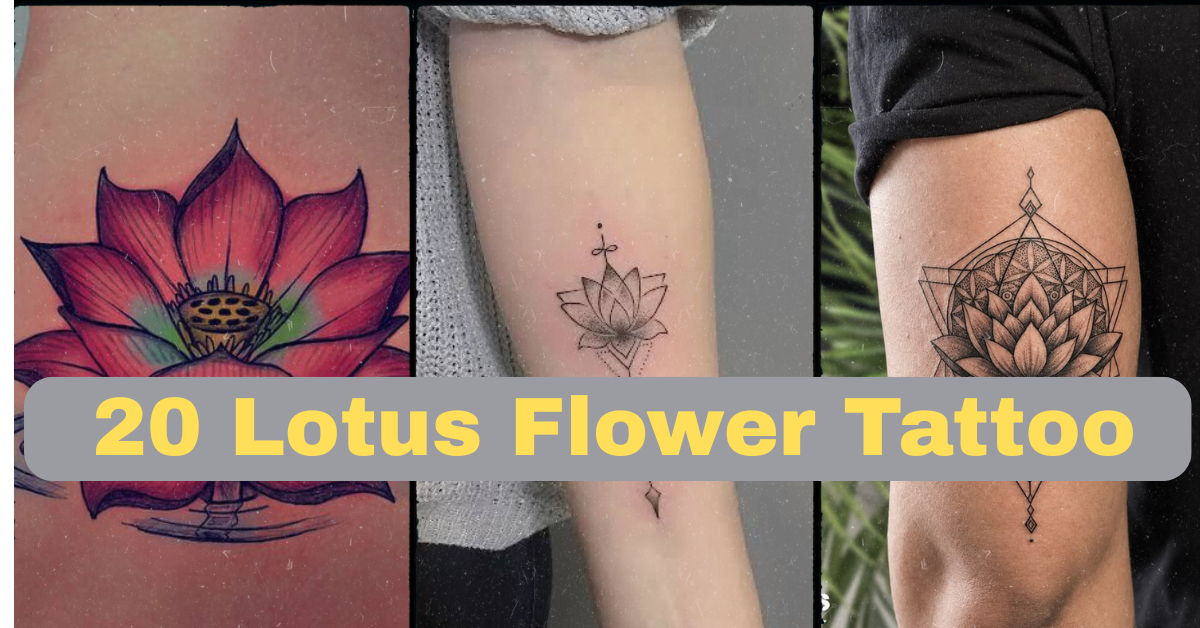
20 Lotus Flower Tattoo Design Ideas
Nervous about picking a lotus tattoo design you’ll actually still love in ten years? You’re not alone — the lotus is one of the most requested designs in tattoo studios, and that popularity means there’s a lot of copy-paste advice floating around. This guide skips the fluff and gets into what actually matters: technique, placement, pain, healing, and how to talk to your artist so you get a piece that ages well.
So what are the best lotus flower tattoo ideas? Fine-line single-needle lotus designs, blackwork geometric lotus pieces, and dotwork mandala lotus tattoos rank as the most versatile choices, since they hold detail at small sizes and age cleanly over years. Watercolor and heavily saturated color lotus tattoos look striking fresh but require more maintenance and touch-ups as skin cells turn over and pigment fades.
Stick around, because I’m also going to walk you through pain levels by placement, realistic healing timelines, what a lotus tattoo actually costs depending on size and studio, and the exact things to bring to your consultation so your artist nails the design the first time.
Why the Lotus Keeps Showing Up in Tattoo Studios
The lotus works as a tattoo subject for a practical reason, not just a symbolic one — its natural shape is radially symmetrical, which means it translates well into almost any technique. The petals give an artist room to play with line weight (how thick or thin a tattoo line is), shading, and negative space (areas left unlinked so bare skin becomes part of the design). It also scales well. A lotus can shrink down to a quarter-inch behind the ear or expand into a full back piece, and the composition still reads clearly. That flexibility is why it shows up across so many styles instead of being locked into one aesthetic.
Fine-Line Single-Needle Lotus

This is the most requested version right now, and for good reason. A single needle (literally one needle point instead of a grouped needle cluster) creates thread-thin lines that look almost drawn-on rather than tattooed. There’s no shading here — just clean outlines defining the petals, sometimes with a few interior lines suggesting depth. It reads as delicate and modern rather than traditional.
Best placed on the wrist, forearm, collarbone, or ankle at 1.5 to 3 inches. Thin lines can blur slightly on stretchy or textured skin, so ask your artist whether your skin type holds fine detail well before committing to a design under an inch. Healing typically runs 10 to 14 days on thin-skin areas. Pain is moderate on bony spots like the wrist, milder on the forearm. It’s a strong first-tattoo option and reads as workplace-appropriate almost anywhere you place it.
Bring a clean line-art reference, not a photo of a shaded tattoo — mixing styles confuses the stencil process.
Blackwork Geometric Lotus

Blackwork uses solid black ink and bold, deliberate lines to build the design, often combining the lotus with geometric shapes like triangles or a circular frame. Saturation is high and even — no gradient, no fading in and out. This gives the piece serious visual weight and contrast against most skin tones.
Ideal on the forearm, shoulder, or upper back where there’s room for the geometry to breathe, typically 3 to 6 inches. Solid black fields take longer to heal than line work, often 2 to 3 weeks, and can scab more visibly during that period. Pain runs moderate to high since the artist is packing more ink into the skin per pass. This style holds up remarkably well over decades because solid black ink resists visible fading better than thin gray-wash lines.
Ask to see healed photos in your artist’s portfolio, not just fresh work — blackwork looks different a year out.
Dotwork Mandala Lotus
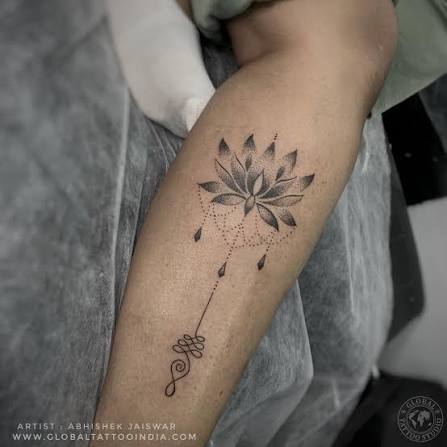
Dotwork builds shading and texture entirely from small dots instead of solid lines or blended shading. Around a lotus, this technique often forms a mandala-style halo of increasingly spaced dots radiating outward from the petals, creating a soft gradient effect without any actual shading blend.
This design needs more surface area to look intentional — think 4 inches minimum — so the spine, upper back, or outer thigh work better than small wrist placements. Skin with visible texture or larger pores can make fine dotwork look less crisp over time, so ask your artist about dot spacing during the consultation. Healing takes about 2 weeks. Pain is generally moderate; the repetitive dot motion feels different from a continuous line but isn’t necessarily worse. Dotwork ages gracefully since there’s no hard line to visibly blur.
Watercolor Lotus

Watercolor tattoos use bursts of color with soft, undefined edges to mimic paint bleeding on paper, often layered behind or around a black-outlined lotus. Saturation is intentionally uneven — that’s the point — with color pooling in some areas and fading into bare skin in others.
Best on the shoulder, upper arm, or thigh, 3 to 5 inches, somewhere with less friction from clothing. Color retention varies by skin tone and sun exposure, and lighter pigments generally fade faster than black ink, so budget for a touch-up around the two-year mark. Healing runs 2 to 3 weeks. Pain is comparable to standard color work — moderate. This isn’t the best pick for a first tattoo if you want something low-maintenance, since watercolor pieces need more upkeep than black linework.
Ask your artist directly which pigments they use and how those specific colors have held up in their older clients.
Negative Space Lotus
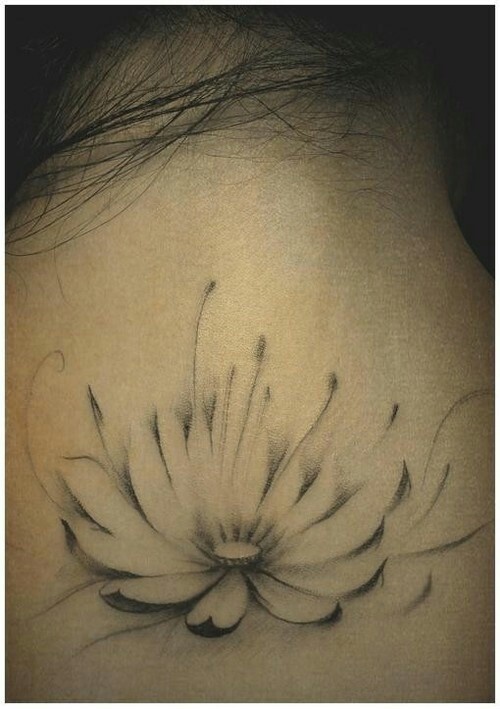
Negative space design flips the usual approach — instead of ink forming the petals, black ink surrounds the lotus shape and the untouched skin becomes the flower itself. It’s a striking technique because the design relies on contrast rather than direct linework.
This works best on medium to large canvases (4+ inches) where there’s enough surrounding black to make the negative shape pop — forearm, calf, or back are common choices. Skin tone matters here more than with other styles, since the contrast between ink and skin drives the whole design; discuss this openly with your artist. Healing is similar to blackwork, around 2 to 3 weeks given the solid ink coverage. Pain is moderate to high due to ink density. It’s a bold statement piece, not a subtle one, so consider workplace visibility before placing it somewhere exposed.
Traditional Bold Lotus
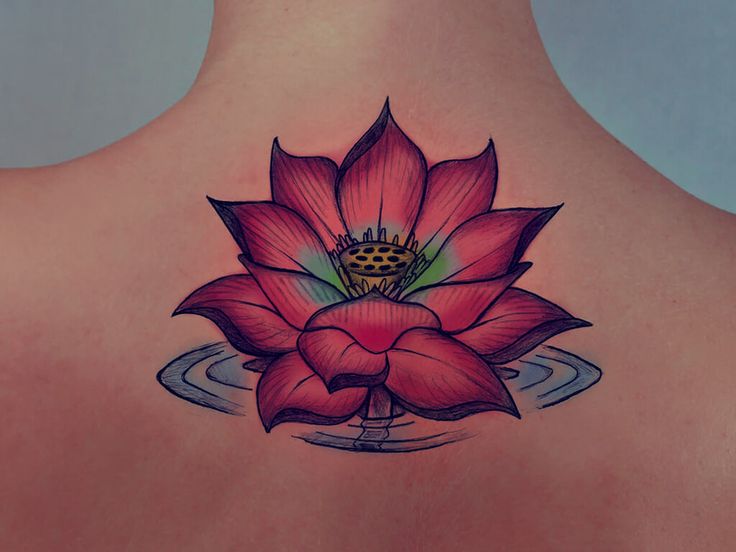
Traditional (or “American traditional”) style uses thick black outlines, limited color palette, and solid, flat shading with minimal gradient. Think bold red or yellow petals with heavy black borders — this style was built to age well and still looks sharp decades later.
Best on the upper arm, chest, or thigh at 3 to 5 inches, since the bold lines need room to stay legible. This style holds up on all skin tones and textures better than fine-line work because the thick lines resist the natural blurring that happens with tattoos over time. Healing takes roughly 2 weeks. Pain is moderate. It’s a great choice if you want something that still looks clean at 60, not just at 25.
Bring reference flash art rather than a soft digital illustration — traditional artists work from bold shapes, not gradients.
Minimalist Lotus Outline
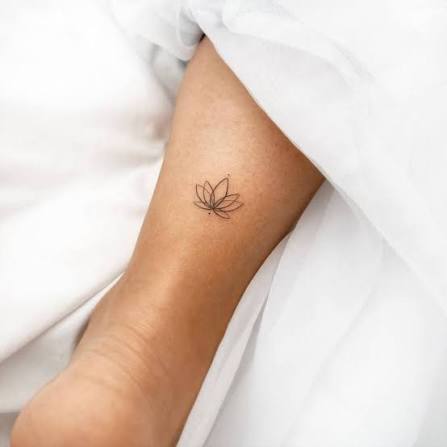
A pared-down version of the fine-line concept, this design strips the lotus to its simplest form — a handful of clean, unbroken lines with zero shading or added detail. It’s the tattoo equivalent of a single confident pencil stroke.
Works anywhere small: the wrist, finger side, ankle, or nape of the neck at under 2 inches. Because there’s so little linework, mistakes in stencil placement are more noticeable, so double-check symmetry before the needle touches skin. Healing runs about 10 days. Pain varies — bony areas like the wrist or ankle tend to be more sensitive than fleshier spots. This is a popular matching-tattoo option for friends or siblings since it’s affordable, quick to do, and low-commitment.
Lotus with Om Symbol
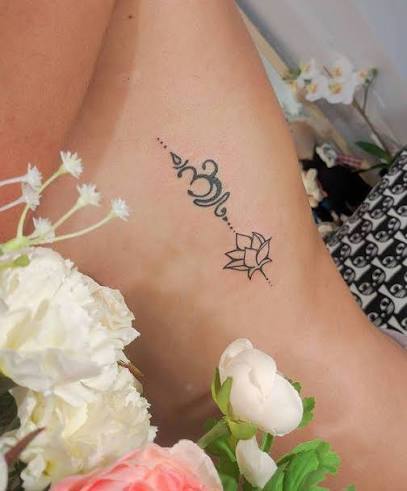
Combining the lotus with the Om symbol (a sacred sound/symbol in Hindu and Buddhist traditions) adds cultural and spiritual meaning, and it’s usually rendered in fine line or light blackwork so the Om doesn’t overpower the flower.
Best kept to 2 to 4 inches on the forearm, ankle, or upper back so both elements stay legible without crowding. Because this design carries specific cultural and religious weight, it’s worth doing some reading on the symbol’s meaning before booking, out of respect for its origin. Healing is standard for linework, about 10 to 14 days. Pain is moderate depending on placement. This combination suits people looking for a design with personal or spiritual meaning rather than pure decoration.
Sacred Geometry Lotus
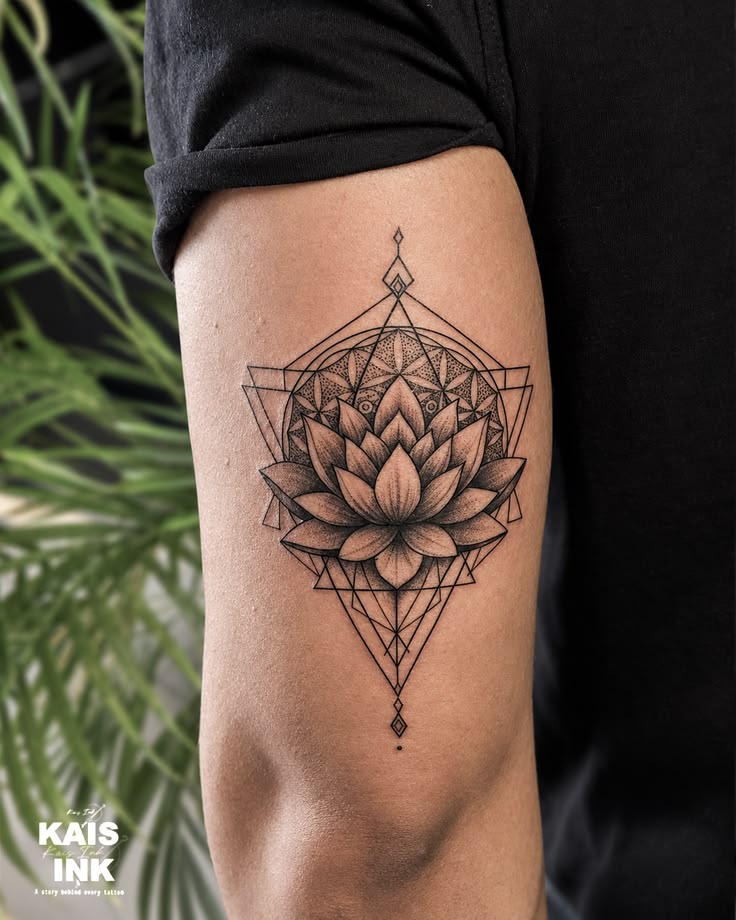
This style frames the lotus inside precise geometric patterns — circles, triangles, or interlocking lines — usually done in fine line or medium-weight blackwork. The appeal is mathematical precision paired with organic petal shapes.
Because symmetry is everything here, this design needs a flat, even surface like the upper back, sternum, or forearm at 3 to 5 inches — curved or uneven areas can visibly distort the geometry. Healing takes about 2 weeks. Pain is moderate to high depending on ink density. Ask your artist to draft the stencil digitally first so the geometric lines stay perfectly proportional before it goes on skin.
Lotus and Koi Fish
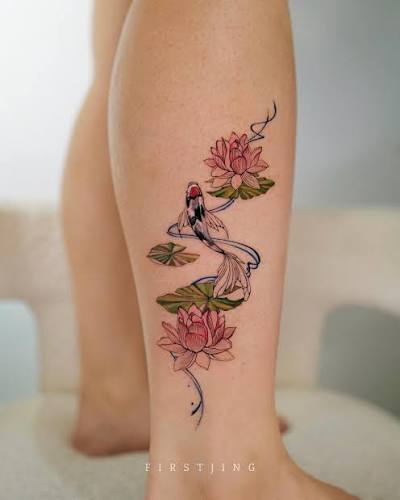
Pairing a lotus with a koi fish is a classic combination in Japanese-influenced tattoo work, usually done in bold traditional linework with flowing water details connecting the two elements.
This composition needs real space — think 5 inches or more — making the thigh, calf, or back the natural home for it. Healing runs 2 to 3 weeks given the larger scale and color work involved. Pain is moderate to high, especially over longer sessions. This isn’t a first-tattoo-sized commitment; it’s better suited for someone who already knows their pain tolerance and wants a larger custom piece.
Micro Lotus Behind the Ear

A tiny lotus tucked behind the ear, usually under an inch, done exclusively in fine line since shading or heavy black would overwhelm the small space. It’s one of the most discreet placements available.
Skin behind the ear is thin and close to bone, so expect a sharper sensation than fleshier areas — many people describe it as one of the more sensitive spots on the body. Healing takes about 10 days, and cleaning this area gently matters since hair and hats can introduce friction. Great for a first tattoo if you want something almost entirely hidden, though keep in mind ultra-small designs can blur slightly after a decade.
Matching Friendship Lotus Tattoos
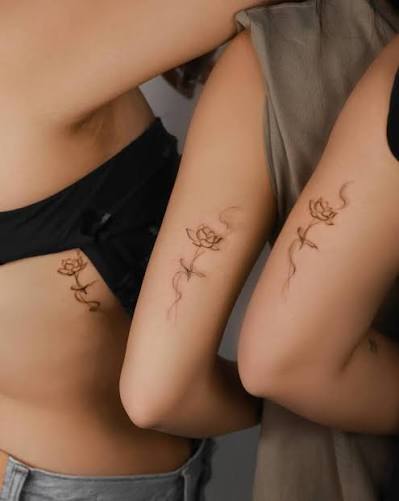
Matching lotus tattoos for friends or family usually use identical fine-line or minimalist outline designs, sometimes with a small personalized detail like a different petal count or tiny initials.
Wrist, ankle, or inner forearm placements work well at 1 to 2 inches since they’re easy to show off in the same pose for photos. Healing and pain match standard fine-line expectations — mild to moderate. A practical tip: book the same artist and appointment day if possible, so line weight and proportions match exactly between both tattoos.
Lotus Spine or Back Piece

A large-scale lotus running along the spine or across the upper back allows room for real detail — layered petals, shading, or a mandala backdrop — usually combining blackwork and dotwork techniques.
This is a bigger commitment, typically 6 inches or larger, and often done across multiple sessions. The spine itself is a notably sensitive area due to thin skin over bone, so pain runs higher here than almost anywhere else on the body. Healing can take 3 weeks given the size. This piece suits someone confident in a longer-term commitment rather than a first-timer testing the waters.
Lotus with Mandala Background
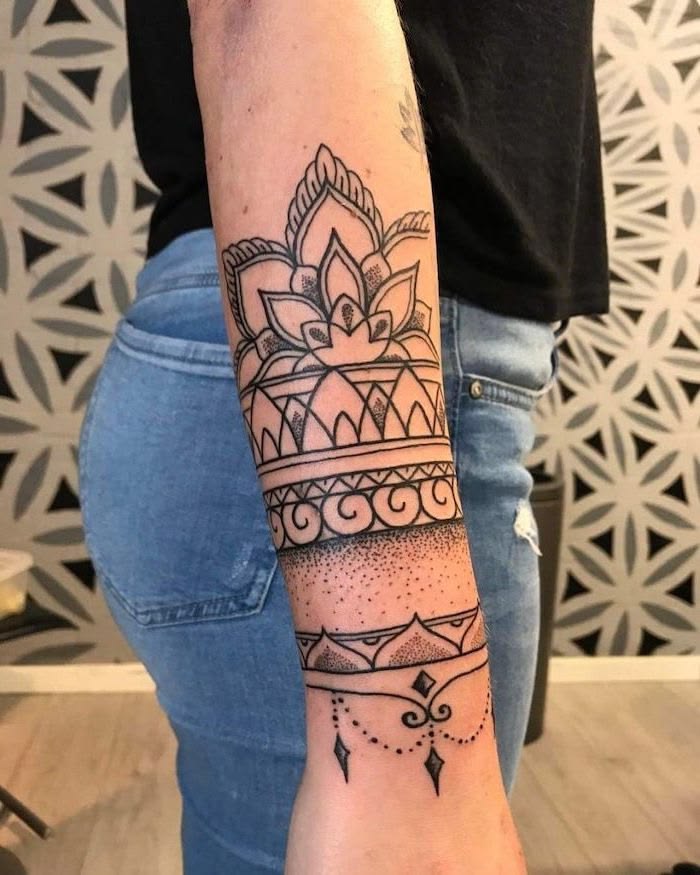
Here the lotus sits at the center of a full mandala, radiating symmetrical patterns outward, typically combining fine line for the mandala details with slightly bolder lines for the lotus itself to keep it as the visual focus.
Needs a flat, wide canvas — upper back, chest, or thigh — at 4 inches or more. Healing takes about 2 weeks. Pain is moderate. Request a printed stencil preview before your appointment so you can check that the radial symmetry lines up evenly on your specific body curve.
Soft-Saturation Colored Lotus
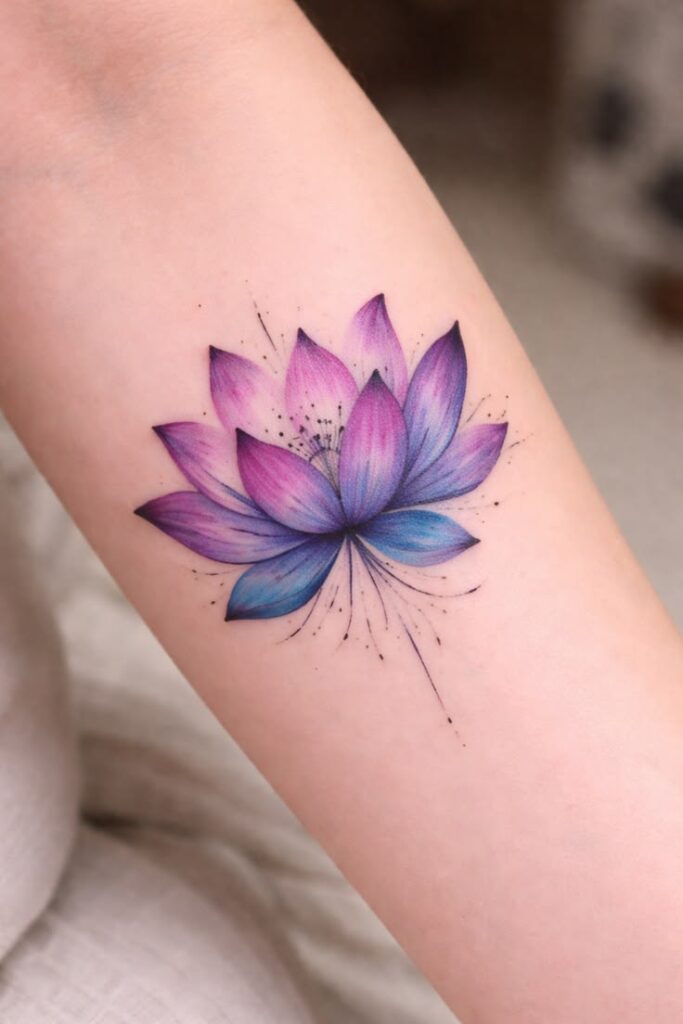
Unlike full watercolor work, this style uses light, controlled color — pale pinks, soft purples — with a defined black outline holding everything in place. It’s a middle ground between bold traditional color and washed-out watercolor.
Best at 2 to 4 inches on the shoulder, forearm, or ankle. Color pigment generally holds up longer when it’s paired with a solid outline versus color used alone. Healing runs about 2 weeks. Pain is moderate. This is a solid option if you want color without the higher touch-up frequency associated with pure watercolor pieces.
Lotus as a Sleeve Element
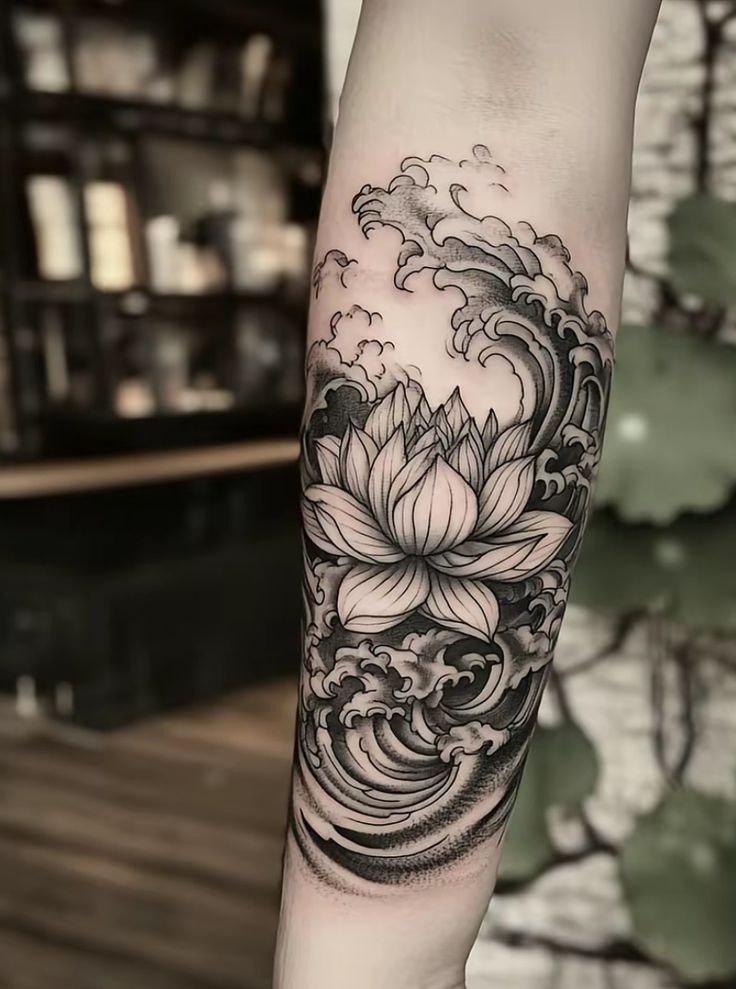
Rather than a standalone piece, the lotus here acts as one component within a larger sleeve, blending into surrounding botanical or geometric elements using consistent line weight and shading throughout.
This requires planning the whole sleeve concept with your artist ahead of time, not just the lotus itself, so the flow and proportions make sense together. Sessions are broken into multiple sittings. Pain accumulates with session length more than with any single area’s sensitivity. This is a long-term project, not a walk-in booking.
Lotus with Script Lettering
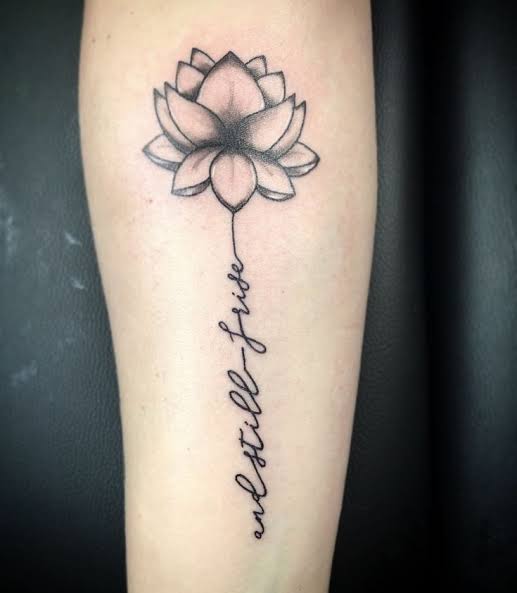
Combining a lotus with a word or short phrase, usually in fine-line linework so both the flower and the lettering stay proportionate and legible.
Placement on the forearm, ribs, or collarbone at 2 to 4 inches works best since there’s enough length for text to read clearly. Ribs are a notably sensitive placement due to thin skin and close bone, so factor that in before choosing this spot for a script piece. Healing takes 10 to 14 days. Bring your exact wording typed out and confirm the font style with your artist beforehand — lettering mistakes are far harder to fix than flower details.
Ankle Lotus Tattoo
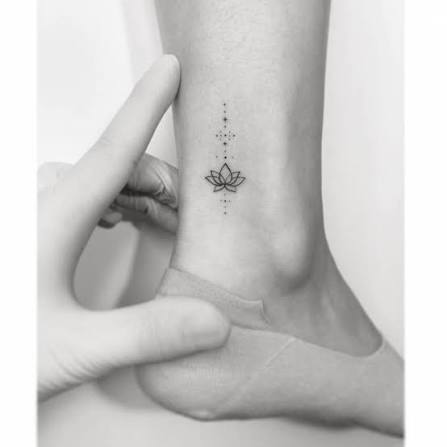
A small to medium lotus wrapping around or sitting above the ankle bone, typically fine line or light blackwork given the limited flat space available.
Keep it under 3 inches so the design doesn’t distort when the ankle moves. Pain here tends to be moderate to high because of the bone proximity and thin skin. Healing can run slightly longer, about 2 weeks, since ankle placements experience more friction from socks and shoes. This is a popular discreet placement for workplaces with visible-tattoo restrictions.
Rib Cage Lotus
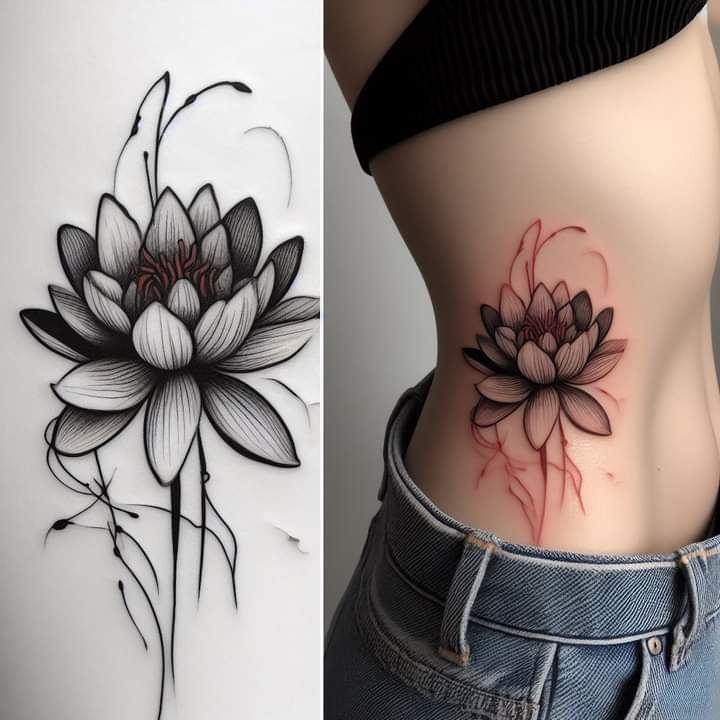
A medium to large lotus along the rib cage, often incorporating shading or dotwork to add dimension across the curved surface.
This placement consistently ranks among the more painful spots people choose, due to thin skin directly over bone and limited muscle padding. Healing takes about 2 to 3 weeks, and clothing friction during recovery is a real factor to plan around. Size typically runs 3 to 6 inches. This isn’t the best first-tattoo choice if you’re pain-cautious, but it’s a striking, easily-hidden placement for a second or third piece.
Sternum or Chest Lotus
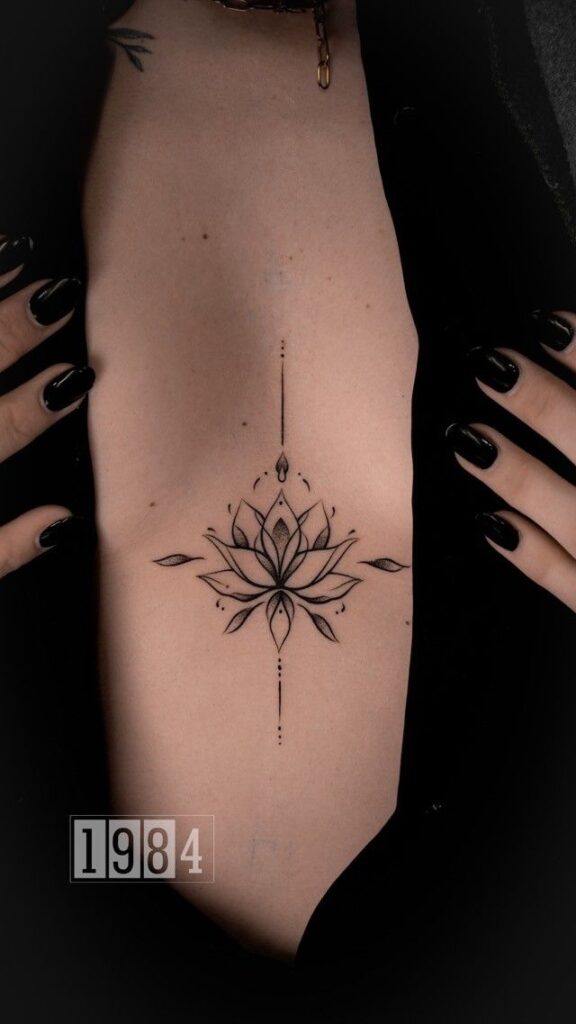
A centered lotus on the sternum, usually fine line or soft blackwork, taking advantage of the flat vertical space between the collarbones.
The sternum is another bony, thin-skin area, so expect noticeably higher discomfort than fleshier placements. Size generally stays under 4 inches to avoid crowding. Healing runs about 2 weeks. This placement is easy to conceal with most clothing, making it a solid option for workplace-conscious clients who still want something meaningful and visible when they choose to show it.
Best Placement Ideas
- Wrist or ankle — highly visible, moderate pain, best for small fine-line designs, moderate maintenance due to friction from watches or shoes
- Forearm — good visibility control (easy to cover), lower pain, works with almost any style or size
- Behind the ear — very discreet, higher pain due to thin skin, best for micro designs only
- Upper back or spine — excellent for large detailed pieces, higher pain along the spine specifically, low day-to-day visibility
- Ribs — highly discreet, notably high pain, best reserved for those with prior tattoo experience
- Sternum/chest — easily concealed, moderate-to-high pain, works well for centered symmetrical designs
- Shoulder or thigh — flexible sizing, moderate pain, good for color or watercolor work needing more surface area
Tips for Success
Look for an artist whose portfolio shows multiple healed examples of the specific technique you want, not just fresh photos — fresh tattoos always look sharper than they will in a year. If you want fine-line work, find someone who specializes in it specifically, since single-needle technique takes different hand control than bold traditional work. Bring at least two or three reference images, note your general size and placement preference, and be upfront about your pain tolerance and any skin sensitivities. A good consultation should include a conversation about linework weight, ink saturation, and how the design might shift on your specific skin over time — if an artist skips that conversation entirely, keep looking.
Common Mistakes and How to Avoid Them
- Going too small for the detail level — intricate mandala or dotwork lotus designs need enough surface area, or the lines merge into a blob over time
- Ignoring placement geometry — a symmetrical lotus on a highly curved area (like the ribs) can look distorted once healed if the artist doesn’t account for body curvature
- Skipping aftercare instructions — improper care in the first two weeks affects how sharp the final linework looks
- Copying a design exactly from Pinterest — a small personalized detail (petal count, added symbol, size adjustment) makes the piece yours and avoids an awkward “matching a stranger” moment
- Choosing a generalist artist for a specialized style — dotwork and fine line both require specific technical practice; not every artist does every style equally well
Similar Variations
Nearly every design on this list can shift dramatically with size and color changes. A large blackwork lotus can shrink into a minimalist outline for a second, smaller matching piece. A soft-saturation color lotus can drop the color entirely and become a bold traditional piece instead. Dotwork shading can be added to a plain fine-line lotus later as a cover-up-style enhancement, and negative space elements can be worked into an existing black lotus tattoo during a touch-up session. Talk to your artist about how your chosen design could evolve later — it’s easier to plan for that upfront than to redesign around existing linework.
Aftercare Basics
General aftercare for a new tattoo typically includes keeping the area clean, avoiding direct sun exposure, skipping swimming pools and long soaks for the first couple weeks, and applying a fragrance-free moisturizer as directed. Avoid picking at scabbing or peeling skin, since that can pull ink out unevenly. Every studio has slightly different recommendations based on the products they use, so always follow the specific aftercare sheet your artist provides rather than generic internet advice. If you notice unusual redness, swelling, or symptoms beyond typical healing, consult a licensed dermatologist or your artist directly rather than guessing.
Fine Line vs. Blackwork vs. Dotwork: A Quick Reference
- Fine line — thin, single-needle lines with no shading; best for delicate, minimalist designs; ages by softening slightly over many years
- Blackwork — solid, saturated black fields and bold outlines; high contrast; holds up exceptionally well over decades
- Dotwork — shading and texture built entirely from small dots instead of blended gradients; creates a soft, textured look; ages gracefully with minimal blurring
Quick FAQ
How much does a lotus tattoo cost?
Small fine-line lotus tattoos typically run $80 to $200 depending on the studio and region, while larger blackwork, dotwork, or color pieces can range from $300 to $800 or more based on size and session count. Always ask your artist for a specific quote during consultation rather than relying on general estimates.
How painful is a lotus tattoo?
Pain depends heavily on placement and individual tolerance — bony, thin-skin areas like the ribs, ankle, or sternum tend to feel more intense than fleshier spots like the forearm or shoulder. Everyone’s pain tolerance is different, so what feels moderate to one person may feel higher to another.
How long does a lotus tattoo take to heal?
Most lotus tattoos heal within 2 to 3 weeks on the surface, though full healing beneath the skin can take longer. Following your artist’s specific aftercare instructions plays a big role in how smoothly that process goes.
Do lotus tattoos fade or change over time?
Yes — all tattoos change gradually due to natural skin cell turnover and sun exposure, with fine lines softening slightly and colors mellowing faster than solid black ink. Touch-ups every several years can help keep detailed designs looking sharp.
Final Thoughts
A lotus tattoo can be as quiet as a quarter-inch outline behind your ear or as bold as a full back piece with dotwork shading and geometric framing — the design flexes to match whatever you’re actually looking for, whether that’s subtlety, symbolism, or a statement piece. What matters most is matching the technique to the placement, being honest with yourself about pain tolerance and upkeep, and picking an artist whose portfolio proves they can execute your specific style well.
Take your time researching before you book, ask real questions at your consultation, and remember that pain, healing, and long-term fading all vary from person to person — a licensed professional can walk you through what to expect for your specific skin and design. Do that groundwork, and your lotus flower tattoo has a real shot at being something you’re just as happy with a decade from now as you are on day one.