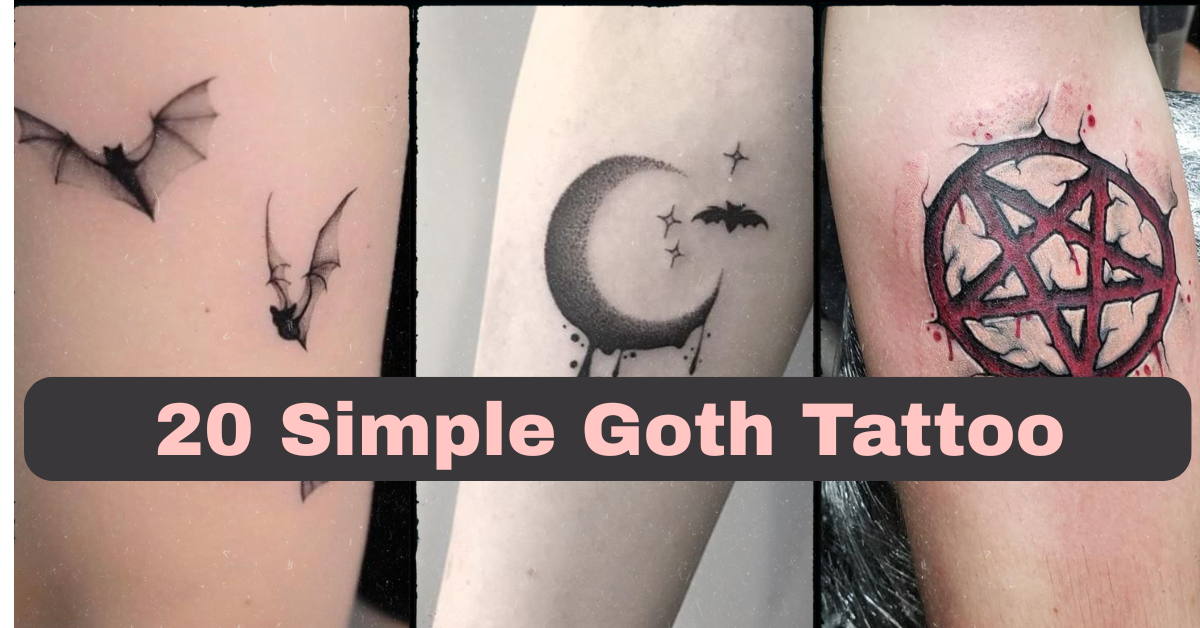
20 Simple Goth Tattoo Ideas That Actually Hold Up on Skin
Nervous about picking a simple goth tattoo design you’ll second-guess in five years? You’re not alone, and honestly, that hesitation is a good sign — it means you’re thinking past the aesthetic and into the long game.
So what are the best simple goth tattoo ideas? Fine-line bats, blackwork moons, dotwork skulls, and minimalist crosses top the list because they use clean, low-detail linework that ages well, heals predictably, and reads clearly even at small sizes. The best choices avoid heavy shading that can blur over time and stick to strong, simple shapes instead.
I’ve spent enough time in studios watching consultations go sideways to know the difference between a design that photographs well and one that actually works on skin for a decade. Below, I’ll walk through 20 specific designs, plus the placement, pain, healing, and booking details most lists skip entirely.
Why Simple Goth Designs Work So Well Long-Term
Goth imagery — moons, ravens, spiders, thorns — has a natural advantage: it’s built on bold, recognizable silhouettes. That’s exactly the kind of shape that survives the test of time on skin. Tattoos with thin, delicate detail packed into a tiny space tend to blur as skin ages and ink settles deeper into the dermis (the layer beneath your skin’s surface). Simple goth designs sidestep that problem by relying on strong outlines, negative space (areas left uninked to form part of the image), and minimal internal detail. That’s why this style is such a smart entry point if you’re getting your first tattoo, or if you want something meaningful without a three-hour sitting.
Fine-Line Bat Silhouette
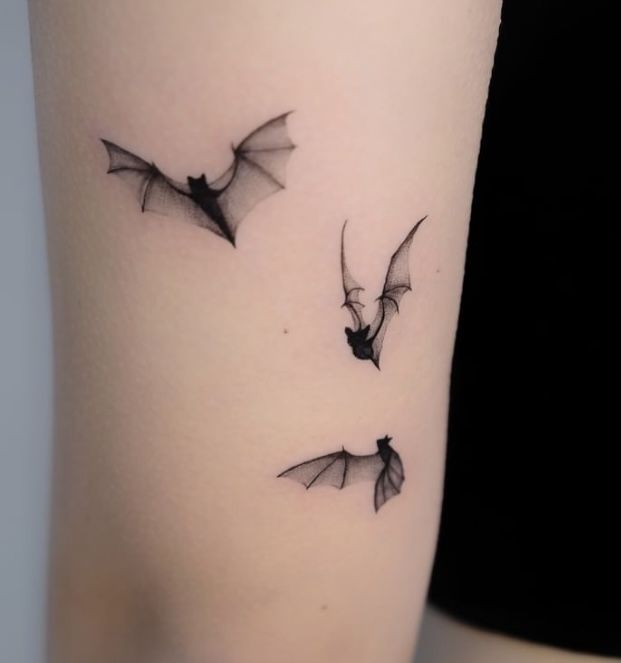
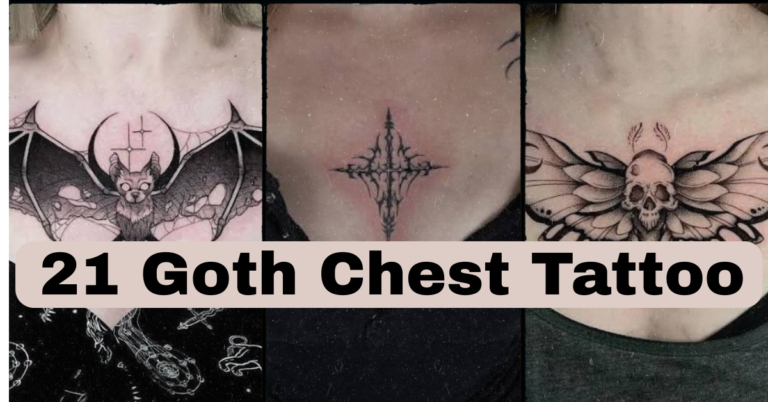
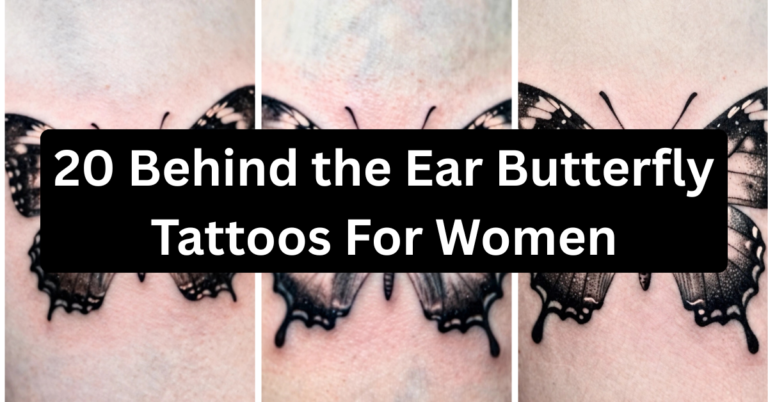
A single bat in flight, rendered in fine line work with a needle configuration on the thinner side, keeps this design crisp without looking cluttered. The line weight should stay consistent — no tapering — so the wings hold their shape as the tattoo ages. This works beautifully on the forearm, behind the ear, or along the collarbone at around 1.5 to 2 inches wide. Skin with visible texture or stretch marks nearby can distort very thin lines, so ask your artist to assess the area first. Healing typically runs 10 to 14 days for linework this size. Bony placements like the collarbone or ankle tend to sting more than fleshier spots like the upper arm. It’s an easy first tattoo and reads as subtle enough for most workplaces. Next up, a design that leans even further into negative space.
Blackwork Crescent Moon
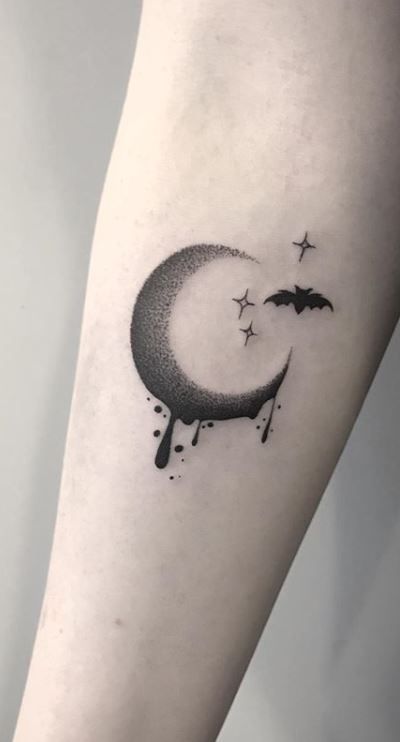
Blackwork means solid, saturated black fill with no gradient or shading — just flat, confident color. A crescent moon in this style, maybe an inch and a half across, holds up incredibly well because there’s no fine detail to lose over time. Wrist, inner arm, or ankle placements all work, though wrists show more visible aging from sun exposure. Bring a reference image showing the exact curve and thickness you want — “crescent” can mean a dozen different shapes to different artists. Healing runs about two weeks, and solid black areas can scab more visibly than fine lines, so plan accordingly. This is a strong matching-tattoo option since the shape is easy to replicate consistently. From here, let’s talk about a design that plays with what’s left unstained.
Negative Space Moth
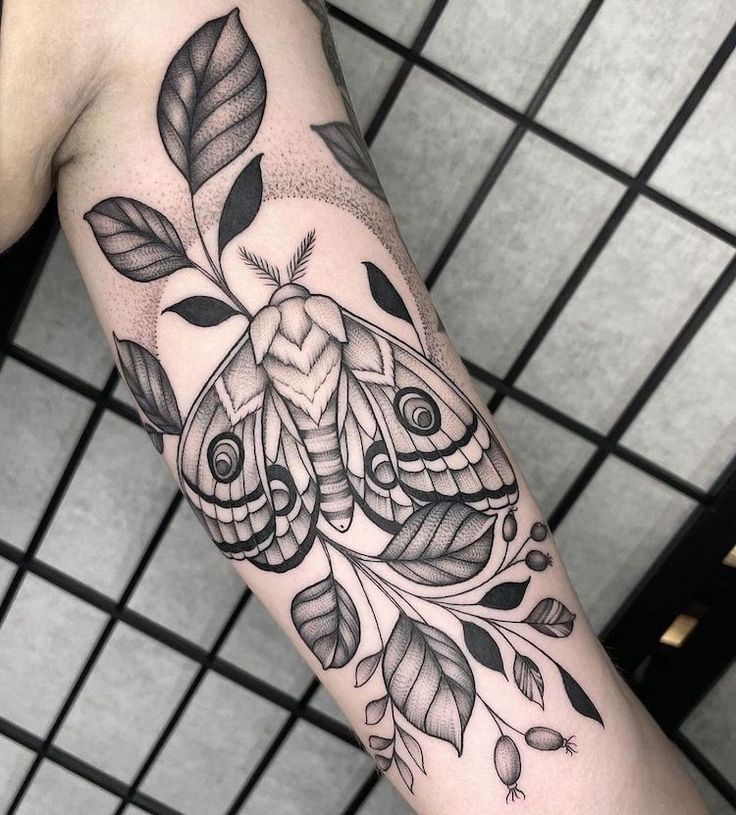
Instead of tattooing the moth’s body solid, the artist leaves sections of bare skin to form the wing patterns — this is negative space work, and it takes real skill to execute cleanly. Chest, upper back, or thigh placements give the design room to breathe; anything under 2 inches risks the negative space closing up and looking muddy. Ask to see healed photos of an artist’s negative space work specifically, not just fresh ink, since this style changes the most during healing. Fleshier areas hurt less than ribs or spine placements. This one’s less workplace-subtle depending on size, but it ages gracefully if the contrast stays sharp. Next, a much smaller and more discreet option.
Single-Needle Spider
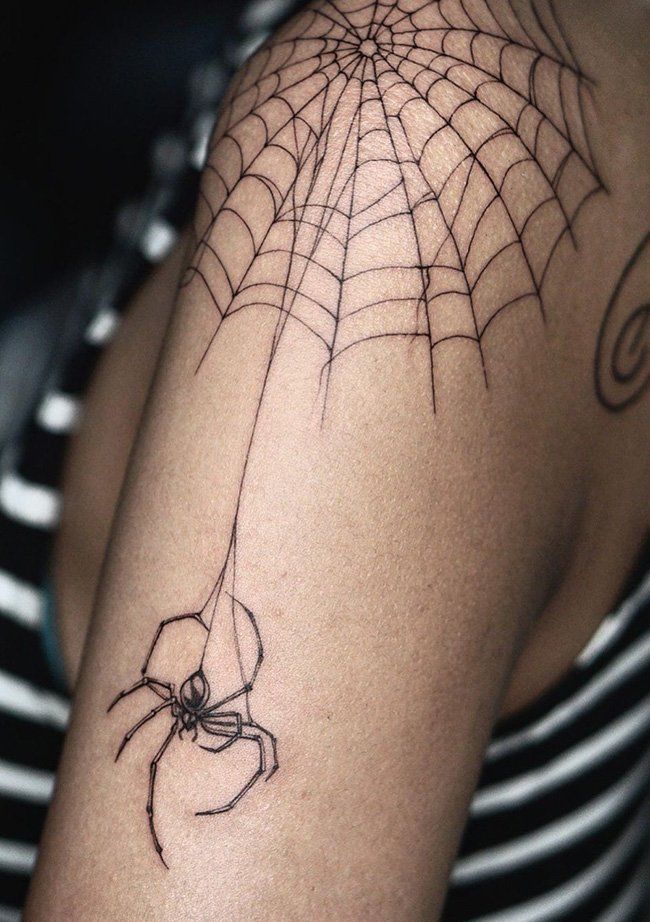
Single-needle tattoos use one fine point to create extremely thin, delicate lines — think of it as the finest pen you can draw with. A small spider done this way, under an inch, works well on the wrist, finger, or behind the ear. Because the lines are so thin, they fade faster than bolder work, so expect a touch-up (a follow-up session to refresh faded ink) within 3 to 5 years depending on placement and sun exposure. Fingers and hands are notoriously painful and prone to fading fast, so ask your artist honestly about longevity before committing there. This design is low-commitment and easy to hide, making it a solid choice for first-timers or workplace-conscious clients. Now let’s look at a heavier, more traditional technique.
Dotwork Pentagram
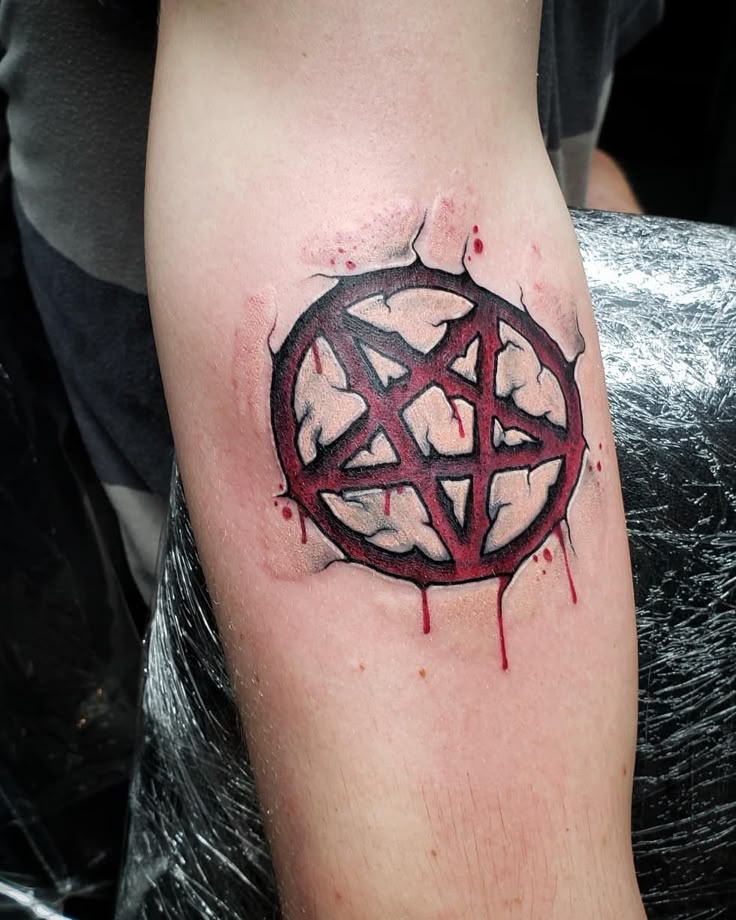
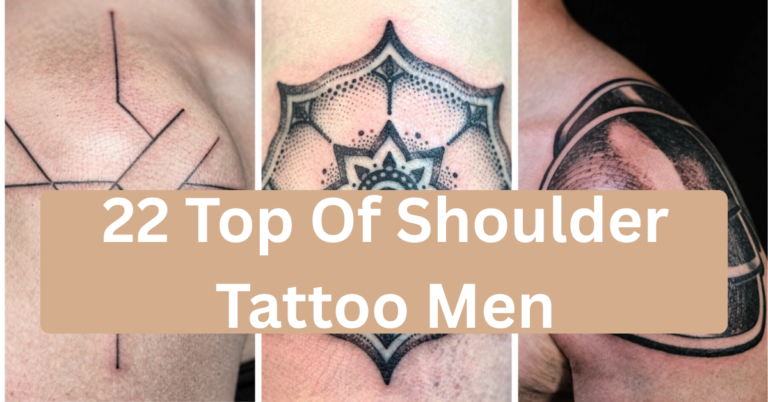
Dotwork builds an image entirely from small dots instead of solid lines or fill, creating texture and shading through density. A pentagram rendered this way gets subtle dimension without looking like classic bold shading. This suits the upper arm, shoulder, or back at 2 to 3 inches — small dotwork under an inch tends to blur into a gray blob over time. Dotwork sessions can run slightly longer than linework because of the stippling technique, so budget extra chair time. Pain is generally comparable to fine line on fleshy areas but can feel more intense over bone. This design carries obvious symbolic weight, so make sure you’re comfortable with people asking about it. Moving on to a shape almost everyone recognizes instantly.
Minimalist Coffin Outline
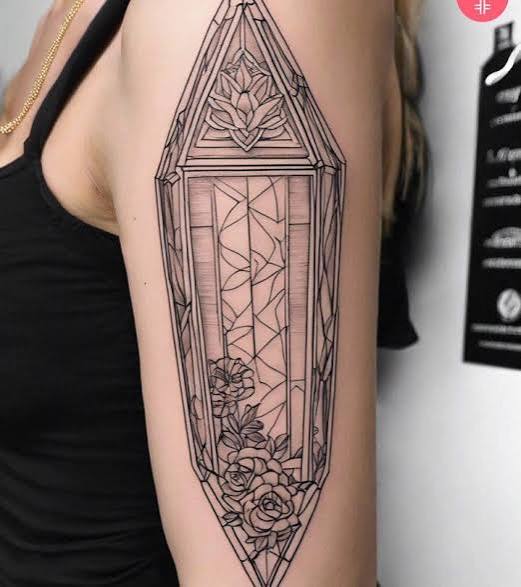
A coffin drawn in simple outline form, no shading, no fill, works as a clever bit of dark humor or aesthetic without being heavy-handed. Keep it around 1 to 2 inches on the forearm, ankle, or ribcage. Straight lines like these actually require a steady hand more than people expect — check an artist’s portfolio for geometric or architectural work to gauge their line control. Healing is quick, usually under two weeks, since there’s no dense ink saturation. Rib placement will hurt more than most other spots on this list due to thin skin and less padding over bone. It’s a great matching-tattoo idea for friend groups who want something a little dark but still small. Here’s a design that adds movement to a similarly simple shape.
Fine-Line Raven
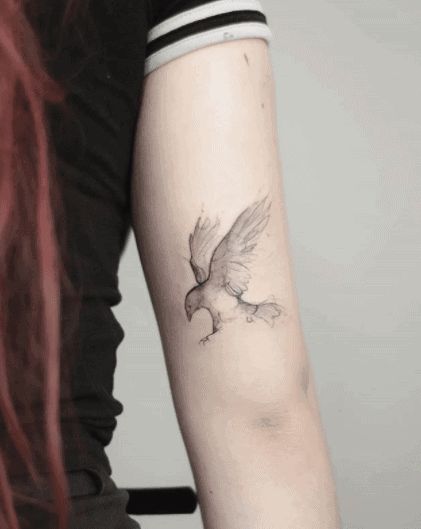
A raven in profile, done with fine, even linework and minimal internal detail — maybe a few lines suggesting feathers — captures the bird’s silhouette without overcomplicating it. This suits the shoulder blade, forearm, or calf at 2 to 3 inches. Ask your artist about needle size specifically; thinner needles create the crisp, illustrative look this design needs. Healing takes about two weeks, and shoulder blades tend to be more tolerable pain-wise than ribs or ankles. This design works well as a first tattoo since it’s visually clear without needing heavy shading that fades unevenly. It also ages well because the composition relies on shape, not detail density. Next, a design built almost entirely from empty space.
Negative Space Crescent Eye
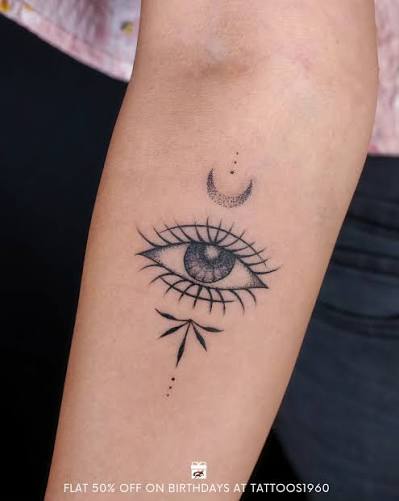
This design places a crescent shape behind an eye, using untattooed skin to form the pupil or iris highlight. It’s a striking way to combine two goth motifs into one composition. Best placed on the upper arm or thigh at 2.5 to 3 inches so the negative space doesn’t close in during healing. Bring high-contrast reference images to your consultation — this design depends entirely on clean edges, so ask specifically about line crispness in the artist’s healed work. Expect moderate pain on fleshy placements. This isn’t the most workplace-discreet option due to its visual complexity, but it ages remarkably well if done with strong, saturated black.
Blackwork Thorned Rose
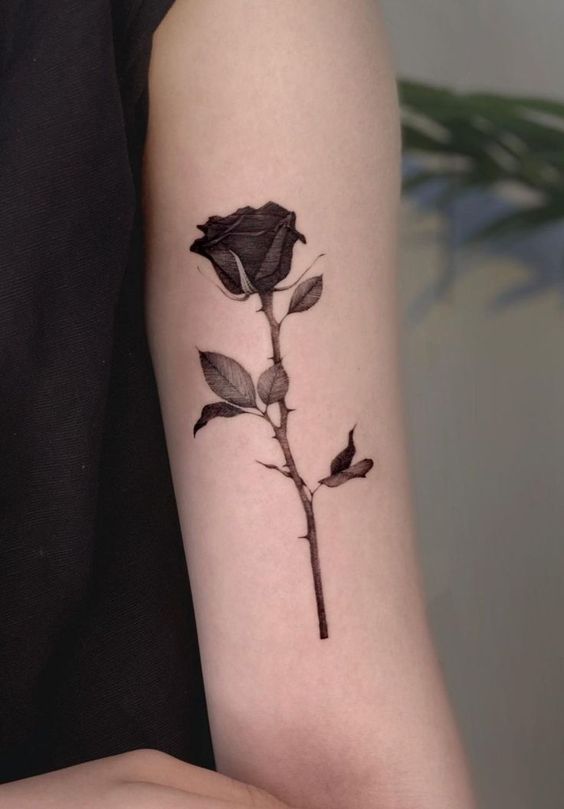
Thorned roses done in blackwork skip the traditional red-and-green palette entirely, relying on solid black petals and stem for contrast. This gives the design a starker, more graphic look than a traditional rose tattoo. Ankle, forearm, or upper arm placements at 2 to 4 inches work well. Ask your artist about saturation — solid blackwork needs even ink deposit, or you’ll get patchy spots that require a touch-up. Healing runs about two weeks, with more noticeable peeling than fine line work. Ankles are more painful and prone to fading faster due to friction from socks and shoes. This design suits both first tattoos and larger custom pieces if you want to expand it later. Next, something with a sharper edge.
Single-Needle Dagger
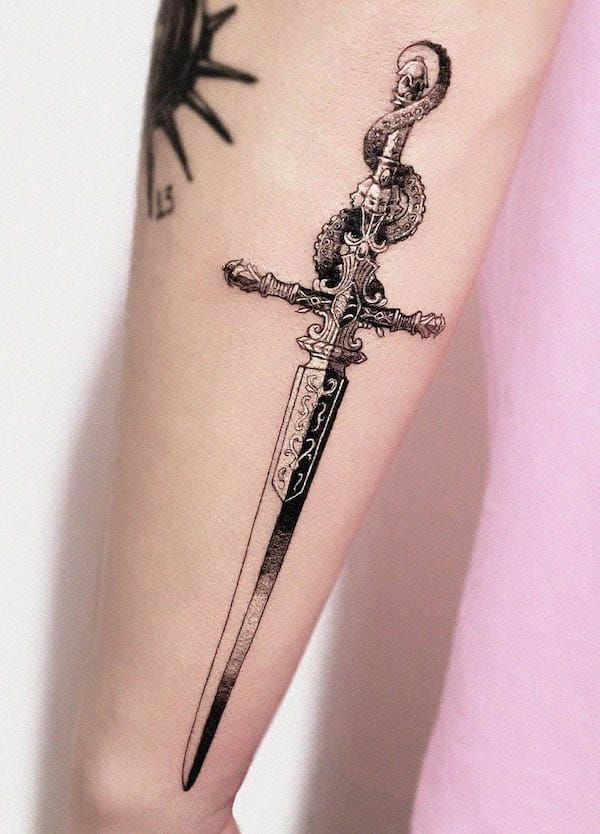
A dagger rendered in single-needle style keeps the classic tattoo motif but strips away the bold shading and color usually associated with it. Thin, precise lines outline the blade and hilt, sometimes with a tiny drip of “blood” left as a simple filled shape rather than shaded detail. This fits well on the forearm, ribs, or behind the calf at 2 to 3 inches. Because single-needle work fades faster than bold traditional tattoos, ask about touch-up scheduling upfront. Rib and calf placements vary in pain tolerance person to person. This is a solid choice if you want a recognizable symbol without the heavier, more saturated look of old-school tattoo flash.
Dotwork Skull Outline
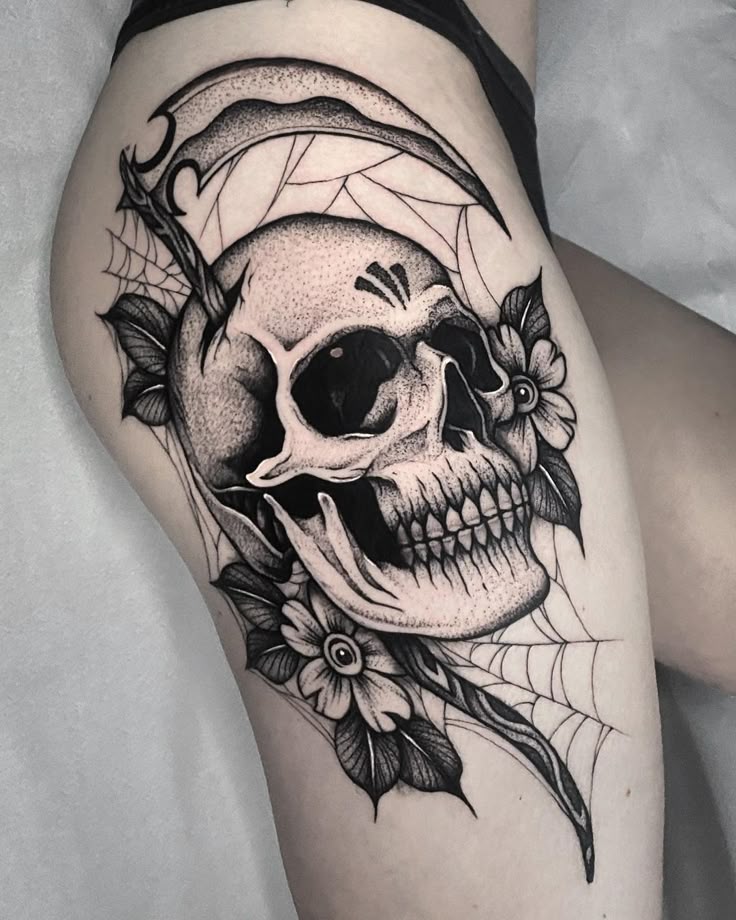
A skull built from stippled dots instead of solid lines gets subtle texture and shadow without heavy black fill. This works nicely on the shoulder or upper arm at 2 to 3 inches — any smaller and the dot pattern loses definition. Dotwork requires a patient hand, so review portfolio pieces closely for consistent dot spacing, not just the finished look in photos. Healing takes about two weeks, similar to other dotwork pieces. This design is a good middle ground between a bold traditional skull and something more delicate, and it tends to age better than heavily shaded alternatives since there’s less ink density to blur.
Fine-Line Spider Web
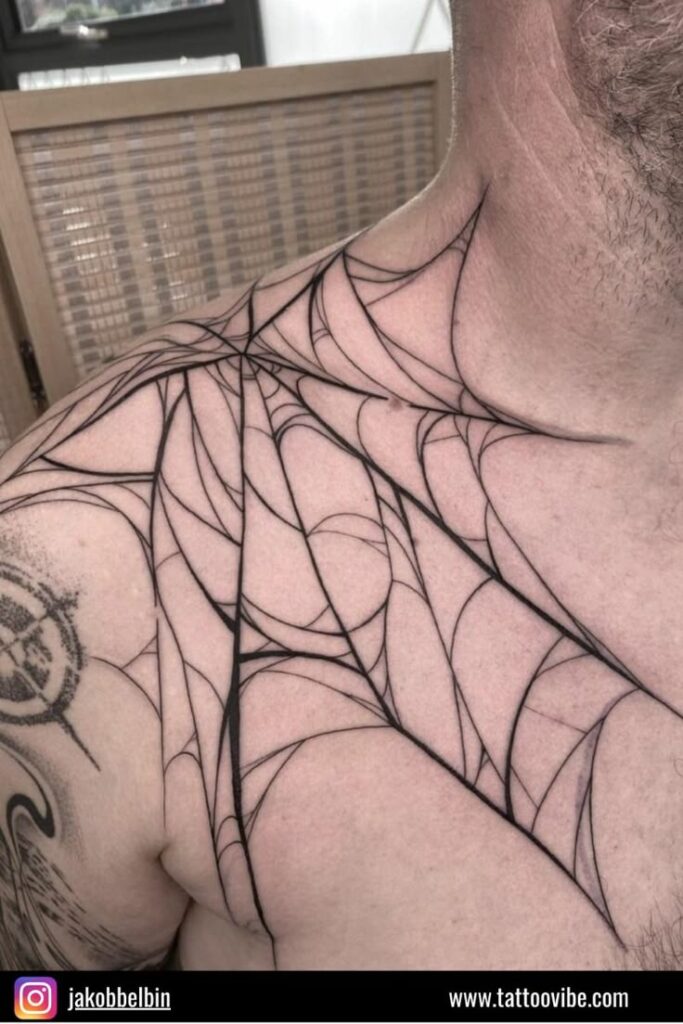
A small web in the crook of the elbow or behind the ear, done in thin, even lines, is one of the more recognizable goth-adjacent designs out there. Keep it under 2 inches for elbow placement since skin movement there can distort larger pieces over time. Ask your artist about placement geometry — webs need to follow the body’s natural creases to avoid looking stretched later. Elbow creases are known for being more sensitive and slower to heal due to constant movement. This is a fun, low-commitment design for matching tattoos among friends, though it’s not the most discreet for office settings depending on exact placement.
Minimalist Gothic Cross
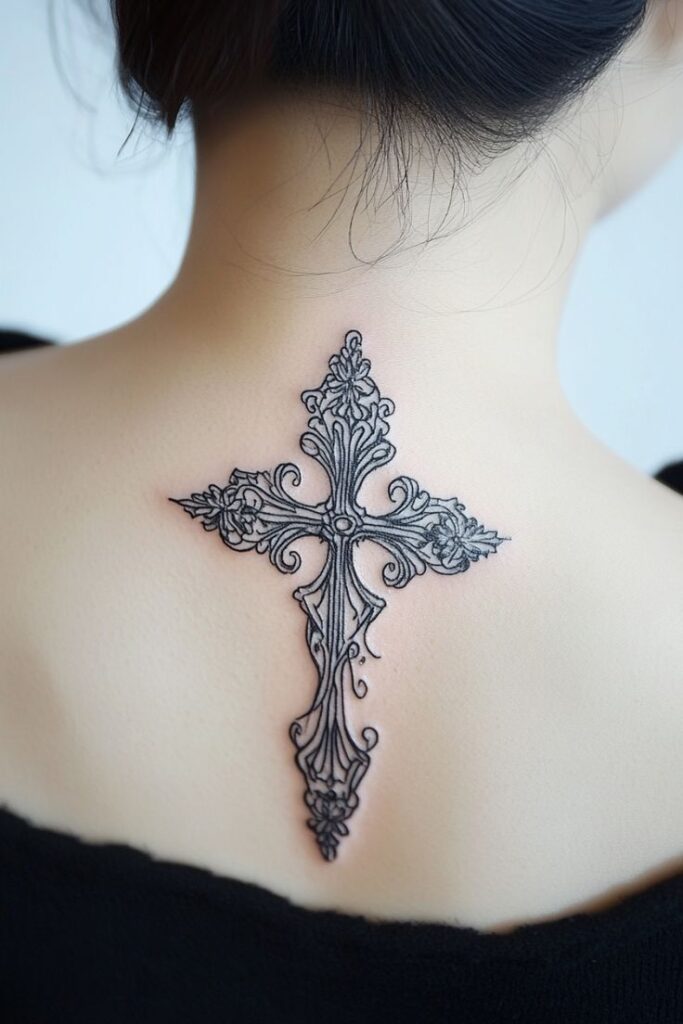
A cross with slightly elongated, angular lines gives off gothic architecture vibes without needing ornate detail. Simple linework, no shading, at 1.5 to 3 inches works on the sternum, forearm, or nape of the neck. Sternum placement is one of the more painful spots on this entire list due to thin skin over bone, so go in prepared. Healing runs 10 to 14 days for most people. This design suits both religious and purely aesthetic intentions, so be ready to explain your reasoning if that matters to you personally. It also works well scaled up into a larger back piece down the road.
Blackwork Snake
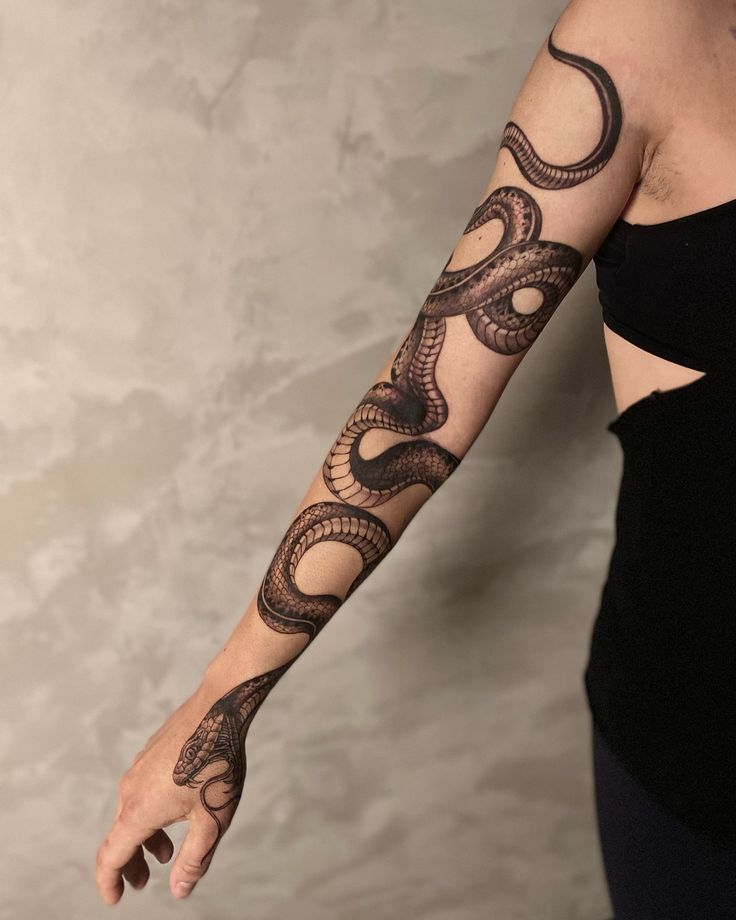
A coiled snake in solid blackwork, with maybe a few negative-space scale details, creates strong visual contrast against skin. This suits the upper arm or thigh at 3 to 4 inches, since smaller sizes lose the coiling detail. Saturation matters enormously here — ask to see healed (not just fresh) photos of an artist’s blackwork to check for even, solid fill without gaps. Healing takes about two weeks with more visible peeling than fine line designs. Thigh placement is generally more tolerable than bony spots. This design works well as a statement piece and holds its shape remarkably well over the years.
Fine-Line Candle Flame
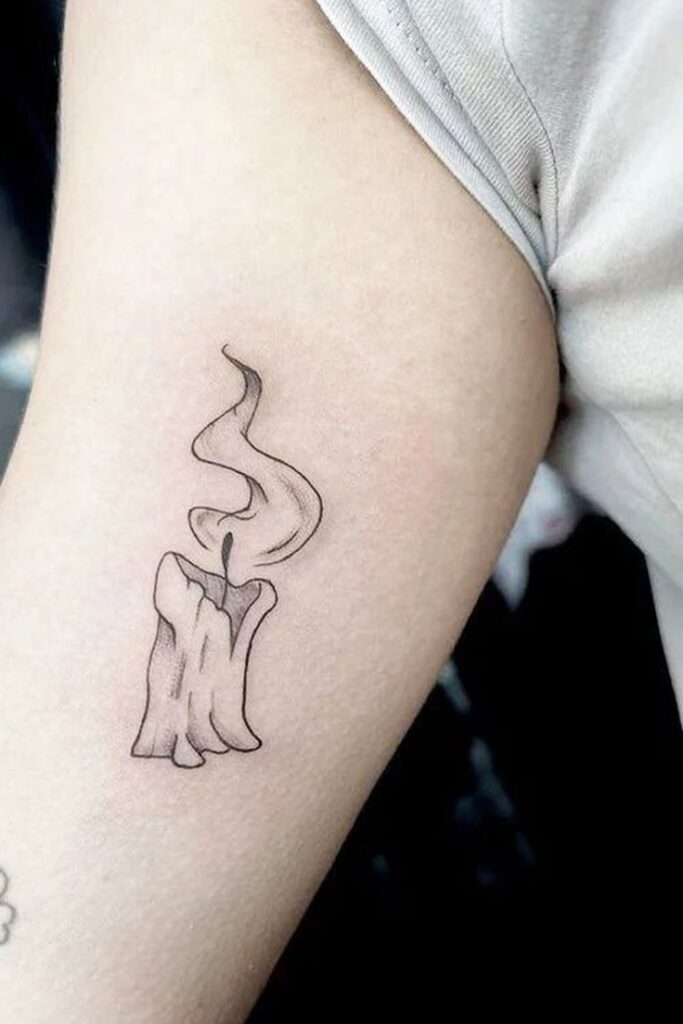
A single candle with a small flame, done in delicate fine line work, brings a quiet, almost sentimental edge to goth imagery. This fits nicely on the wrist, ankle, or ribs at around 1.5 inches. Because fine line fades faster in high-friction areas, avoid palms or inner fingers if you want this to last without frequent touch-ups. Healing takes about 10 days. Wrist and ankle placements are more sensitive than the ribs for most people. This design is popular for memorial tattoos, so consider whether you want to explain that meaning openly before choosing a visible placement.
Fine-Line Wilting Flower
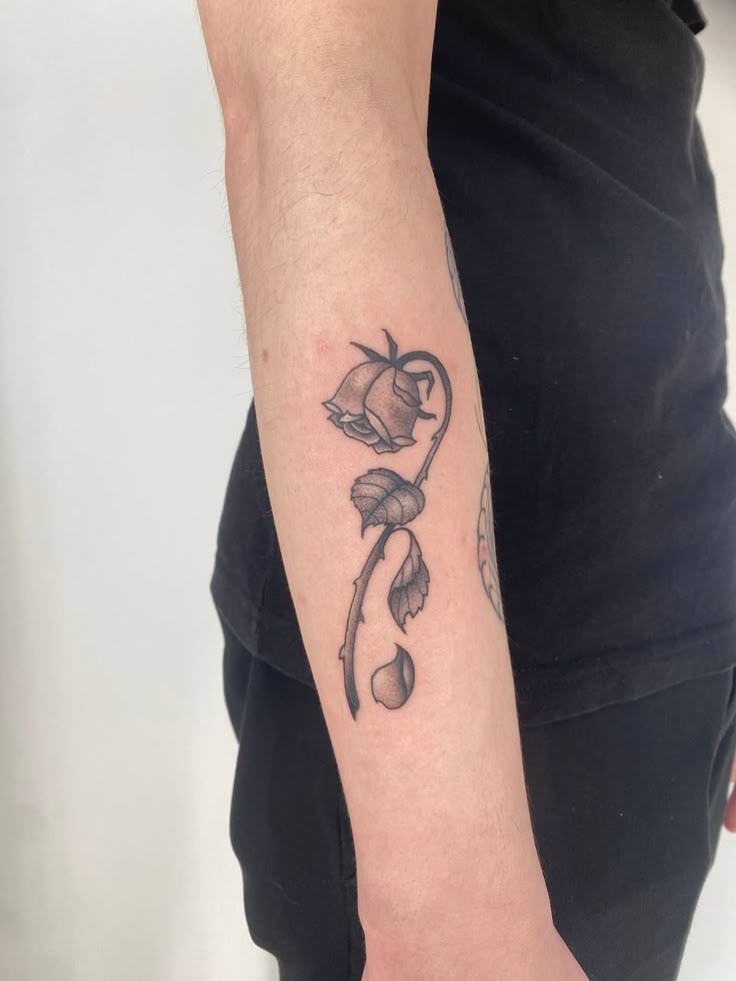
A drooping flower, rendered with thin, slightly uneven lines to suggest decay, plays with the idea of beauty fading — a classic goth theme without any dark imagery at all. This suits the collarbone, hip, or forearm at 2 inches. Ask your artist about line variation here; too uniform and it loses the “wilting” character, too shaky and it looks unintentional. Healing runs about two weeks. Hip placement tends to be more painful than the forearm for most clients. This design ages into something interesting, since real fine lines do soften slightly over years, ironically matching the wilting theme itself.
Dotwork Constellation with Occult Symbol
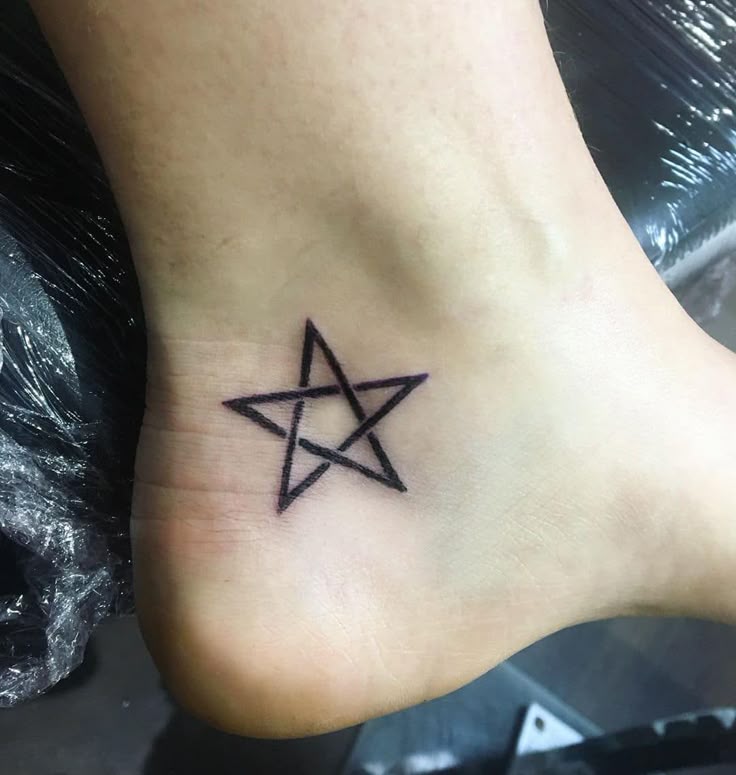
Combining a small constellation with a subtle occult symbol, like a simple sigil, through dotwork shading creates depth without a single solid black area. This works well on the upper back or shoulder at 3 to 4 inches, giving the stippled dots room to form gradients. Bring a clear sketch of your specific symbol — occult imagery varies a lot, and you don’t want ambiguity in a permanent piece. Healing takes roughly two weeks. Shoulder placement is moderately painful. This is a great custom design option rather than a flash piece (a pre-drawn design ready to tattoo as-is), since personalizing the symbol matters here.
Single-Needle Broken Chain
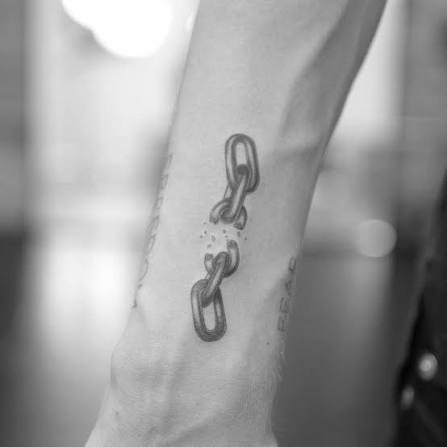
A broken chain link, done in delicate single-needle linework, often symbolizes breaking free from something difficult. This fits well on the wrist, ankle, or behind the ear at around 1.5 inches. Because single-needle work is so fine, ask your artist directly how long they expect the lines to hold crisp definition in that specific placement before needing a refresh. Healing takes about 10 to 12 days. Wrist and ankle bones make this more uncomfortable than fleshier spots. This design carries personal meaning for a lot of people, so it’s worth sitting with the idea for a while before booking.
Minimalist Tombstone
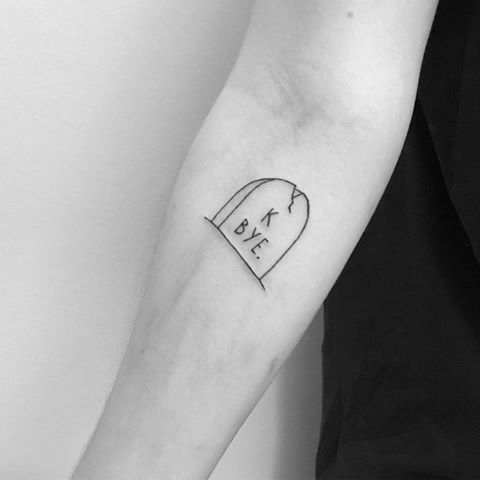
A small tombstone outline, sometimes with a simple “RIP” or initials, done in clean linework with zero shading, works as a tongue-in-cheek or genuinely meaningful memorial piece. This suits the forearm, calf, or ribs at 2 inches. Keep any lettering large enough to stay legible — text under a certain point size blurs first as fine line tattoos age. Healing runs about two weeks. Rib placement is more painful than calf or forearm. This design works for both playful and sincere intentions, so think through how you want people to read it before finalizing text.
FAQ: Definition Check — Fine Line vs. Blackwork vs. Dotwork
Fine line: Thin, delicate lines made with a smaller needle grouping, best for detailed illustrative designs but prone to faster fading over time.
Blackwork: Solid, saturated black fill with no gradient, built for bold contrast and strong long-term visibility on skin.
Dotwork: Shading and texture created entirely from small dots, offering subtle depth without the heaviness of full black fill.
Single-needle: A specific fine-line technique using one needle point for extremely thin, precise lines, often used for minimalist or delicate designs.
Best Placement Ideas
- Wrist: highly visible, moderate pain, faster fading due to friction and sun exposure
- Ankle: easy to hide with socks, moderate-to-high pain over bone, faster wear from footwear
- Forearm: great visibility control (sleeves), moderate pain, ages well
- Ribs: very private, higher pain due to thin skin over bone, minimal friction damage
- Behind the ear: easy to hide, low-to-moderate pain, small size limits detail
- Upper arm/shoulder: flexible visibility, moderate pain, good for larger blackwork or dotwork
- Collarbone: visible in certain outfits, higher pain due to bone proximity
Tips for Success
Look for an artist whose portfolio shows healed photos, not just fresh ink — healed work tells you how their linework and saturation actually hold up. Bring reference images, but also be ready to describe the feeling or meaning behind the design; a good artist will translate that into line weight and composition choices. Ask direct questions about needle type, expected fading timeline for your chosen style, and whether they recommend a custom design or a flash piece for what you want. A consultation should feel like a conversation, not a rushed transaction.
Common Mistakes and How to Avoid Them
- Going too small for detailed work: Fine detail under an inch often blurs within a few years.
- Ignoring skin texture or placement geometry: Curved or high-movement areas distort designs like webs or negative space pieces.
- Skipping the aftercare conversation: Every artist has slightly different recommendations; ask before you leave the chair.
- Copying a design exactly: Personalizing size, angle, or a small detail makes the piece genuinely yours and avoids an oddly identical match with strangers online.
Similar Variations
Most of these designs scale up or down easily. A small single-needle bat can become a larger fine-line piece with added detail like fur texture. A blackwork moon can shift into a dotwork version for softer shading. Negative space designs can be combined with dotwork shadows for added depth. Think of these 20 ideas as starting points, not fixed templates.
Aftercare Basics
General aftercare typically involves gently washing the area, applying a thin layer of recommended ointment or lotion, and avoiding direct sun, swimming, and tight clothing while it heals. Healing time varies by placement and individual skin, but most simple designs settle within 10 to 14 days on the surface, with full healing underneath taking longer. Always follow the specific aftercare sheet your artist provides, and check in with them or a dermatologist if you notice anything that seems off.
Quick FAQ
How much does a simple goth tattoo cost?
Small pieces under 2 inches typically range from $60 to $200 depending on your region and the artist’s experience level, with larger or more detailed custom work costing more.
How painful are these designs?
Pain varies by individual and placement — bony areas like ribs, ankles, and collarbones tend to feel more intense than fleshier spots like the upper arm or thigh.
How long do they take to heal?
Most simple linework and small blackwork pieces heal on the surface within 10 to 14 days, though this varies by person and aftercare consistency.
Will these designs fade or need touch-ups?
Fine line and single-needle work generally fades faster than blackwork or dotwork, so a touch-up every few years is common depending on placement and sun exposure.
Final Thoughts
Choosing a simple goth tattoo really comes down to matching the right technique to the right spot on your body, and being honest with yourself about pain, upkeep, and how visible you want it to be. The designs that age best are the ones built on strong, simple shapes rather than crammed detail, so keep that in mind no matter which of these 20 ideas you gravitate toward.
Take your time, talk through your options with a licensed professional, and don’t rush the decision just because you’re excited. A well-planned simple goth tattoo, done by someone whose portfolio backs up their skill, is one you’ll still feel good about years from now.