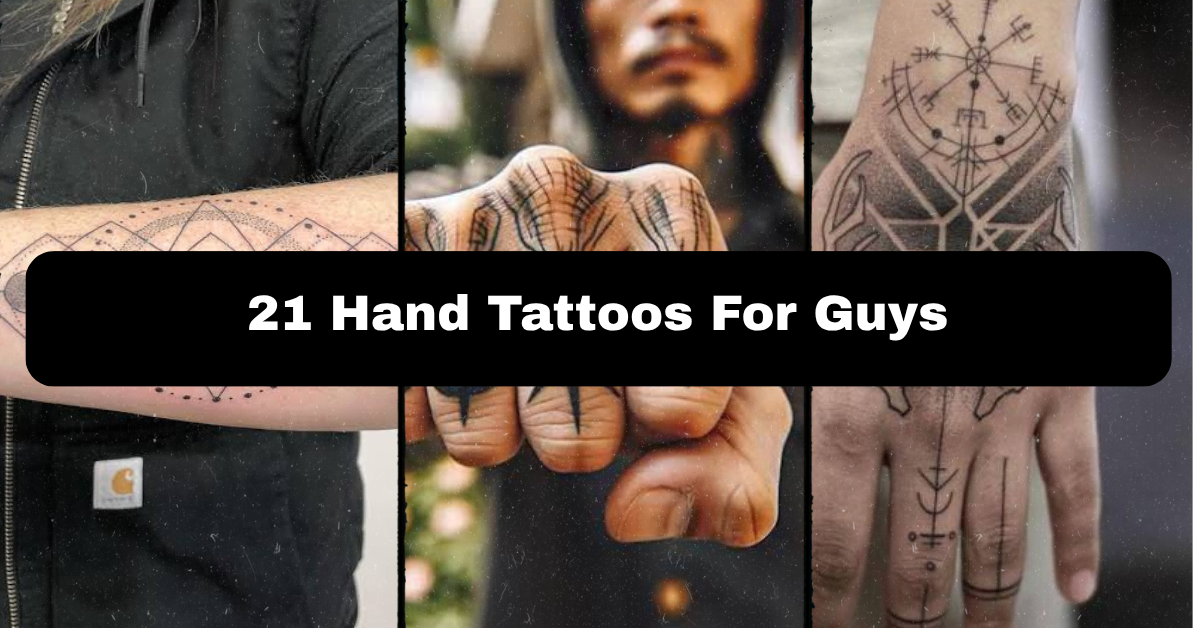
21 Hand Tattoos For Guys: A Complete Design and Placement Guide
Nervous about picking a hand tattoo you’ll second-guess in five years? You’re not alone, and honestly, that hesitation is smart. Hand tattoos are permanent in a way that other placements aren’t quite as visible about — they’re on display every single day, through every handshake, every meeting, every photo. This guide pulls from real studio conversations, current technique trends, and honest pain and healing information so you can walk into a consultation already knowing what to ask.
So what are the best hand tattoos for guys? Fine-line symbols, blackwork bands, and small dotwork patterns work best on hands because they hold detail on tricky skin, heal predictably, and read clearly at a glance. Simpler linework also ages better on hands than heavily shaded pieces, since hand skin turns over faster than most other body areas.
Beyond the 21 designs below, you’ll get real numbers on pain, healing time, cost ranges, and exactly how to brief an artist so you don’t end up with a blown-out, blurry version of what you actually wanted.
Why Hand Tattoos Are a Different Kind of Commitment
Hands aren’t like ribs or thighs. The skin here is thinner over the knuckles, thicker on the palm side, and it moves constantly — gripping, flexing, washing dishes, typing. That movement affects how ink settles and how designs age. It also means hand tattoos are one of the most visible placements a guy can choose, which cuts both ways: total self-expression, but also zero hiding for job interviews or family dinners if that matters to you. I’ve seen guys regret going too intricate here simply because the design turned to mush within two years. The designs below are picked specifically because they hold up on hand skin long-term, not just because they look sharp in a fresh photo.
Quick Definitions: Know Your Techniques Before You Book
- Fine line / single needle — Uses a single needle point to create thin, precise lines, often under 1mm wide. Reads as delicate and detailed but can fade faster on high-movement areas like hands.
- Bold traditional — Thick outlines (often 2–4 needles grouped together), flat bold color or solid black fill. Ages slower and stays legible longer because there’s more ink saturation per line.
- Blackwork — Solid black fill or heavy linework, sometimes covering large sections of skin. High contrast, graphic look.
- Dotwork — Shading and texture built from individual dots instead of solid lines, creating gradient effects without full color saturation.
Fine-Line Knuckle Symbols
Small symbols — arrows, triangles, single stars — done in fine line work sit cleanly across the knuckles. The thin, single-needle line keeps things subtle without looking like a stamp. Best kept under half an inch per knuckle since knuckle skin is tight and creases when you make a fist, which can distort bigger designs over time. Expect moderate-to-high discomfort here; knuckles have little fat padding, so the sensation is sharper than on fleshier spots. Healing typically runs two to three weeks, longer than most placements, because constant hand use disrupts the scabbing process. Bring a simple line drawing to your consultation, not a photo of someone else’s finished tattoo — it helps the artist adjust line weight for your specific skin. This works well as a first tattoo if you want something quiet but personal. Next, let’s look at a bolder take on the same finger real estate.
Blackwork Finger Bands
Solid black bands wrapped around one or more fingers, like graphic rings, use heavy ink saturation for a clean, bold statement. Unlike thin linework, the solid fill holds up better over years because there’s simply more ink deposited per square millimeter. Best placed on the base of the finger rather than over the knuckle joint, since joint movement causes more cracking and fading during healing. Pain sits on the higher end — fingers are bony with thin skin. Ask your artist about “solid fill” versus “outline only” so you both agree on saturation level before the needle touches skin. These read as intentional and graphic, great for guys who want visible ink without a literal picture. Workplace visibility is worth considering here since finger tattoos are hard to hide with anything but gloves. From bands, it’s a short jump to geometric patterns across a larger hand surface.
Dotwork Geometric Patterns on the Back of the Hand
The back of the hand offers more flat surface than fingers, making it ideal for dotwork geometric designs — think honeycomb patterns, sacred geometry, or layered triangles built from thousands of small dots instead of solid lines. This technique creates gradient and texture without heavy black saturation, so the design looks lighter and more textured than blackwork. Size can run larger here, two to three inches, since the back of the hand has more even skin than fingers. Pain is moderate; tendons are close to the surface, so some guys feel a buzzing sensation rather than sharp pain. Bring reference images showing dot density, not just the shape, so your artist knows how tight or loose you want the pattern. Great for a second or third tattoo once you know your pain tolerance. Let’s move from patterns to something more narrative.
Single-Needle Script Across the Fingers
Short words or a single word in fine, single-needle script across the fingers reads as intimate and personal. Because letters need clean edges to stay legible, this is one design where line weight consistency matters more than usual — inconsistent pressure during the tattoo session can make letters blur together within a year or two. Keep it to one short word per hand; anything longer gets cramped. Pain is sharp given how close the ink sits to bone. Ask specifically for a “fine line specialist” when booking, since script requires more precision than bold designs. This suits guys who want meaning without imagery. It’s also a common matching tattoo choice between close friends or siblings. Speaking of matching ink, let’s look at a design built for that exact purpose.
Negative Space Moon Phases
Negative space tattoos use the untouched skin itself as part of the design, letting black ink frame a shape rather than fill it. A row of moon phases along the side of the hand, where the thumb meets the wrist, uses this technique well — the phases appear as pale crescents surrounded by black background. This spot has decent padding, so pain runs low to moderate compared to knuckles. Size should stay compact, around one to two inches total, since too much negative space on a small area gets visually confusing. Ask your artist to sketch the design directly on your skin before tattooing so you can check the spacing looks right in real light. This design ages gracefully because the contrast stays sharp even as fine details soften. From lunar symbolism, let’s go bolder with a classic motif.
Bold Traditional Anchor
A small anchor done in bold traditional style — thick black outlines, minimal shading, maybe a single flat color — sits well on the back of the hand or along the side near the wrist. Thick lines resist the blurring that thinner designs suffer from as hand skin ages and stretches. Keep it under two inches for hand placement; anchors get busy fast with rope detail if sized too small. Pain is moderate on the back of the hand, sharper near the wrist bone. This is a solid pick for guys wanting something classic and masculine without heavy symbolism attached. It also photographs well for those who care about how a tattoo looks in casual shots. Let’s shift to something more minimal.
Minimalist Line Compass
A simple compass outline, built from clean geometric linework with no shading, works nicely on the side of the hand or wrist-to-hand transition zone. The minimal design keeps ink volume low, which some guys prefer for a first tattoo since it’s a smaller time and cost commitment. Stick to one and a half to two inches so the compass points stay distinct. Pain is low to moderate depending on exact placement. Bring a printed reference with exact proportions, since compass designs get lopsided easily if drawn freehand without a guide. This works fine in most workplaces since it reads as understated rather than aggressive. Now for something with more cultural weight.
Blackwork Tribal-Inspired Wrist-to-Hand Band
A continuous blackwork band that starts at the wrist and tapers onto the hand creates a strong visual flow line. Solid black saturation means this design has excellent longevity, resisting fade better than lighter work. Because it crosses a joint, expect a longer healing window — three weeks isn’t unusual — since the wrist bends constantly. Pain is higher near the wrist bone itself. Ask your artist about session length; a piece this size sometimes needs two sittings if you want crisp edges throughout. This isn’t ideal for conservative workplaces given the visibility, but it’s a strong choice for guys who want one continuous statement rather than several small ones.
Fine-Line Rose Between Thumb and Index
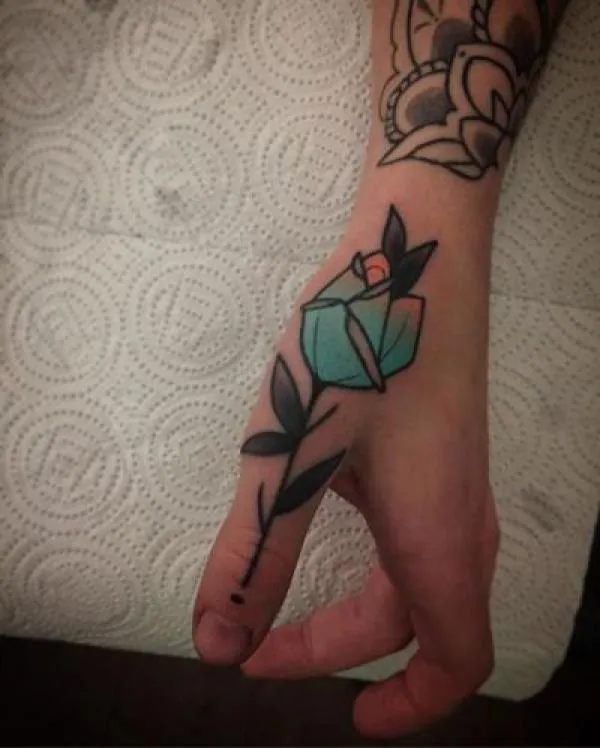
The webbing between thumb and index finger is thin-skinned and highly mobile, making it one of the more painful hand spots — worth knowing upfront. A small fine-line rose here, kept under an inch, uses delicate outline work with little to no shading since heavy shading tends to blotch in this particular skin. Healing takes close to three weeks because this area flexes with every grip. Ask for thinner needle groupings specifically for this placement. This spot suits guys who want something meaningful but don’t mind the visibility trade-off of a very public tattoo location.
Dotwork Mandala on the Back of the Hand
A circular mandala built through dotwork shading spreads detailed texture across the back of the hand without solid black fill weighing down the design. Because dots create gradient rather than flat color, the design can include subtle depth that flat linework can’t achieve. Size around two to three inches works best for keeping pattern detail legible. Moderate pain, longer tattooing session due to dot density. Bring your artist a clear front-facing photo of your hand so they can plan symmetry around your actual proportions, not a generic template.
Single-Needle Star Constellation Across Knuckles
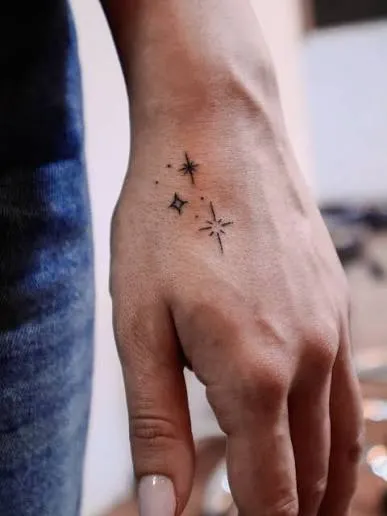
Small dots and thin connecting lines mimicking a constellation pattern across the knuckles create a subtle, scattered design rather than one solid image. Keep individual stars small, a few millimeters each, so the overall pattern doesn’t feel cluttered on such a narrow canvas. Sharp pain expected on bony knuckle surfaces. This design works well as a low-commitment first hand tattoo since total ink coverage is minimal.
Bold Traditional Skull
A compact skull done in traditional style with thick black outlines and minimal color fits the back of the hand nicely, staying legible for years thanks to strong line saturation. Keep it around two inches; too small and detail collapses into a blob over time. Moderate to high pain on this surface. This design carries more visual weight, so it’s worth considering workplace norms before booking.
Negative Space Wave Pattern
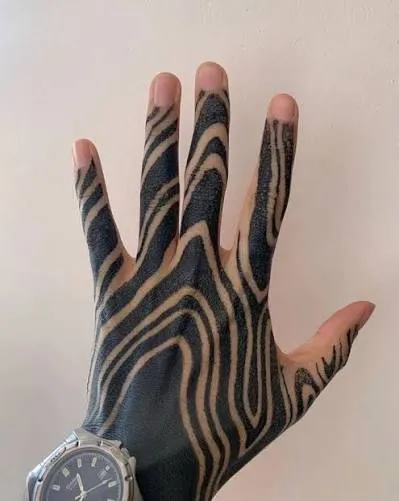
Ocean waves rendered through negative space along the side of the hand use black background with pale wave shapes cut through it. This suits guys who like nature imagery without literal, detailed waves. Moderate pain, healing around two weeks. Ask your artist to show a digital mockup first since negative space designs are easy to misjudge on paper alone.
Fine-Line Arrow Across the Fingers
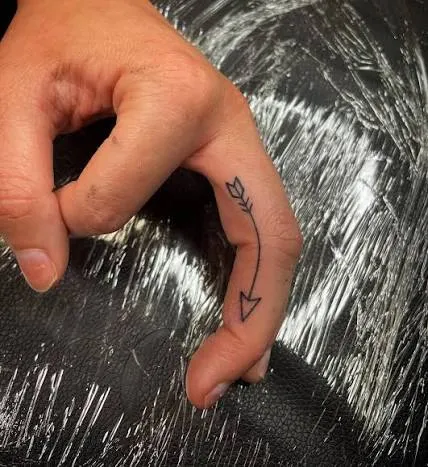
A single thin arrow stretched across two or three fingers reads as directional and simple. Low ink volume keeps cost and pain lower than most hand designs, though finger skin is still sensitive. This is a common matching tattoo pick for brothers or close friends wanting something symbolic but not overly detailed.
Blackwork Solid Shapes on a Single Finger

A solid black triangle or diamond on one finger, done in heavy blackwork saturation, holds up far better over time than thin outlines in the same spot. High pain due to bone proximity. Great minimalist option for guys wanting graphic ink without any real imagery.
Small Religious Symbol on Finger
A small cross or similar symbol in fine line or light blackwork fits neatly on a single finger. Because meaning matters more than intricate detail here, simple bold shapes hold their clarity longer than delicate designs in this exact spot.
Fine-Line Animal Silhouette
A wolf or lion silhouette in fine line, kept to simple outline with no fur texture shading, sits well on the back of the hand. Detailed shading tends to blur here over time, so simplicity is the smarter long-term choice.
Dotwork Sleeve Transition Into the Hand
For guys with existing forearm work, a dotwork gradient that fades from the wrist onto the back of the hand creates a smooth visual bridge rather than an abrupt stop. This requires an experienced blackwork or dotwork specialist to blend properly.
Script Quote Along the Side of the Hand
A short quote in single-needle script along the side of the hand, kept to just a few words, works as a personal statement piece. Longer phrases get cramped and illegible within a few years as skin texture changes slightly with age.
Minimalist Lightning Bolt on Finger
A tiny lightning bolt on a single finger in bold linework is quick, low-cost, and low-commitment — a solid starter tattoo for someone unsure about bigger hand work down the road.
Custom Initials or Roman Numerals on Knuckles
Personal initials or a meaningful date in Roman numerals across the knuckles, done in clean bold linework rather than thin script, holds legibility longer since thicker lines resist the blurring that fine numerals suffer from on this high-movement surface.
Best Placement Ideas
- Back of the hand — high visibility, moderate pain, best for larger geometric or blackwork designs
- Fingers/knuckles — highest pain, hardest to hide, best for small bold symbols
- Side of the hand (thumb to wrist) — moderate pain, good for negative space and script
- Web between thumb and index — most painful due to thin, mobile skin, best kept very small
Tips for Success
Look for an artist whose portfolio shows healed photos, not just fresh ink — healed work tells you how their linework actually holds up. Ask directly whether they specialize in fine line, blackwork, or dotwork, since hand skin punishes designs done outside an artist’s core strength. Bring reference images, but also be open to their adjustments; a good artist will often simplify a design specifically because it’s going on the hand. Walk-in flash designs work fine for simple symbols, but anything custom or detailed deserves a proper consultation and drawn stencil first.
Common Mistakes and How to Avoid Them
- Sizing detailed designs too small, causing them to blur into an unreadable smudge within a couple years
- Choosing delicate fine-line work for high-movement joints like knuckles instead of bolder linework
- Skipping the aftercare instructions because “it’s just a small tattoo”
- Copying a design exactly from social media instead of adjusting proportions to fit your actual hand shape and size
Similar Variations
Most of these designs scale up or down easily — a fine-line rose can shrink to fit a finger or expand across the back of the hand. Blackwork pieces can incorporate small color accents for guys wanting a bit more visual pop. Dotwork and negative space techniques combine well, letting an artist build shading around an untouched central shape for extra depth.
Aftercare Basics
Hand tattoos need extra attention simply because hands touch everything all day. General consensus among tattoo artists and dermatologists points to washing gently with mild soap, avoiding soaking the area, and applying a thin layer of the aftercare product your artist recommends. Avoid excessive hand-washing chemicals and heavy gripping activities during the first couple weeks. Always follow the specific aftercare sheet your artist gives you, and check in with them or a dermatologist if you notice anything that seems off during healing.
Quick FAQ
How much do hand tattoos cost? Small finger or knuckle designs often start around $60–$150, while larger back-of-hand pieces can run $200–$500 or more depending on detail and the artist’s hourly rate.
Do hand tattoos hurt more than other placements? Generally yes — thin skin and close bone contact make most hand spots more sensitive than fleshier areas like the outer arm or thigh, though pain tolerance varies by individual.
How long do hand tattoos take to heal? Most take two to three weeks for surface healing, though full settling can take longer since hands are used constantly.
Do hand tattoos fade faster? Frequent sun exposure, washing, and skin movement can cause more visible fading or blurring over time compared to less-used areas, which is why bold, simple designs tend to age better here.
Hand tattoos for guys offer some of the boldest, most personal ink options out there, but they demand honest thinking about pain, visibility, and long-term aging before you sit in the chair. Pick a design that matches how hand skin actually behaves — bolder lines, simpler shapes, realistic sizing — and talk through placement and technique with a licensed, experienced artist before booking anything permanent.