24 Feminine Floral Shoulder Tattoo Ideas That Actually Hold Up on Skin
Thinking about a feminine floral shoulder tattoo but not sure which style will still look sharp in ten years? You’re not alone, and you’re asking the right question before you sit in the chair.
So what makes a feminine floral shoulder tattoo work long-term? Fine-line botanical designs, dotwork florals, and blackwork petals placed along the shoulder cap or blade heal cleanly and age well because the shoulder’s flatter skin holds detail better than curved or bony spots. Size, saturation, and artist skill matter just as much as the flower you pick.
Below, I’ll walk through 24 specific design directions, plus the placement tradeoffs, pain expectations, healing timeline, and artist-briefing tips that most design roundups skip entirely.
Why the Shoulder Works So Well for Floral Tattoos
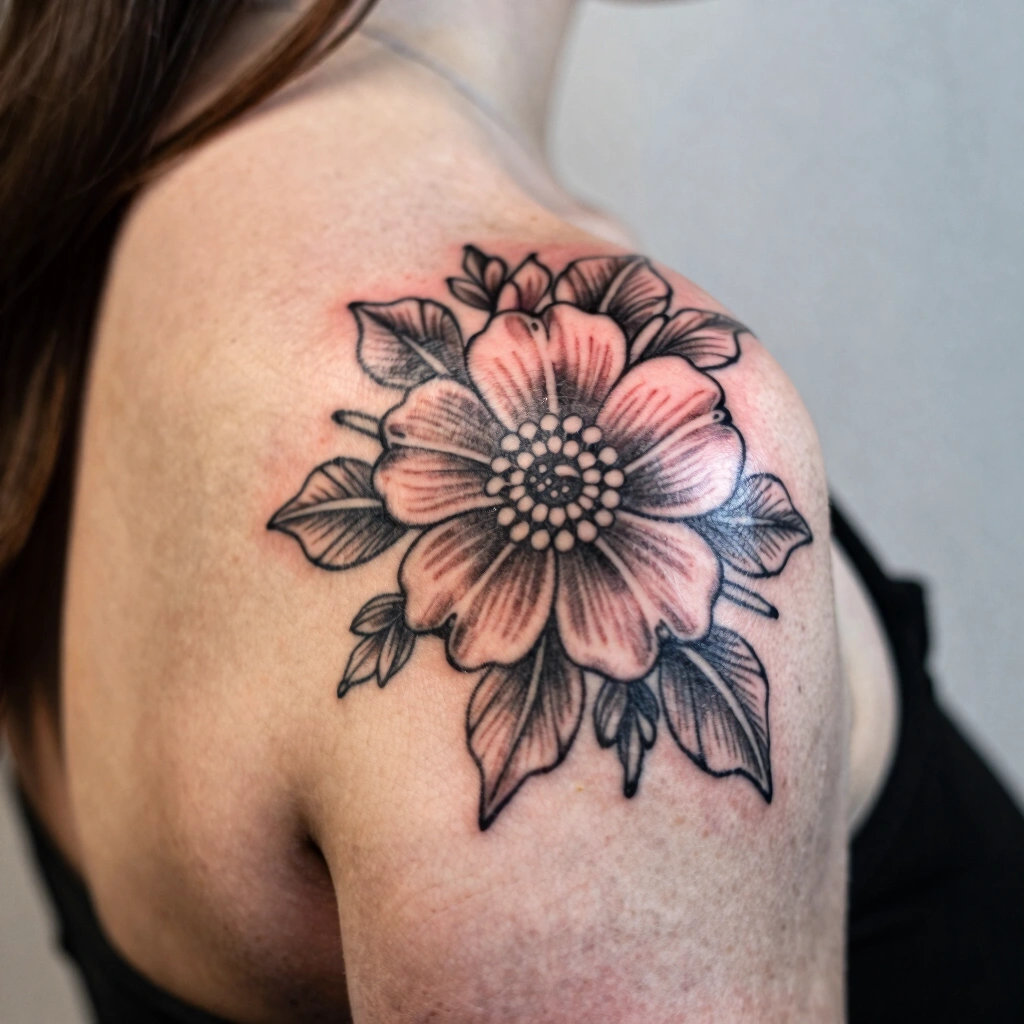
The shoulder is one of the most forgiving canvases in tattooing. It’s got a decent amount of flat, low-movement skin, which means linework stays crisp instead of warping the way it can on joints like the wrist or ankle. It’s also easy to cover for work and easy to show off for everything else — that flexibility is a big reason floral shoulder pieces stay popular year after year. Whether you want a small sprig near your collarbone or a wraparound piece that stretches toward your back, the shoulder gives an artist room to work with scale, shading, and negative space (the untattooed skin left intentionally blank to create shape and contrast) without fighting the body’s natural curves too hard.
1. Fine-Line Single Rose Shoulder Tattoo
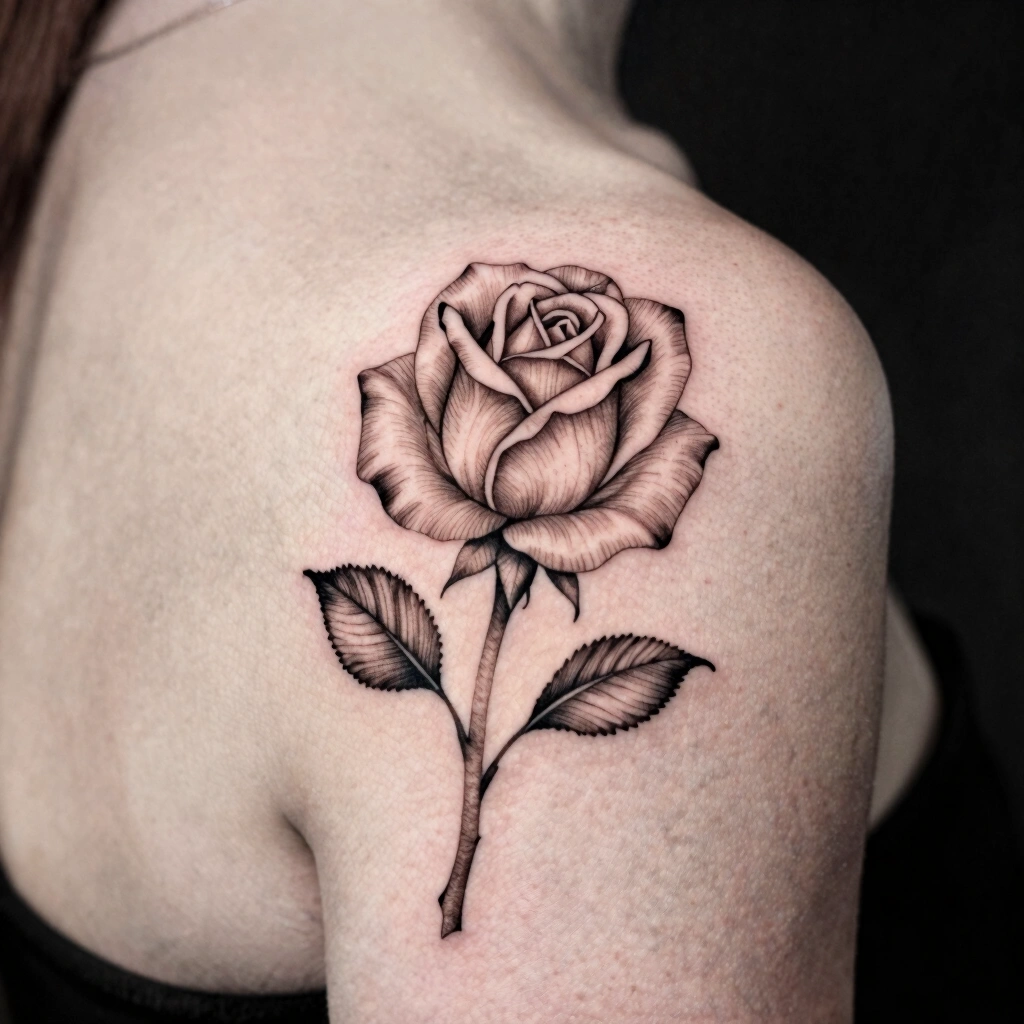
A single rose done in fine line — meaning thin, consistent needle strokes with little to no shading — sits beautifully on the front or top of the shoulder. Artists typically keep the line weight under 0.3mm for that delicate look, with maybe light stippling for depth instead of heavy shadow. At 2–3 inches, it holds detail without blurring as it ages. Skin with visible texture or a lot of sun exposure can cause fine lines to soften faster, so ask your artist about touch-up expectations upfront. Pain here is moderate — the shoulder cap has decent muscle padding, though closer to the collarbone gets sharper. Healing runs 2–3 weeks. It’s a solid first-tattoo choice since it’s low-commitment and easy to hide under a t-shirt sleeve. From here, let’s look at a bolder petal option.
2. Blackwork Peony Cap Tattoo
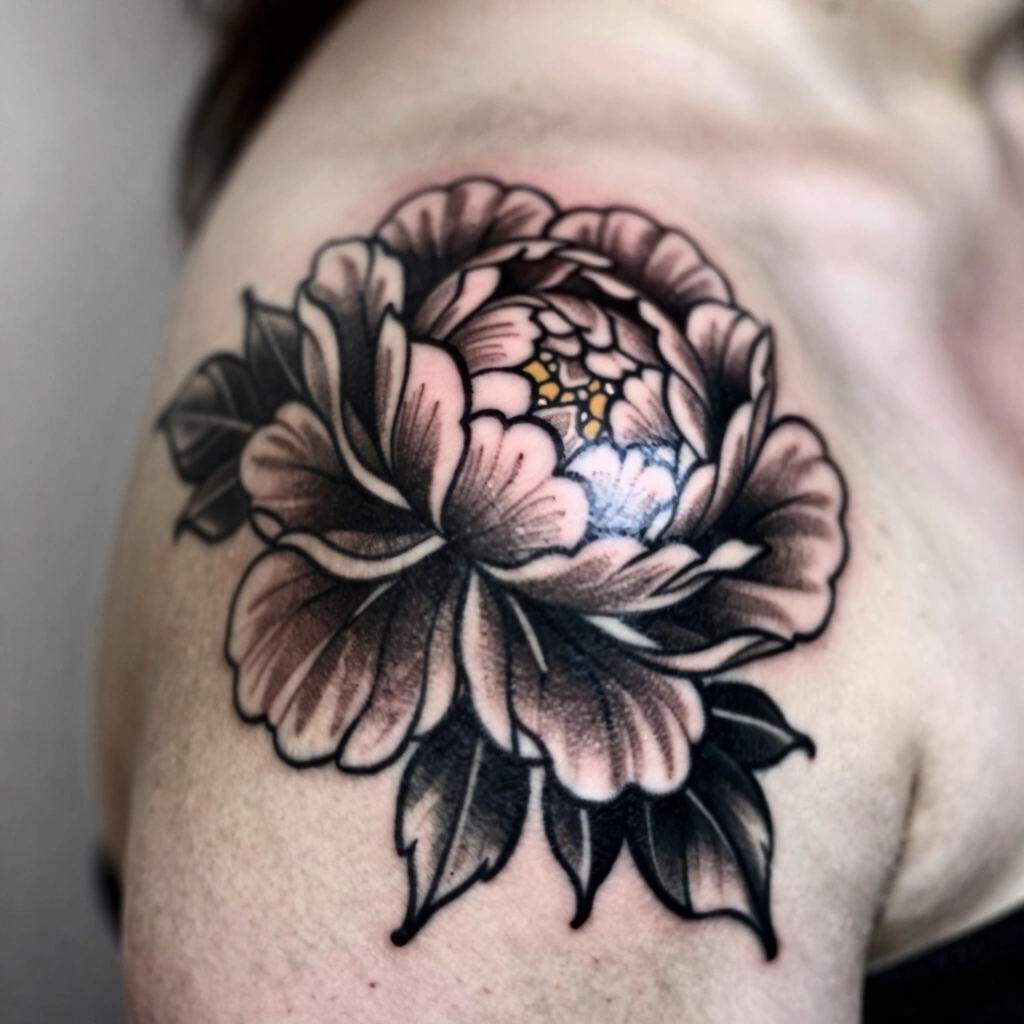
Blackwork uses solid black ink and heavier saturation to build shape, and a peony rendered this way on the shoulder cap becomes a real statement piece. Petals are layered with bold outlines and filled sections, sometimes leaving small negative-space gaps between petals for dimension. This style needs more surface area — think 4–5 inches — to keep the layered petals from muddying together. Pain tends to run higher than fine line because of the extended shading time, though the shoulder itself is still a mid-tolerance zone. Healing takes 3–4 weeks since saturated black holds more ink. Bring a clear reference photo showing petal layering, not just a generic peony image, so your artist can plan the flow around your shoulder’s curve. This design reads well from a distance, making it great for anyone who wants visible symbolism rather than something subtle.
3. Dotwork Wildflower Bouquet
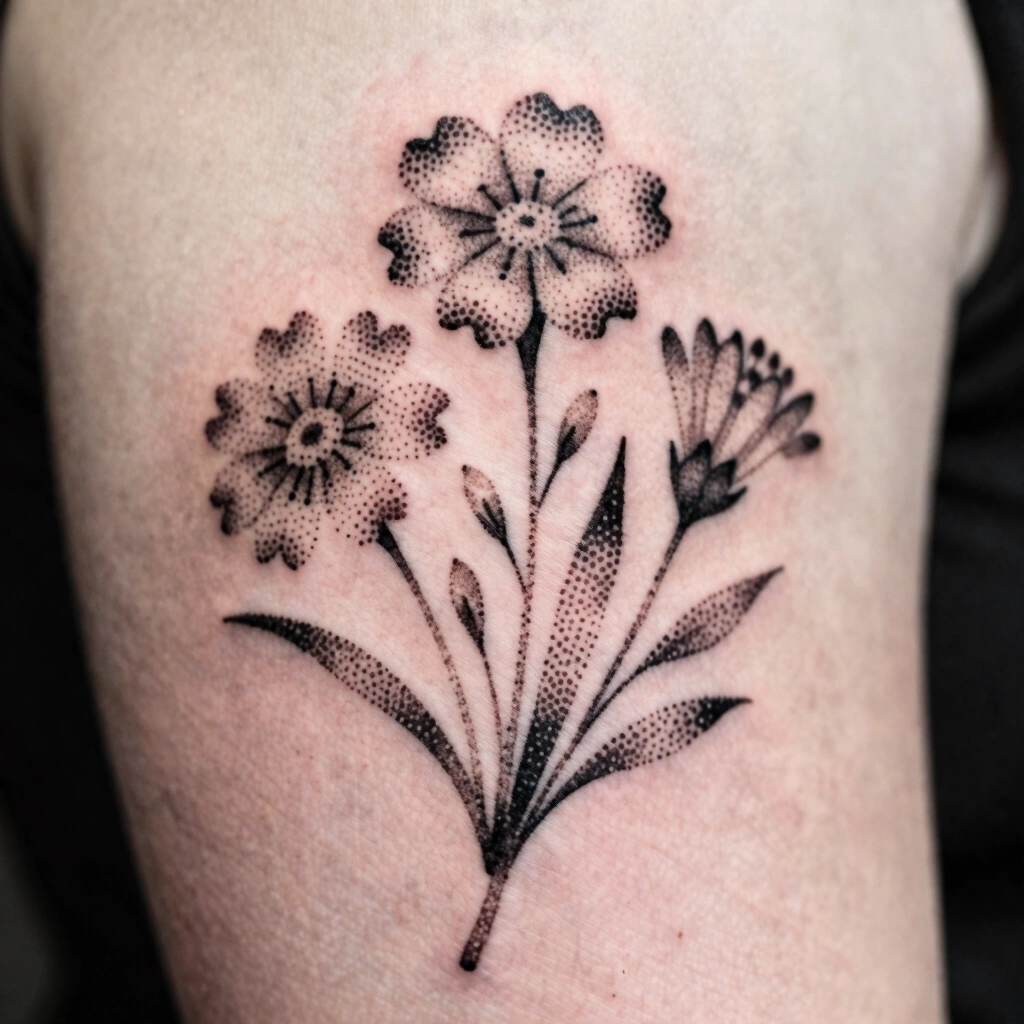
Dotwork builds an image from thousands of small dots instead of solid lines, creating a soft, almost textured look rather than a hard outline. A wildflower bouquet in this style feels organic and painterly, with varying dot density used to fake shading and depth. This works especially well on the upper shoulder blade where there’s enough flat space to let the gradient breathe — aim for at least 3 inches of width. Dotwork is time-intensive, so sessions run longer and the sensation is a steady, repetitive pressure rather than sharp pain. Healing is similar to blackwork, around 3 weeks. Ask your artist whether they use a single needle or a small cluster for dot placement, since that affects texture. This design ages gracefully because the dot gradient fades evenly rather than leaving a hard-edged blob. Next, let’s soften things with color.
4. Watercolor Cherry Blossom Wash
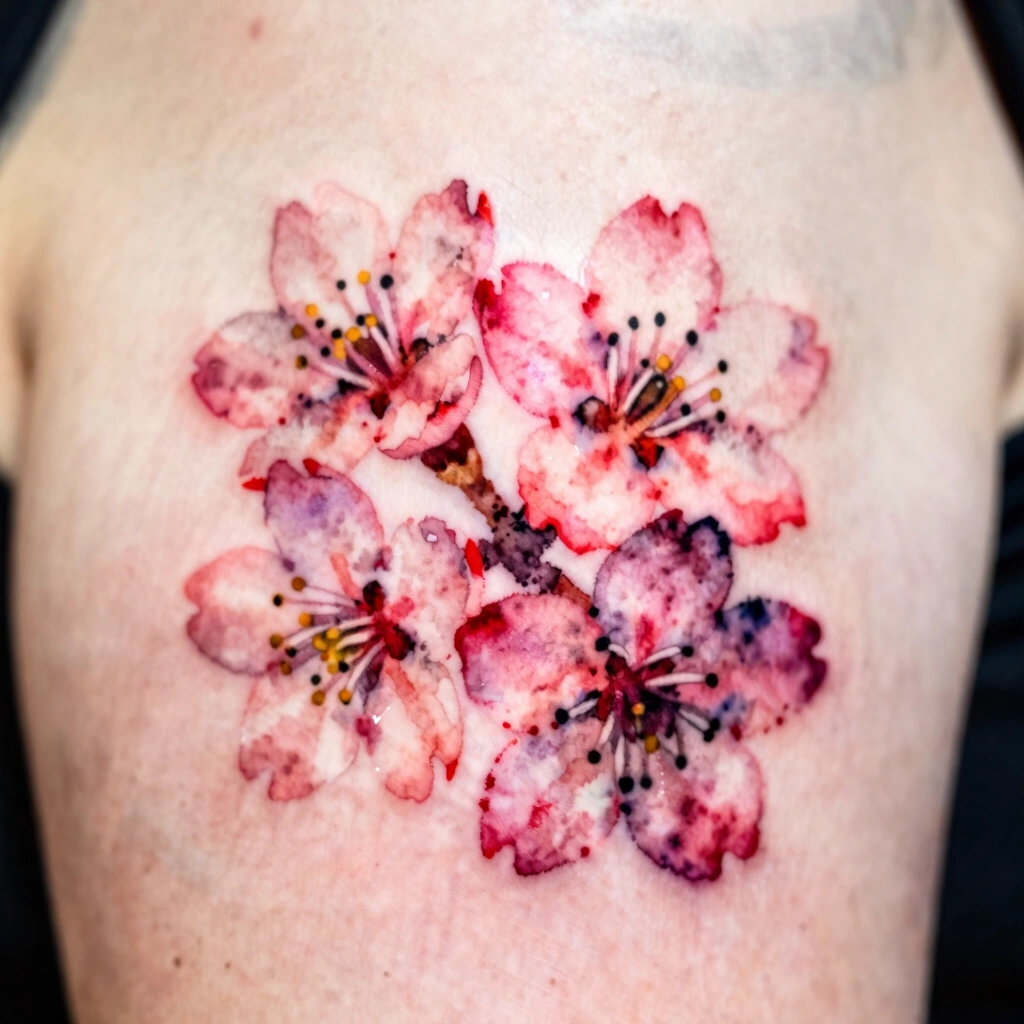
Watercolor tattoos mimic the loose, bleeding look of actual watercolor paint using soft color washes with little to no black outline. Cherry blossoms suit this style since their pale pink and white tones translate into gentle gradients rather than bold blocks of color. Place this on the outer shoulder where a slight color spread won’t compete with other design lines. Because there’s minimal linework holding the color in place, watercolor pieces are more prone to noticeable fading over the years — something a licensed artist should walk you through honestly before you book. Pain is on par with standard shoulder tattoos. Healing runs 2–3 weeks. If you want this look but with more longevity, ask about a hybrid approach that adds thin linework borders around the color washes.
5. Negative Space Lotus Design

Negative space designs use the untattooed skin itself as part of the image, letting the natural skin tone form petals or outlines instead of ink. A lotus done this way often has a solid black background with the flower “carved out” in blank skin, or vice versa — thin linework petals surrounding a solid dark center. This technique reads most clearly on lighter, evenly-toned skin, since contrast is the whole point; darker or more textured skin may need adjusted shading ratios, which a good artist will discuss with you directly. Size should stay above 3 inches so the negative shapes don’t close in on themselves. Pain and healing match standard blackwork. This design suits people who want something visually striking but not overly busy — it photographs well and ages slowly since the black sections hold ink density longer.
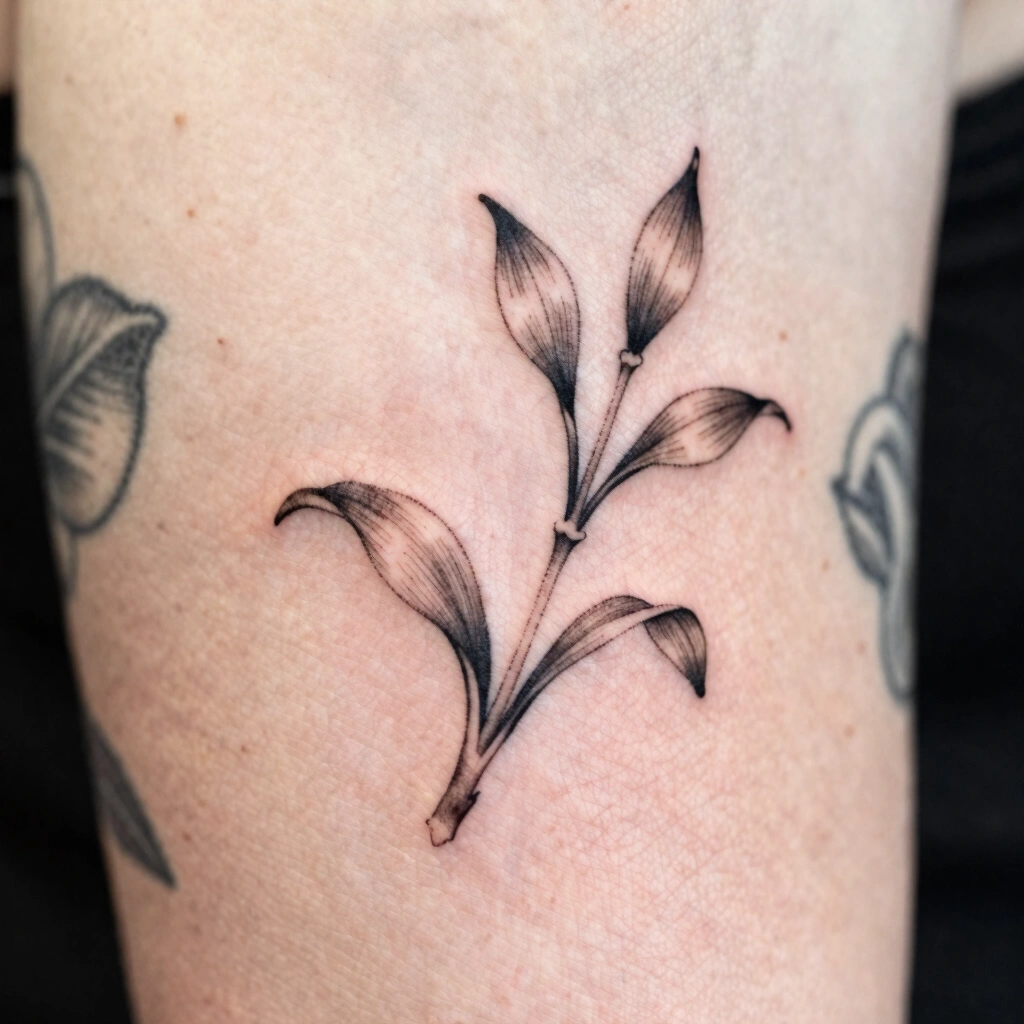
6. Botanical Line Art Fern and Flower
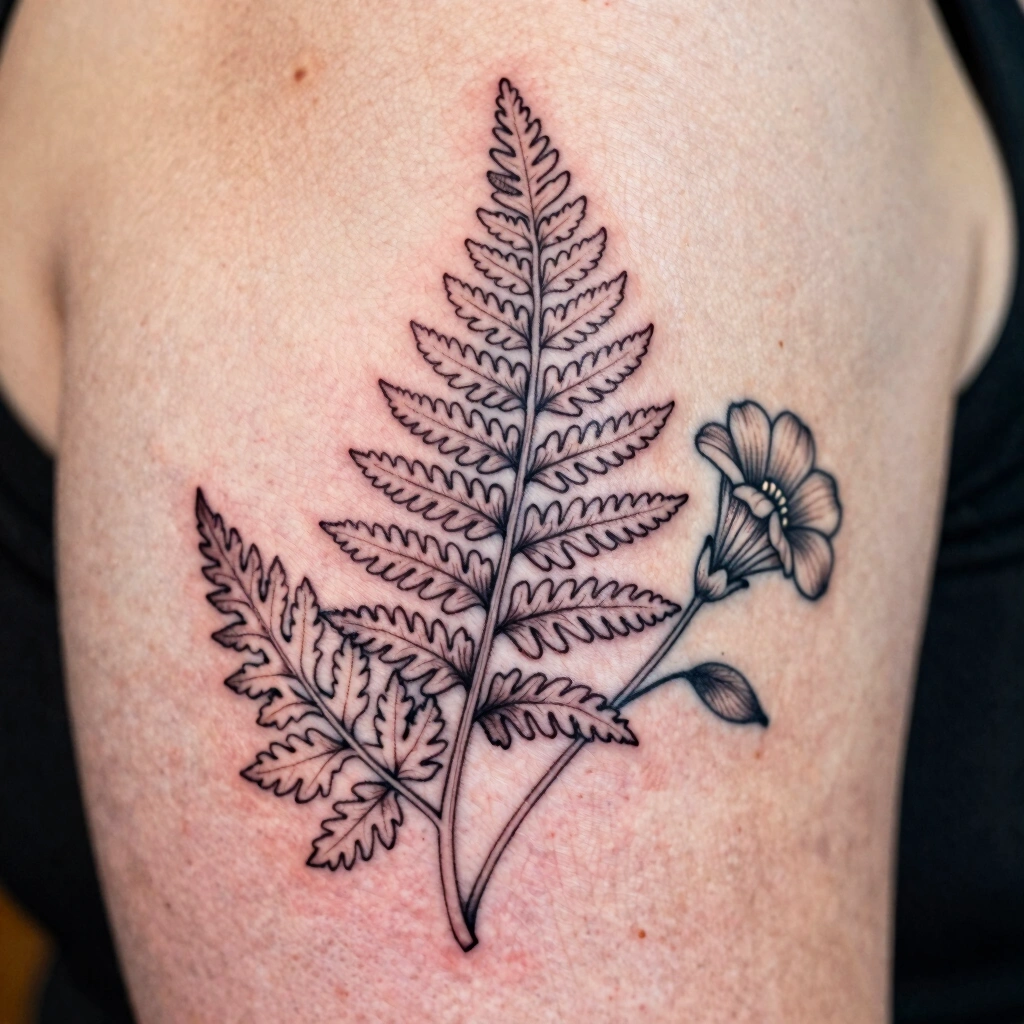
Botanical illustration style borrows from vintage science textbook drawings — thin, precise linework with accurate leaf veins and petal structure instead of stylized shapes. A fern paired with a small flower cluster looks especially natural running along the curve of the shoulder toward the upper arm. Keep line weight consistent (ask for 0.25–0.35mm) so the botanical detail doesn’t blur over time. This design works at almost any size, from a 2-inch accent to a 6-inch statement piece. Pain is moderate on the shoulder cap, milder if placed higher near the trapezius muscle. Bring reference images of real plant anatomy, not just Pinterest tattoos, so your artist can trace accurate structure. This style ages exceptionally well because the thin, precise lines were designed to mimic printed illustrations, which tend to hold clarity longer than loosely sketched linework.
7. Trailing Vine Shoulder-to-Collarbone Tattoo
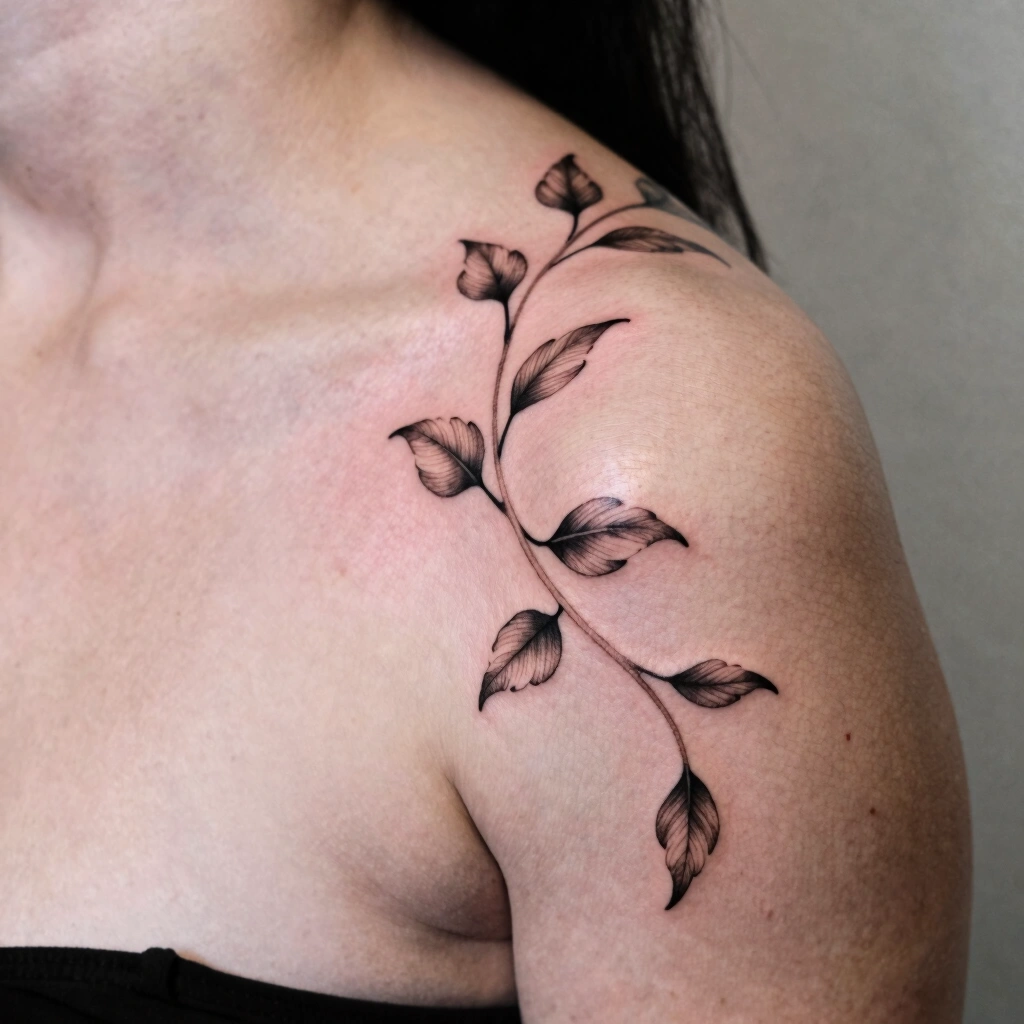
A trailing vine tattoo follows the body’s natural lines, stretching from the top of the shoulder toward the collarbone with small leaves or flower buds branching off along the way. This composition uses the shoulder’s curve as a guide, which is why it looks so fluid compared to a static, boxed-in design. Line weight is usually kept thin and uniform, with occasional small dotwork clusters for texture. Because it crosses a visible area, this placement affects workplace coverage more than a purely upper-shoulder piece — worth considering if your job has a dress code. Pain increases slightly near the collarbone since there’s less muscle padding there. Healing takes about 2–3 weeks. This design is popular for people wanting a “flowing” feel rather than a contained bouquet shape.
8. Bold Traditional Sunflower Tattoo
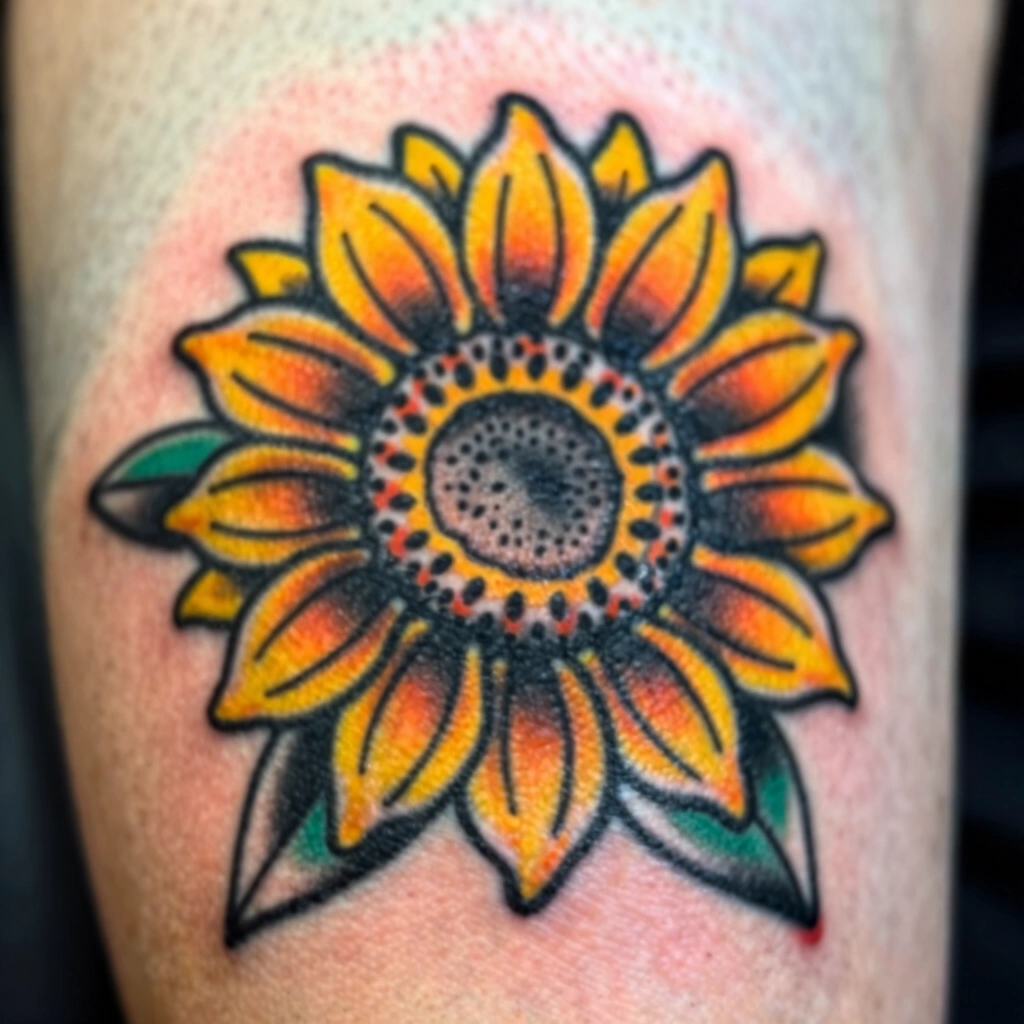
Traditional tattoo style uses thick, bold outlines, limited but saturated color, and minimal fine detail — it’s built to stay legible even decades later, which is exactly why old-school tattoo shops leaned on it. A sunflower in this style pops with deep yellow petals and a solid black outline that holds up better over time than thin linework in high-movement areas. The shoulder cap suits this well at 3–4 inches. Pain is moderate; the thick outlining phase can feel more like steady pressure than sharp pain. Healing runs 3 weeks. Ask your artist about color saturation levels during your consult, since traditional-style yellow can shift subtly warmer as it settles. This design is a strong pick if you want something that reads clearly from across a room and doesn’t rely on fine detail to look finished.
9. Single Needle Daisy Cluster
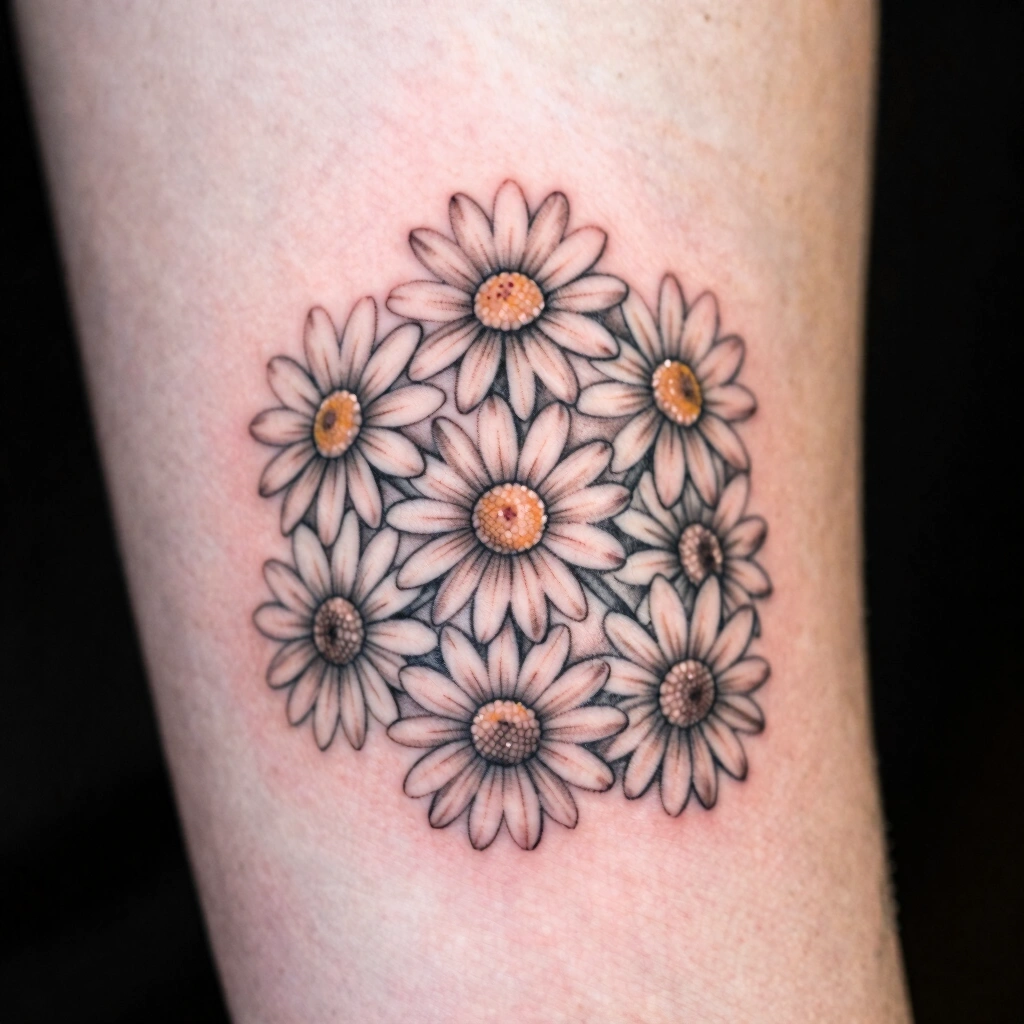
Single needle tattooing uses one fine needle to create extremely thin, delicate lines — thinner than most standard fine-line work — which makes it popular for small, detailed florals like a daisy cluster. Three to five small daisies grouped near the top of the shoulder create a soft, understated look perfect for someone who doesn’t want a large piece. Because the lines are so thin, this style is more prone to fading and blurring over the years, especially on skin that sees regular sun exposure. A dermatologist-recommended SPF routine over healed tattoos can help slow that fading, though nothing prevents it entirely. Pain is generally mild to moderate. Healing takes about 2 weeks. This is a great low-commitment option for a first tattoo or an addition to an existing shoulder piece.
10. Wraparound Floral Shoulder Cap
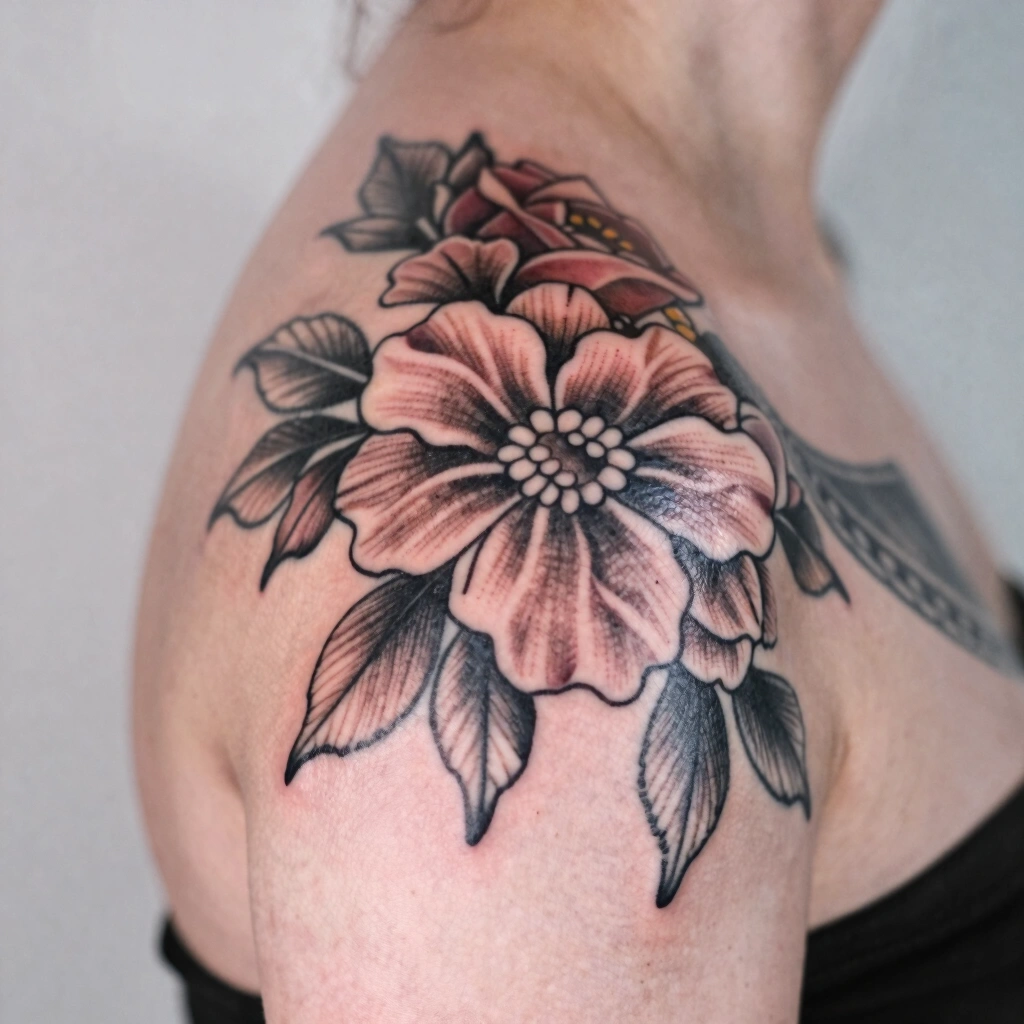
A wraparound shoulder cap design covers the curve of the shoulder almost like a sleeve starting point, blending several flowers — often a mix of roses, leaves, and smaller filler blooms — into one continuous composition. This requires real planning around the body’s contour, so a custom design mapped directly onto your skin (rather than a flat stencil) tends to look more natural than a design built without your shoulder in mind. Expect at least one longer session given the size, typically 4+ inches of coverage. Pain builds as the session goes on, especially near the armpit edge where skin is thinner. Healing takes 3–4 weeks. This piece works well for someone ready to commit to a bigger, more visible design rather than something easily hidden.
11. Minimalist Wildflower Sprig
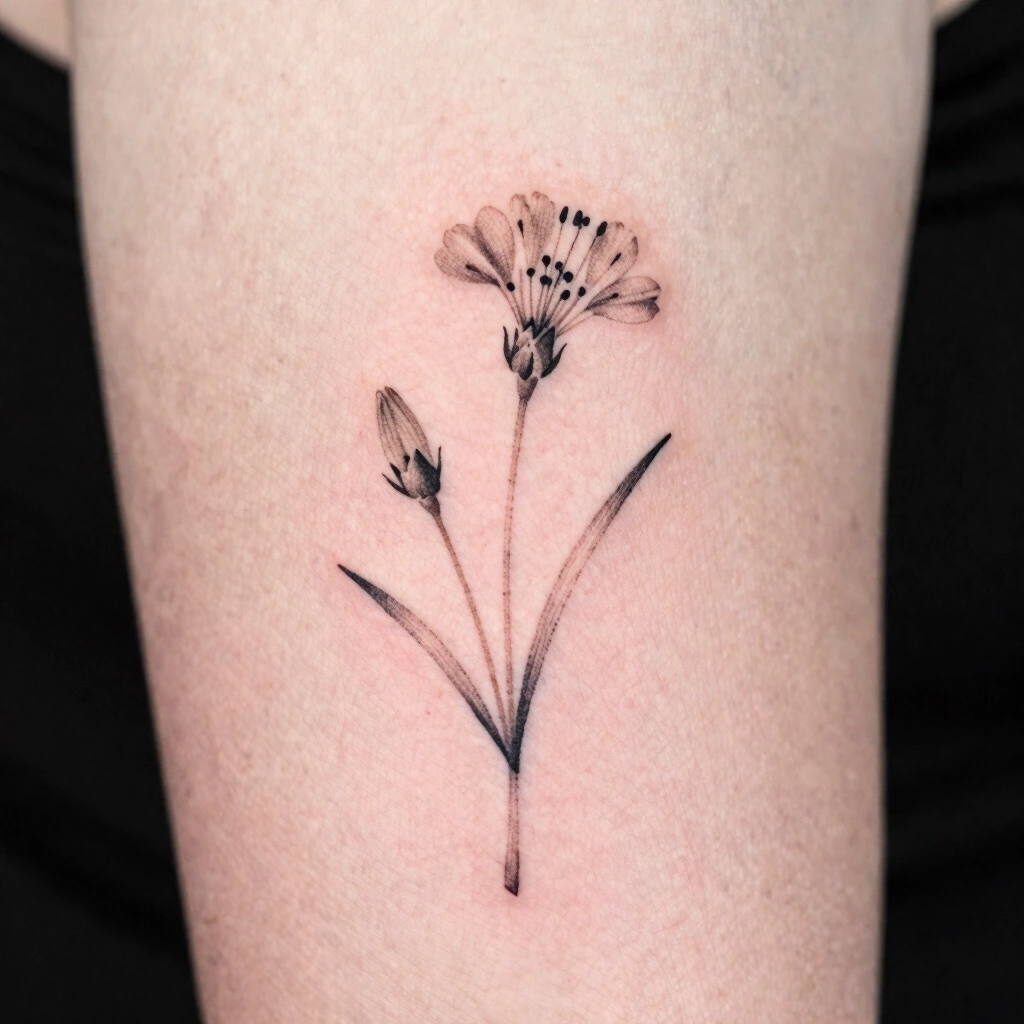
Minimalist tattoos strip a design down to its simplest recognizable form — a few clean lines, no shading, no filler. A single wildflower sprig at 1–2 inches near the front of the shoulder captures this well. Because there’s so little linework, any shakiness or blurring becomes more noticeable over time, so it’s worth confirming your artist has strong fine-line experience before booking. Pain is generally low given the short session length. Healing wraps up in about 2 weeks. This is one of the easiest designs to size down further for a matching tattoo with a friend or sibling. It also works well stacked with other small pieces later if you want to build out your shoulder gradually instead of committing to one large design right away.
12. Sacred Geometry Floral Mandala
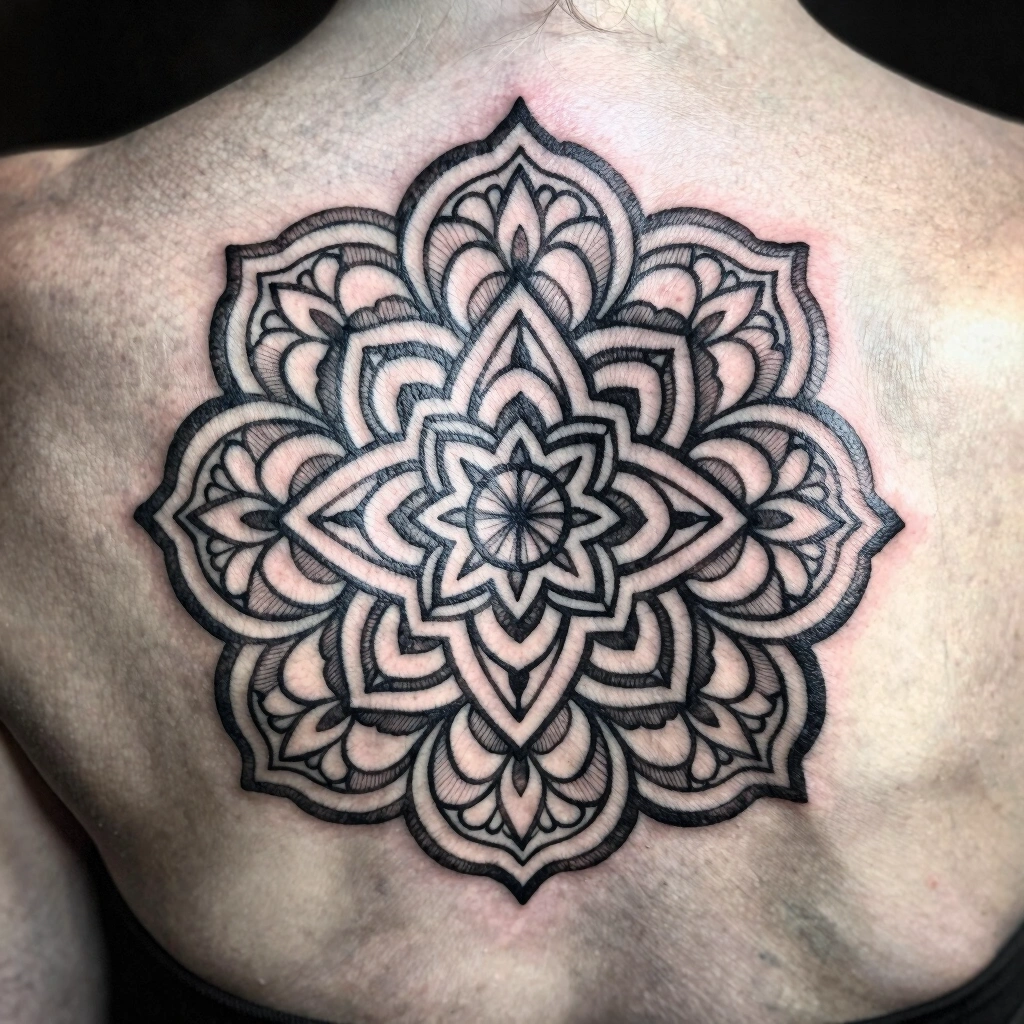
Combining floral elements with sacred geometry — symmetrical, pattern-based shapes like mandalas — creates a design that’s part botanical, part structured art piece. Fine lines form the geometric framework while small flowers fill in specific sections. This needs precise stencil work, since even slight asymmetry is obvious in a symmetrical design. The shoulder cap’s relatively flat surface makes it one of the better spots for this level of precision. Size should stay at 3 inches or larger so the pattern doesn’t crowd itself into illegibility. Pain is moderate to high given the longer, detailed session. Healing takes about 3 weeks. Bring a printed reference with exact proportions you like, since verbal descriptions alone rarely capture geometric balance the way a visual does.
13. Chrysanthemum Blackwork Shoulder Piece
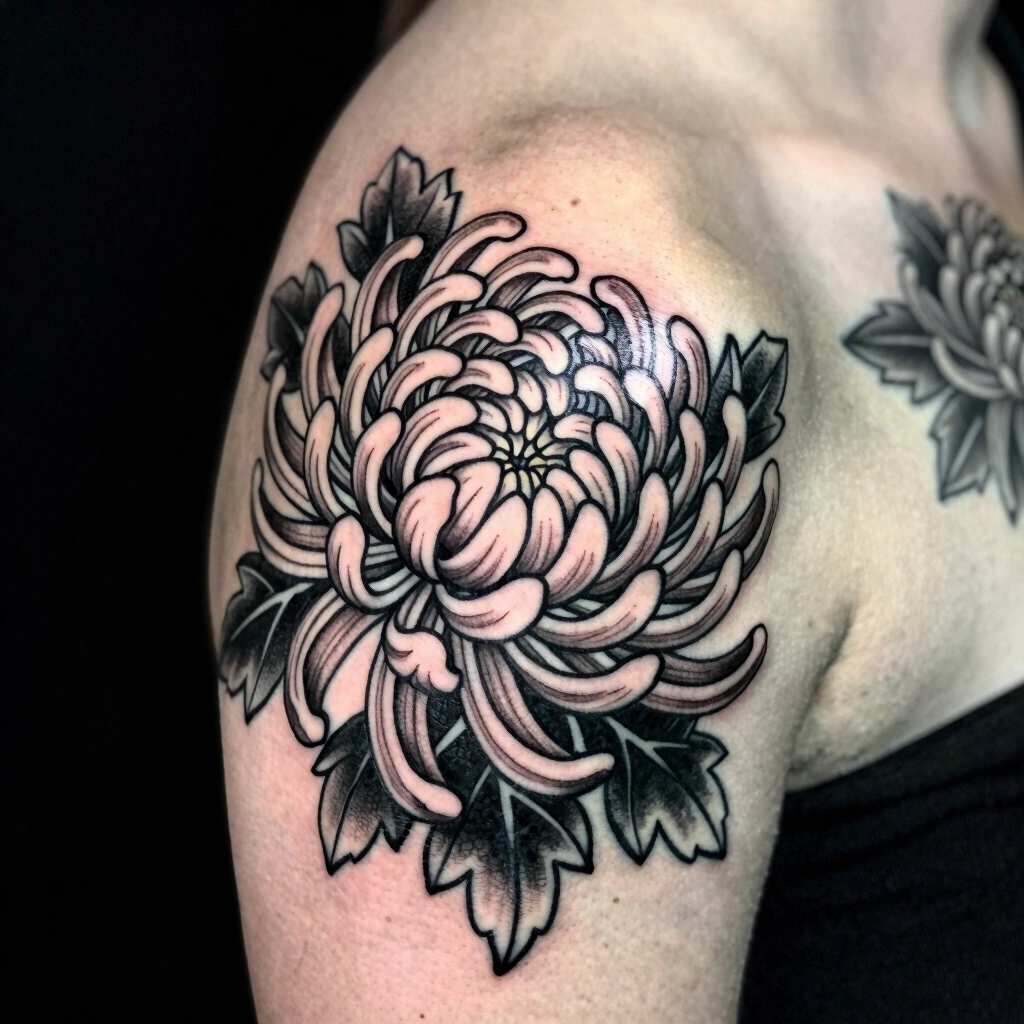
Chrysanthemums have a lot of thin, layered petals, which makes them a strong candidate for blackwork’s bold, high-contrast style. Artists typically use varying line thickness — thicker on outer petals, thinner toward the center — to create a sense of depth without needing color. This piece looks best at 3–5 inches on the shoulder blade or cap, where there’s enough room for the petal layering to read clearly instead of blending into a dark blob. Pain runs moderate to high due to the shading density. Healing takes 3–4 weeks, and touch-ups are more common with heavily saturated blackwork than with simple linework. This design suits people who want strong visual weight and don’t mind a longer healing process in exchange for a piece that holds its structure for years.
14. Fine-Line Orchid with Shading
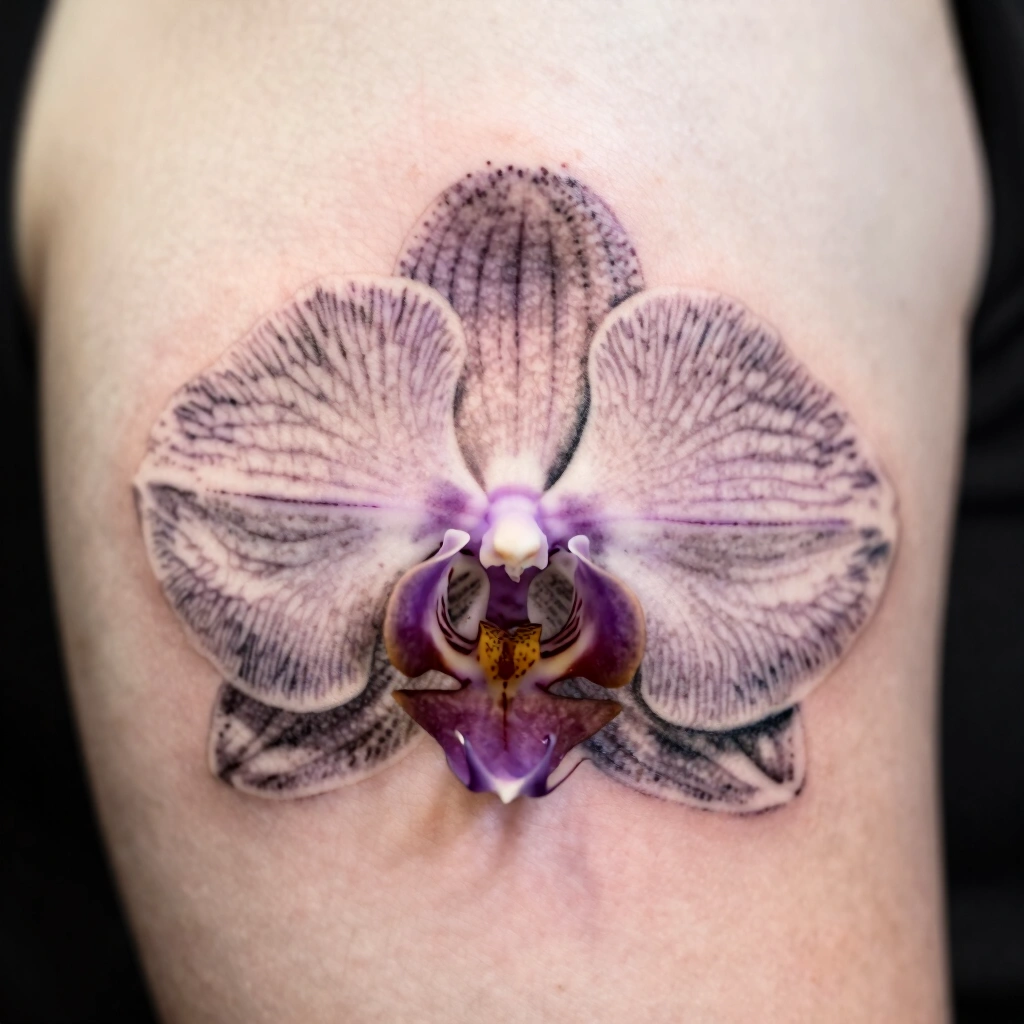
An orchid rendered in fine line with light gray-wash shading (a soft, diluted black ink used for subtle shadow instead of solid black or color) captures the flower’s delicate, layered petals without looking flat. This works well at 3 inches on the upper shoulder, where the skin stays relatively still and won’t distort the shading pattern. Because gray-wash relies on ink dilution, it can fade faster than solid black linework, so ask your artist about realistic touch-up timelines — often within 1–2 years depending on skin and sun exposure. Pain is moderate. Healing takes about 2–3 weeks. This design suits someone who wants more visual depth than a flat line drawing but isn’t ready for full color or heavy blackwork saturation.
15. Baby’s Breath Scatter Tattoo
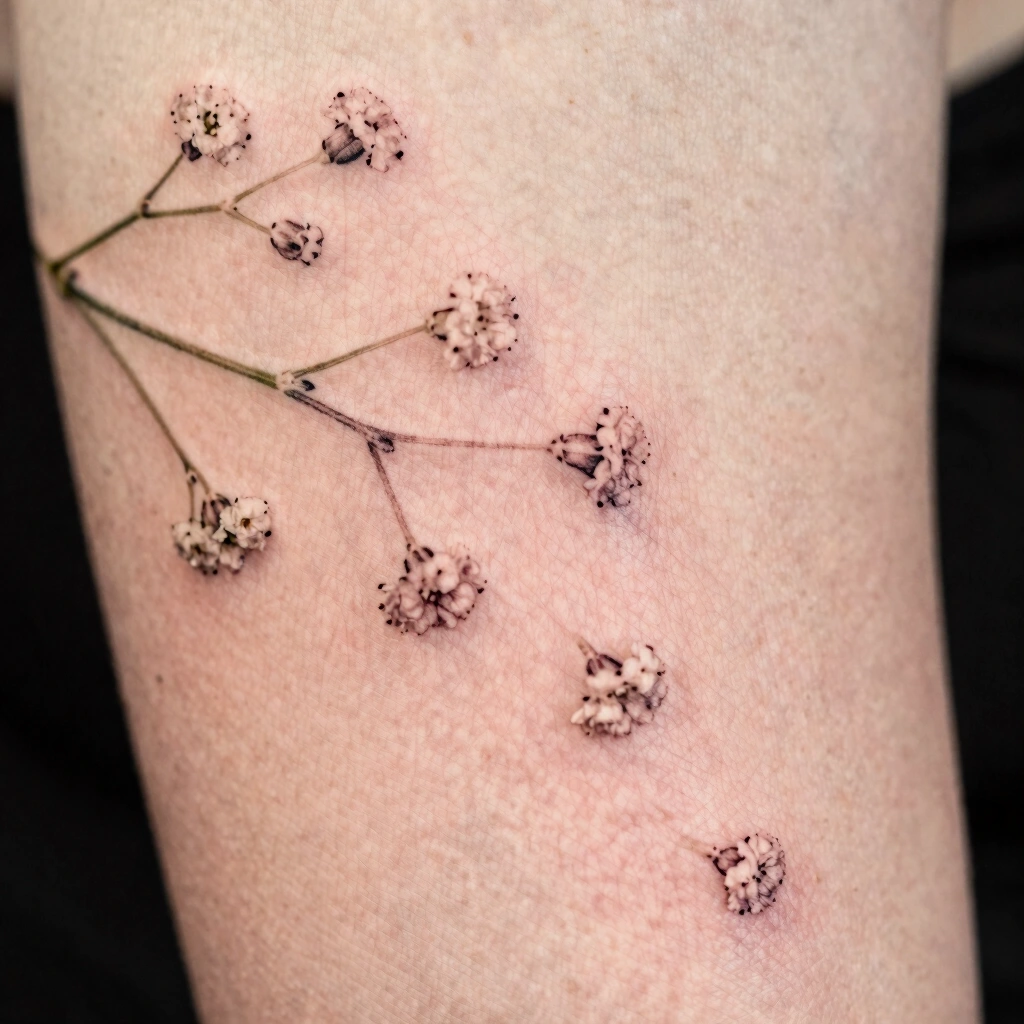
Baby’s breath — those tiny, delicate cluster flowers often used as filler in bouquets — translates into a scattered tattoo design using small dotwork or fine-line clusters spread loosely across the shoulder instead of one contained shape. This asymmetrical scatter approach means placement is more forgiving; small imperfections in spacing actually look intentional rather than off. Keep individual flower clusters under half an inch each. Pain is low given the small needle work per section. Healing takes about 2 weeks. This design is a favorite for meaningful, low-key tattoos, since the scattered blooms can be added to gradually. It also pairs well with a name, date, or small symbol tucked between the flower clusters for added personal meaning.
16. Floral Constellation Combo
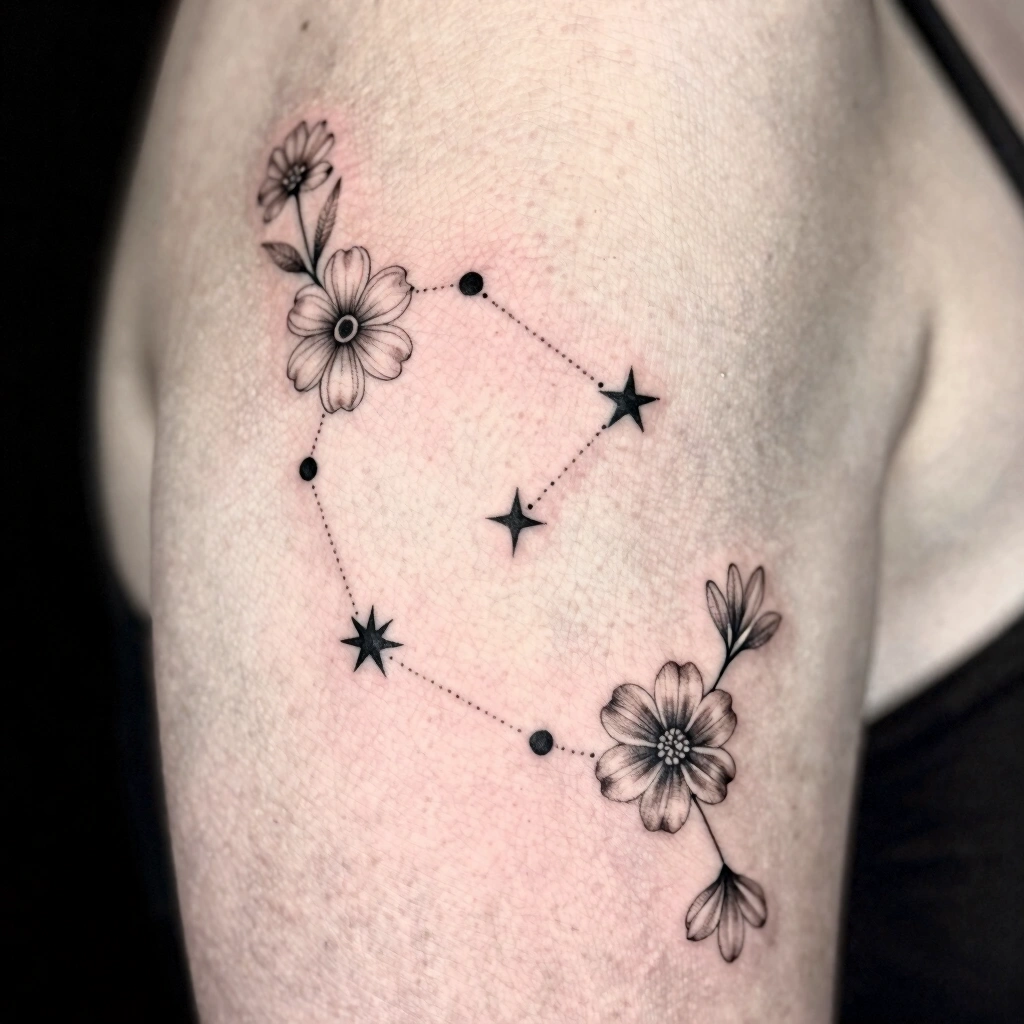
Pairing small flowers with fine-line star or constellation dots creates a night-sky-meets-garden look that reads as more personal than a standalone floral piece. Thin single-needle lines connect the “stars” while small flowers anchor the composition at one or two points. This combo works well running diagonally across the shoulder toward the upper back. Because the design mixes two visual elements, spacing needs careful planning — ask your artist to sketch a placement guide directly on your skin before the stencil goes on. Pain is low to moderate. Healing takes 2 weeks. This design is popular for anniversary or birth-month tattoos, where the constellation represents a specific date and the flower represents a birth month or personal symbol.
17. Hibiscus Watercolor Splash

A hibiscus flower done in warm watercolor tones — corals, pinks, soft oranges — creates a tropical, sun-washed feel that suits an outer shoulder or upper arm placement well. Artists typically keep a thin black or dark linework outline around the petals to anchor the color splash and slow down fading compared to outline-free watercolor work. Size should stay around 3–4 inches to keep the color gradient readable. Pain is standard for the shoulder. Healing takes 2–3 weeks. Because color-heavy tattoos show fading more visibly than black linework, plan on a touch-up conversation with your artist within the first couple of years. This design suits people wanting something bright and expressive rather than subtle or symbolic.
18. Botanical Illustration Style Bouquet
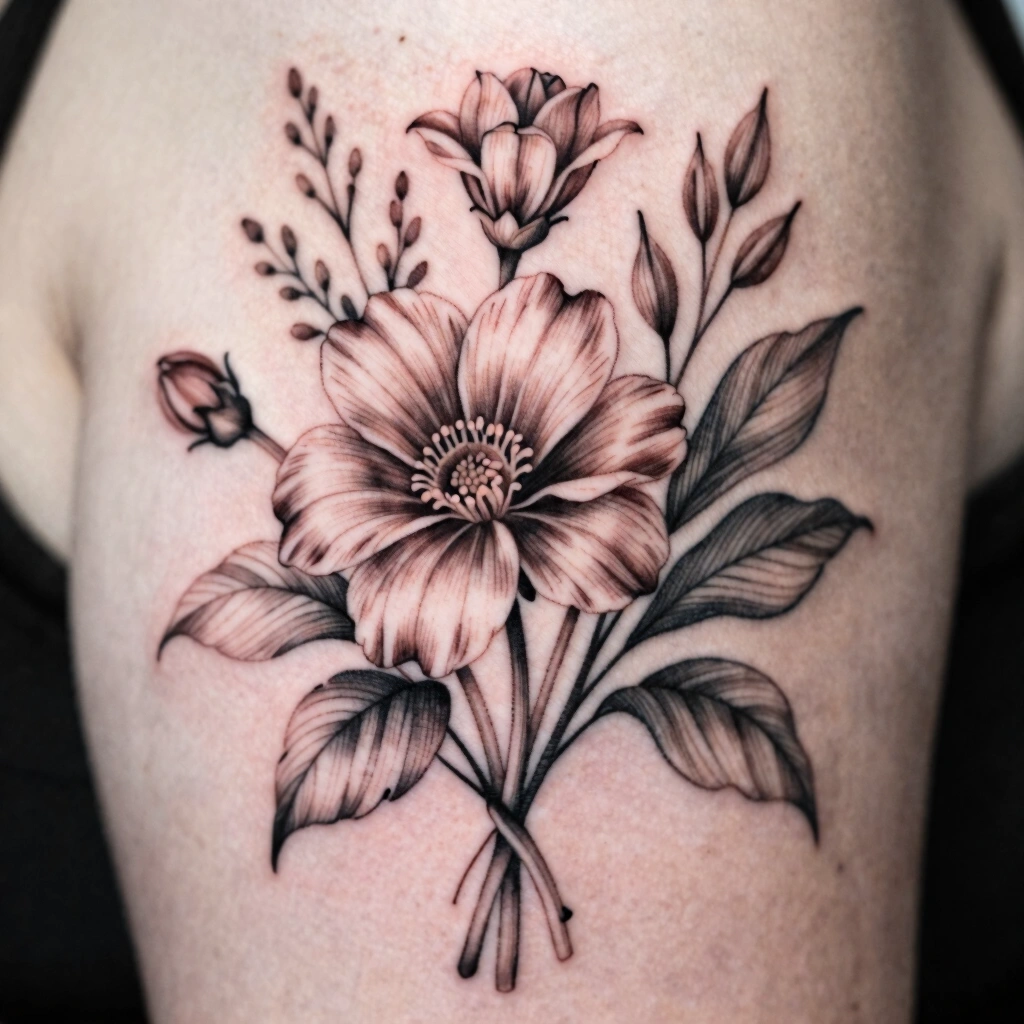
This style leans into detailed, textbook-accurate flower and leaf rendering — closer to a scientific field guide than a stylized tattoo flash sheet. A mixed bouquet with 3–4 different flower types in this style needs real space, generally 4+ inches, so each flower’s individual structure stays distinguishable instead of collapsing into a busy mess. The shoulder blade area gives enough flat room for this. Pain builds with session length, landing moderate to high. Healing takes about 3 weeks. Bring multiple reference photos of the specific flowers you want, labeled if possible, since botanical accuracy depends on the artist understanding petal count and leaf shape correctly. This design suits people who care about the specific symbolic meaning of each flower rather than florals in general.
19. Feminine Rose and Thorn Vine
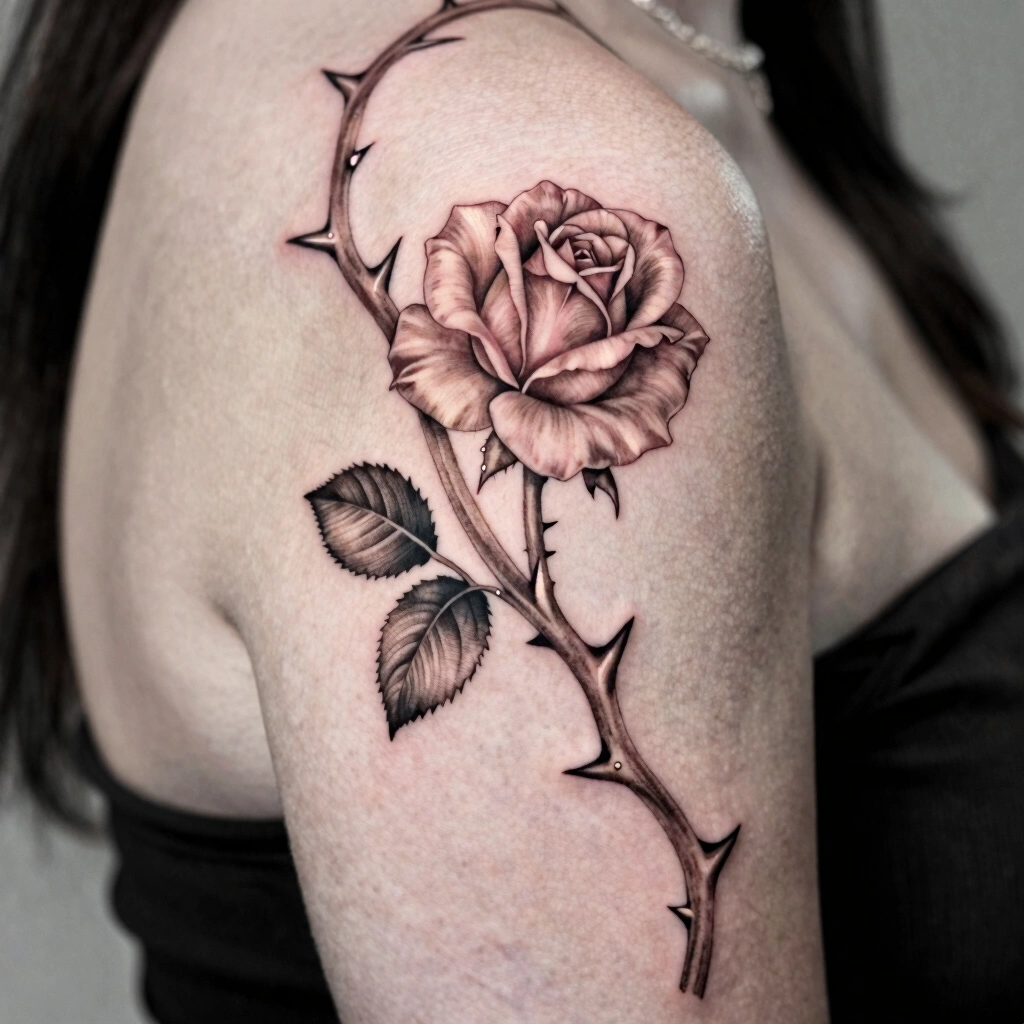
Pairing a rose with a visible thorn-covered vine trailing down from the shoulder toward the upper arm adds contrast — soft petals against sharp, angular thorns — using consistent fine-line work throughout. This composition plays well with the body’s natural downward curve from shoulder to arm. Keep the vine’s thorns small and evenly spaced so they don’t overwhelm the rose itself. Pain increases slightly as the design moves down toward the more sensitive upper arm crease. Healing takes 2–3 weeks. This design carries an easy option for personalization — ask your artist about adjusting thorn density or vine length to make it distinct from a generic flash design you found online. It suits people wanting symbolism around resilience or duality without needing text.
20. Lavender Sprig Fine-Line Tattoo
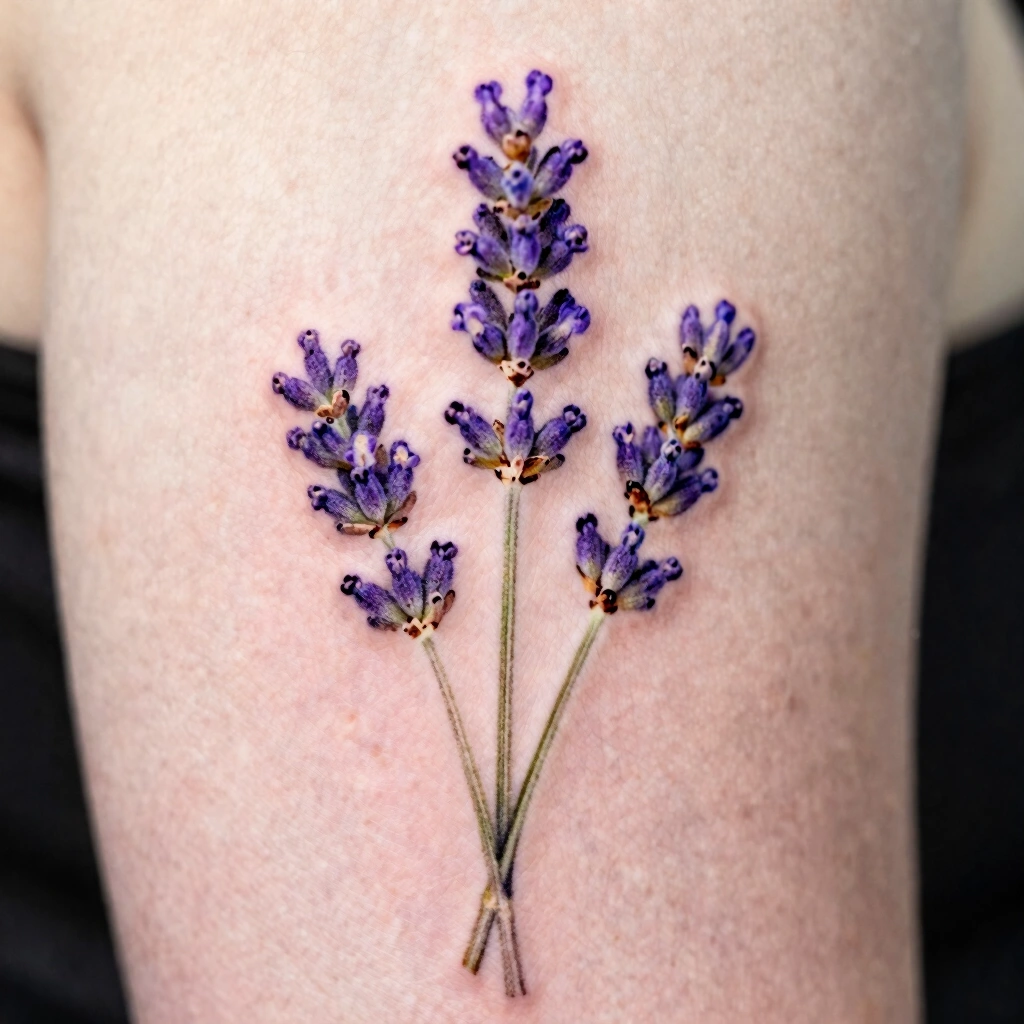
Lavender’s long, thin stem and small clustered buds make it a natural fit for fine-line work, since the shape itself is already simple and linear. A single sprig or small cluster of two to three stems looks clean near the front of the shoulder at 2–3 inches. Because the design relies on thin, repeated small strokes for the buds, ask specifically about needle grouping during your consult, since finer needle configurations hold up better long-term at this scale. Pain is low to moderate. Healing takes about 2 weeks. This design is a strong matching-tattoo option for friends or family, since lavender’s calm, simple shape looks consistent across different skin tones and sizes without needing heavy customization.
21. Anemone Flower Dotwork Design
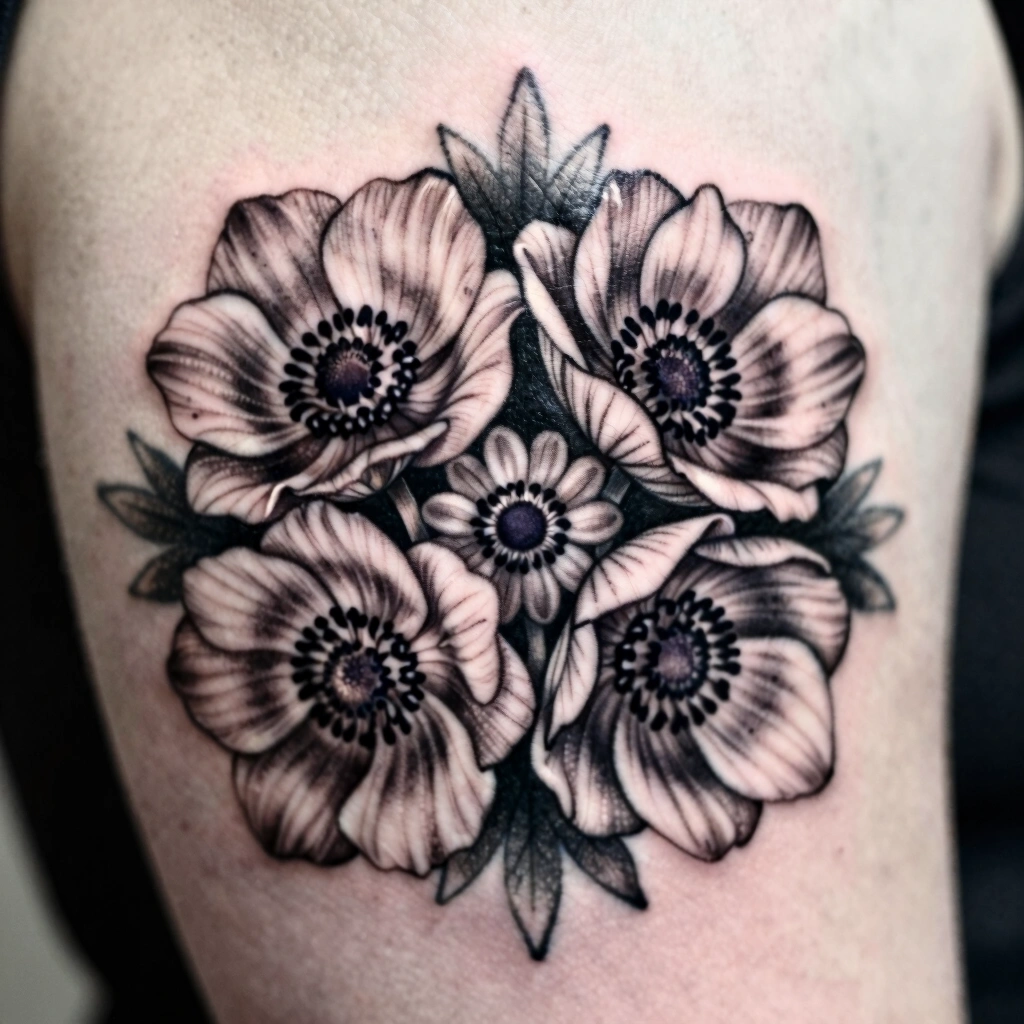
Anemones have a distinctive dark center surrounded by rounded petals, which dotwork renders beautifully through gradient shading — dense dots at the center fading to sparse dots at the petal edges. This creates real dimension without a single solid shading block. Placement on the shoulder cap at 3 inches gives the gradient room to transition smoothly. Dotwork sessions tend to run long, so expect a steady, buzzing sensation rather than sharp pain throughout. Healing takes about 3 weeks, and the dotted texture can look slightly raised during the first week, which is normal and settles with proper healing. This design suits someone drawn to a moodier, more dramatic floral look rather than a bright, cheerful one.
22. Floral Shoulder Blade Statement Piece
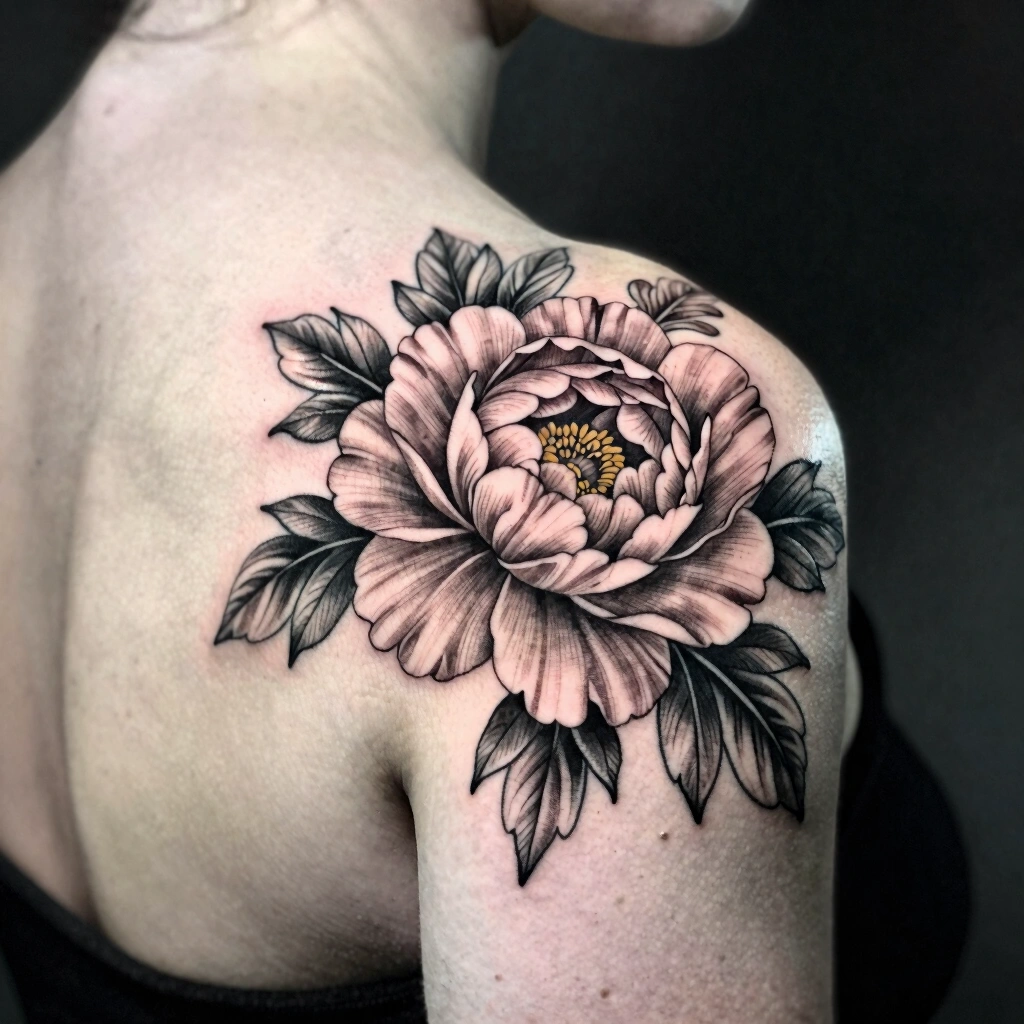
For a bigger commitment, a large single flower — peony, dahlia, or rose — centered directly on the shoulder blade creates a striking statement piece visible mainly when hair is up or clothing is backless. This size, often 5+ inches, allows for detailed shading, layered petals, and strong linework variation all in one composition. Pain runs moderate to high given the extended session time, though the shoulder blade itself has decent muscle coverage. Healing takes 3–4 weeks. Because this piece is highly visible in certain outfits and hidden in others, think through how often you want it seen before committing to the placement. This design suits people ready for a bold, less concealable tattoo with real artistic detail.
23. Tiny Wildflower Trio
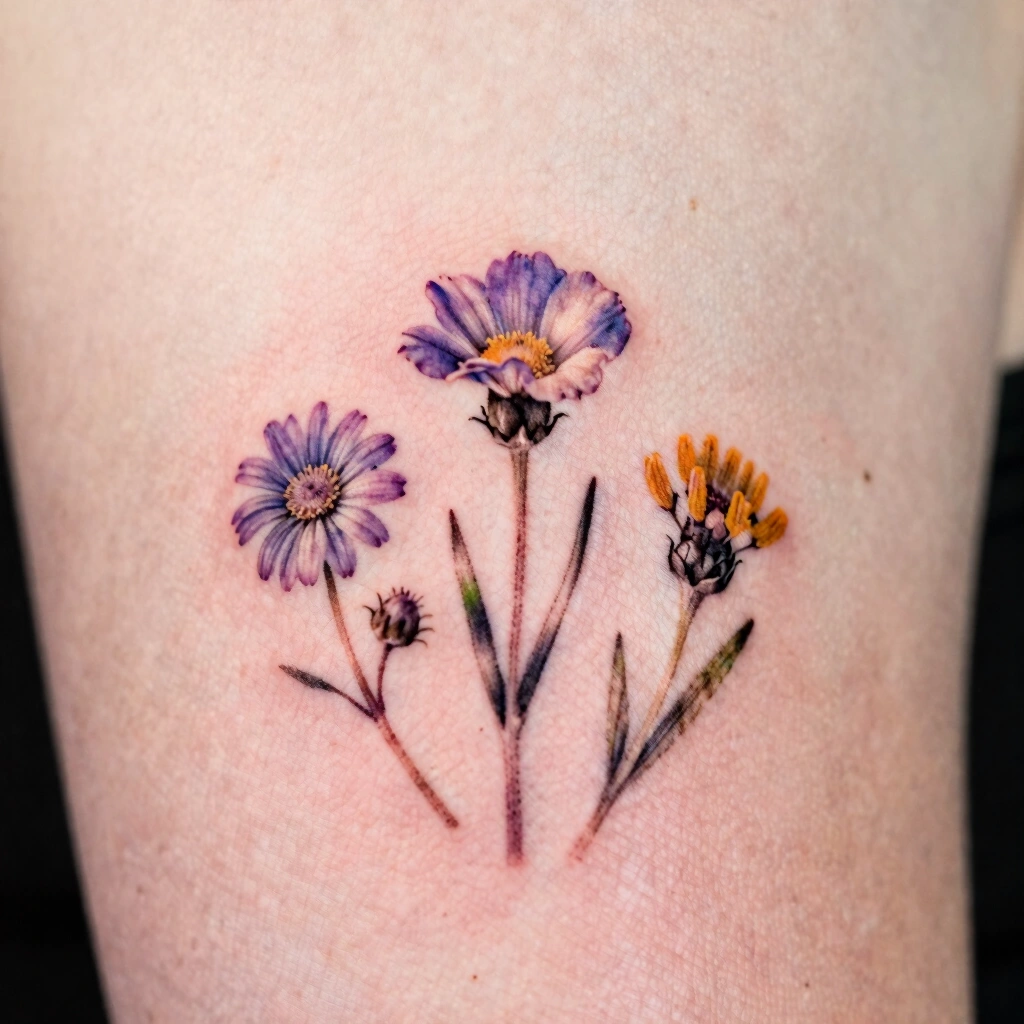
Three small, different wildflowers grouped close together — each under an inch — makes a subtle, easily hidden design near the top of the shoulder or closer to the collarbone. This is one of the most beginner-friendly floral tattoo ideas since the small scale keeps sessions short and commitment low. Fine-line or single-needle work suits this best, since heavier shading would blur together at such a small size. Pain is low given the quick session. Healing takes about 2 weeks. This design works well as a first tattoo, a matching design with two friends (each picking their own flower), or a starting point for a larger floral collection you build onto later.
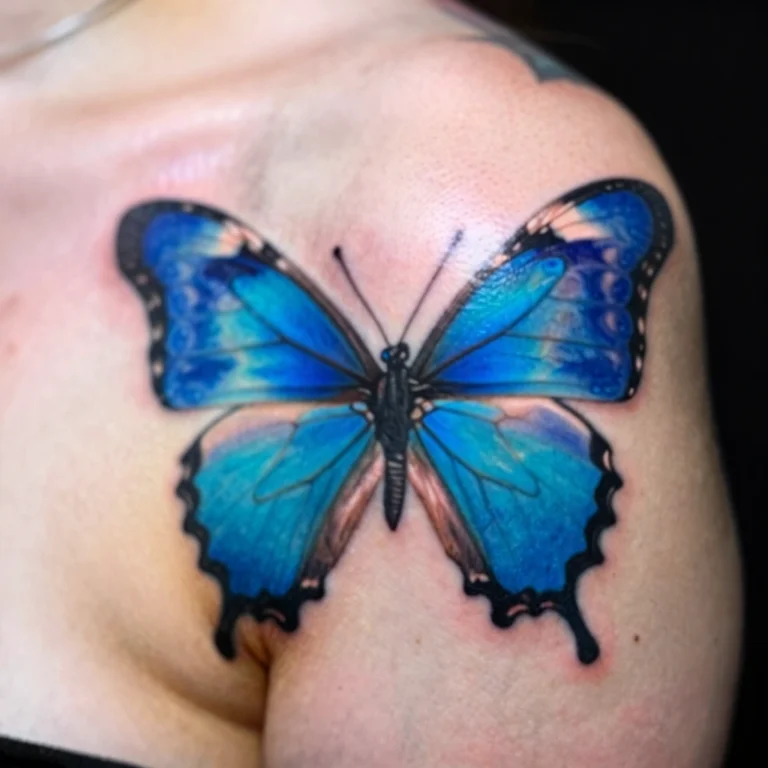
24. Peony and Butterfly Combo
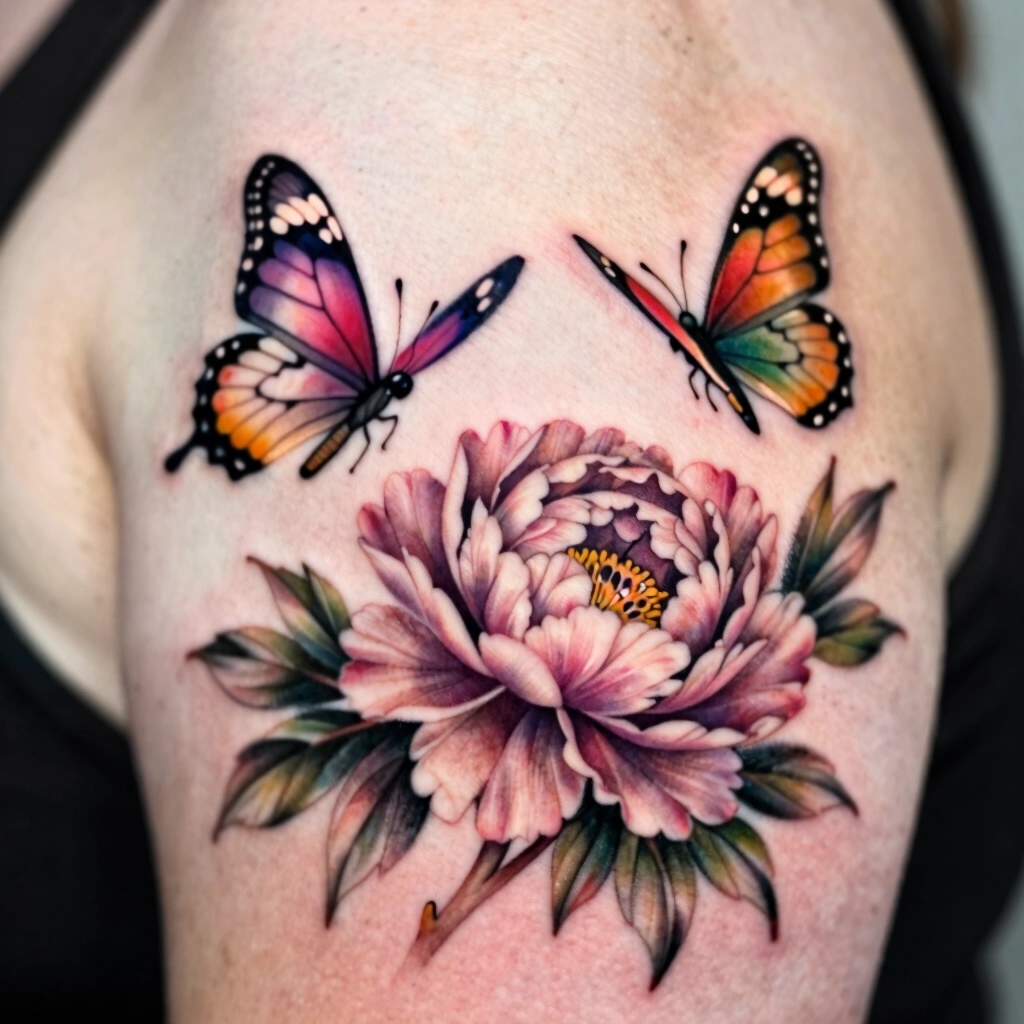
Pairing a peony with a small butterfly adds movement and a bit of visual storytelling to a standard floral piece. The peony is typically done in fine line or light blackwork for the petal layers, while the butterfly’s wings can use thin linework with small dotwork accents for texture. This combo suits the upper shoulder at 3–4 inches, giving both elements enough space to stay distinct. Pain is moderate. Healing takes 2–3 weeks. Ask your artist whether the butterfly should overlap the peony or sit separately — small placement choices like this change the whole composition’s balance. This design suits people wanting a design with personal symbolism (growth, transformation) built into an already feminine floral base.
Best Placement Ideas
Placement changes everything about how a design ages, how much it hurts, and how easy it is to hide. Here’s how the shoulder area breaks down:
- Front of shoulder (near collarbone): Highly visible, easy to show off, but closer to bone means slightly more sensitivity.
- Shoulder cap (top, rounded area): The most popular spot for floral tattoos — flat enough for detail, moderate pain, easy to cover with sleeves.
- Shoulder blade: Great for larger statement pieces; visibility depends entirely on clothing and hairstyle.
- Outer shoulder/upper arm blend: Good for trailing vine or wraparound designs; slightly more pain near the armpit edge.
- Back of shoulder: More private, harder for you to see healing progress yourself, so aftercare requires a mirror or a second pair of eyes.
Tips for Success
Start by reviewing an artist’s portfolio for consistency, not just one great photo. Look for even line weight across multiple pieces, clean healed shots (not just fresh ink), and a clear specialty — fine-line specialists, blackwork specialists, and colorwork specialists all have different strengths. Bring at least two or three reference images, note the exact size you want in inches, and be upfront about your pain tolerance and past tattoo experience. A good consult should include a conversation about placement, healing expectations, and touch-up policy before anything gets booked. If a shop only offers walk-in flash designs and you want something custom, confirm they actually do custom stencil work rather than adapting a pre-made design last-minute.
Common Mistakes and How to Avoid Them
- Going too small for detailed linework. Intricate botanical detail needs enough space to stay legible after healing and years of aging skin.
- Choosing a placement that fights the design’s flow. A trailing vine looks awkward crammed into a small, static space — match the shape to the body’s natural lines.
- Skipping aftercare instructions. Not following your artist’s specific aftercare sheet is one of the most common reasons for patchy healing or early fading.
- Copying a design exactly from a photo. A design built for someone else’s skin tone, shoulder shape, or size won’t translate perfectly onto yours — ask for small custom adjustments.
- Ignoring the artist’s specialty. A traditional-style artist may not be the best fit for delicate single-needle work, and vice versa.
Similar Variations
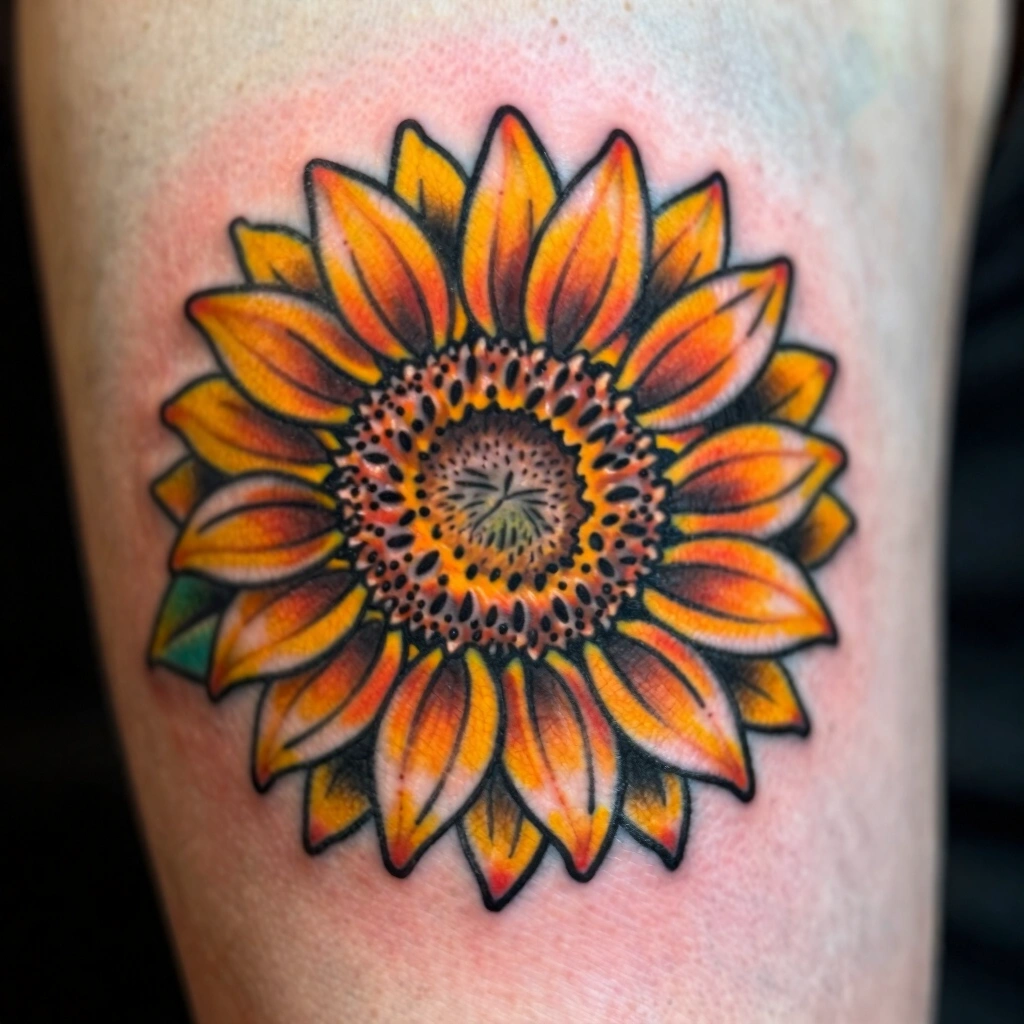
Almost every idea above can shift depending on size and color choice. A bold traditional sunflower can shrink down to a 2-inch minimalist version with the color dropped entirely for a simple linework outline. A dotwork anemone can expand into a full shoulder blade piece with added leaves. Fine-line florals can be recolored with light watercolor washes for a softer feel, or combined into a cluster with other small designs from this list — like pairing the lavender sprig with the tiny wildflower trio for a fuller, layered shoulder piece built up over multiple sessions.
Aftercare Basics
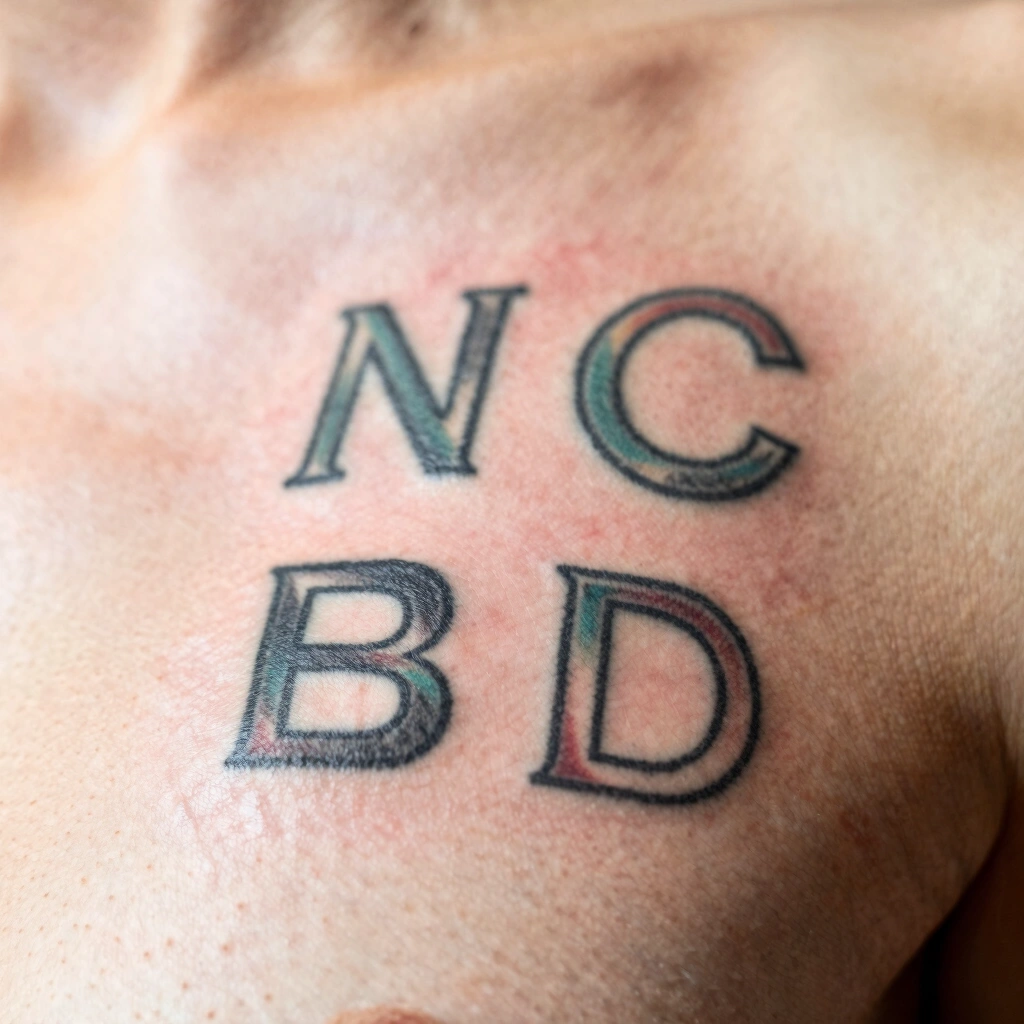
General aftercare consensus among professional artists includes keeping the tattoo clean, avoiding direct sun exposure while healing, and avoiding tight clothing that rubs against fresh ink. Most artists recommend a fragrance-free healing ointment or lotion for the first week or two, followed by regular unscented moisturizer once the surface has closed. Avoid swimming pools, saunas, and prolonged soaking during the first few weeks. Every studio has slightly different recommendations, so always follow the specific aftercare sheet your artist provides rather than generic advice found online — and reach out to them directly, or a dermatologist, if you notice anything that seems off during healing.
Quick FAQ
How much does a feminine floral shoulder tattoo cost?
Small designs under 2 inches often run $80–$200, while larger custom pieces spanning 4+ inches can range from $300–$800 or more, depending on detail level, color use, and the artist’s hourly rate.
How painful is a shoulder tattoo?
Pain varies by individual and exact spot, but the shoulder cap is generally considered a mid-tolerance area — more sensitive near the collarbone and armpit, less sensitive on the fleshier cap itself.
How long does healing take?
Most floral shoulder tattoos take 2–4 weeks to heal on the surface, though full healing beneath the skin can take a couple of months. Individual healing time varies based on aftercare and skin type.
Do floral tattoos fade faster than other styles?
Fine-line and watercolor designs tend to show fading sooner than bold blackwork or traditional-style outlines, since thinner or diluted ink holds less densely in the skin over time.
Choosing a feminine floral shoulder tattoo really comes down to matching the technique to your lifestyle — how visible you want it, how much detail you’re willing to maintain, and how much time you want to spend in the chair. Take these 24 ideas as a starting point, not a final answer, and bring your own twist to whichever one you land on.
Whatever direction you choose, talk through placement, sizing, and aftercare with a licensed professional before booking, since pain tolerance and healing genuinely differ from person to person. A well-planned feminine floral shoulder tattoo, done by the right artist for the specific style you want, is one of those pieces that only looks better with time.