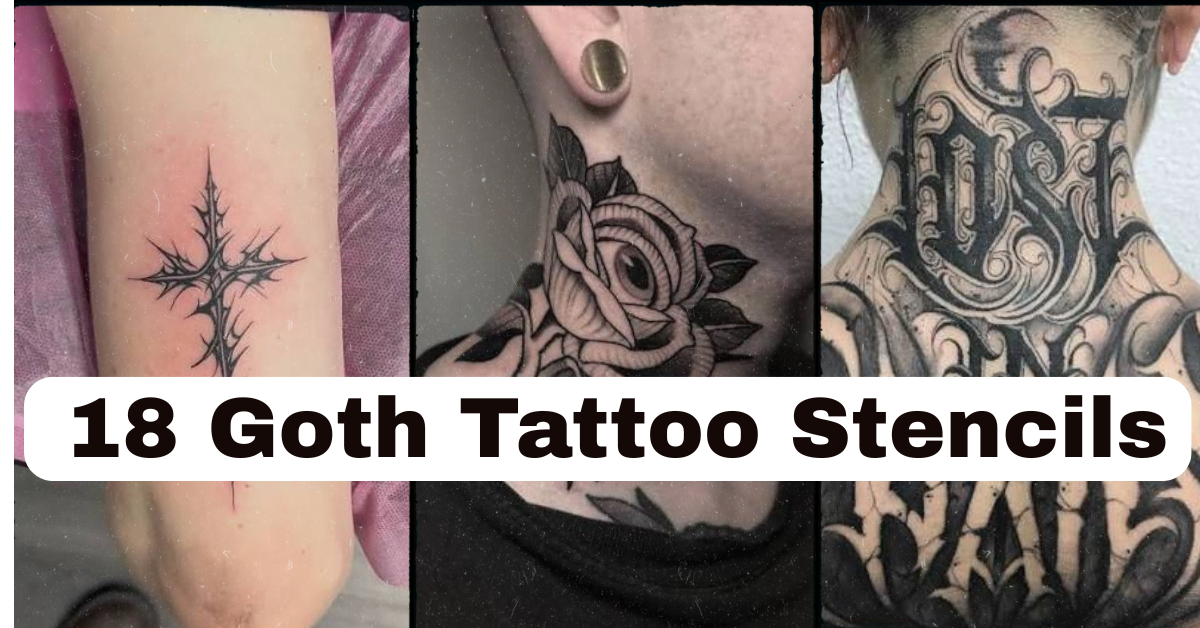
18 Goth Tattoo Stencils That Actually Hold Up on Skin
Nervous about picking a goth tattoo stencil you’ll regret in five years? You’re not alone, and honestly, that worry is a good sign. It means you’re thinking past the Pinterest board and into the “will this look right on my arm in a decade” territory, which is exactly where you should be.
So what are the best goth tattoo stencils? Fine-line crosses, blackwork roses, dotwork skulls, and negative-space moon phases top the list, since they translate gothic imagery into clean, technique-driven linework that heals well and ages gracefully. The trick is matching the right technique to the right size and placement.
Stick around, because we’re getting into placement advice, realistic pain levels, what things cost, and exactly how to brief an artist so your stencil comes out looking the way you pictured it, not a blurry version of it five years from now.
Why Goth Tattoo Stencils Work So Well on Skin
Gothic imagery has a natural advantage that a lot of other tattoo styles don’t: strong, simple silhouettes. Crosses, arched windows, ravens, roses, skulls. These shapes were designed for stained glass, architecture, and woodcuts, meaning they were already built around bold outlines and high contrast. That’s basically the same visual language tattoo artists use to make a design hold up over decades of sun exposure, skin stretching, and natural fading. A gothic stencil done in solid blackwork or crisp fine line ages better than a busy, multi-tone design because there’s less detail that can blur together. Below, we’ll walk through eighteen specific stencils, the technique behind each one, and what you need to know before you sit in the chair.
Fine-Line Gothic Cross
A fine-line cross uses a thin, consistent needle line (usually a single needle or a tight liner) to render a plain or slightly ornamented cross without any shading. The appeal is restraint. There’s no fill, no gradient, just clean geometry that reads clearly even at a small scale. This works best on the wrist, forearm, or behind the ear, sized between one and two inches so the linework doesn’t collapse into a smudge as it settles. Skin with more texture, like inner forearms with visible veins, can distort a very thin line over time, so ask your artist about a slightly heavier line weight if that’s your skin type. Bony areas like the wrist tend to be more sensitive during the session, but healing is usually quick since there’s minimal trauma to the skin. It’s a strong first-tattoo option and reads as workplace-appropriate in most settings. From here, let’s look at what happens when you swap that thin line for solid black fill.
Blackwork Gothic Rose
Blackwork means the design is filled in with solid black ink rather than outlined and shaded, and a gothic rose done this way trades petal detail for bold, graphic shape. Think less “realistic flower” and more “rose as a symbol,” rendered in flat black with maybe a few negative-space veins left unfilled for contrast. This holds up beautifully on the upper arm, calf, or shoulder blade, ideally three inches or larger since solid black needs room to breathe without looking like a dark blob. Ask your artist to show you their solid-fill work specifically, since even ink saturation across a large area is a skill some artists are better at than others. Fill work involves more needle passes than linework, so expect a bit more soreness and a slightly longer healing window, often two to three weeks before it’s fully settled. It’s a great choice if you want something with visual weight for a matching tattoo with a friend, since bold black reads consistently across different skin tones. Next, let’s shrink things down and talk texture instead of solid fill.
Dotwork Skull and Lace
Dotwork builds an image out of individual, hand-placed dots instead of continuous lines, creating a stippled, textured look that’s especially good for shading skulls, lace patterns, or anything with a soft gradient. A skull rendered this way, paired with a lace collar or veil motif made of dot clusters, gets you depth and softness without the flatness of solid black. This design suits the upper arm, ribs, or thigh, somewhere between two and four inches, since dotwork needs enough space for the gradient to read clearly. Bring reference photos that show the dot density you want, tight and dark versus loose and airy, because that’s the single biggest variable in how the finished piece looks. Dotwork tends to feel similar to fine line in terms of discomfort, though ribs and thigh placements carry their own sensitivity regardless of technique. Healing runs about two weeks. This one’s popular for people who want something more artistic and less “flash sheet,” and it transitions well into our next idea: pure silhouette work.
Single-Needle Bat Silhouette
A single-needle bat uses the thinnest available needle configuration to draw an extremely delicate, almost sketch-like silhouette, often with wings mid-flight for movement. There’s no shading here at all, just a whisper-thin outline that looks closer to a pen drawing than a traditional tattoo. This is ideal for small, discreet placements: behind the ear, on the ankle, or along the side of the ribs, kept under two inches since the linework won’t survive much larger without an artist adding weight to key areas. Ask specifically whether your artist has single-needle experience, since this technique is less forgiving of a shaky hand than bolder styles. It also fades faster than other techniques, so plan on a touch-up appointment within three to five years to keep the lines crisp. Pain is generally mild given the small surface area, though thin skin over bone can still feel sharp. It’s an easy first-tattoo pick and works well as a subtle nod to gothic style without committing to something bold. Let’s move from image to text next.
Gothic Script Lettering
Gothic script, sometimes called blackletter, is a dense, angular lettering style historically used in illuminated manuscripts and old printing presses. As a tattoo, it’s rendered in solid black with sharp serifs and tight spacing, which means legibility depends heavily on size. A single word or short phrase works well on the forearm, collarbone, or side of the neck, generally needing at least three inches of length to keep the letterforms from blurring into each other as the tattoo settles. Bring your exact wording typed out, and ask your artist to mock up the spacing digitally before the session, since blackletter fonts can look cramped if the kerning isn’t adjusted for skin. Placements over the collarbone or ribs tend to be more sensitive due to the thin skin and proximity to bone. Healing typically takes two to three weeks. This is a popular choice for a meaningful phrase or date, and it ages well since the flat black fill resists the kind of blur that fine-line script can suffer from. Next, let’s look at pairing lettering with imagery.
Negative Space Moon Phases
Negative space tattoos use the untouched skin itself as part of the design, meaning the moon shapes are defined by the black ink around them rather than filled in directly. A row of moon phases, from crescent to full and back again, done this way creates a striking silhouette effect where the moons appear to glow against solid black. This works best on the forearm or upper arm, in a horizontal band roughly three to five inches long to give each phase room to read clearly. Ask your artist how they plan to keep the negative space clean during healing, since scabbing can temporarily obscure the effect before it settles. Pain is comparable to other blackwork due to the surrounding fill, and healing takes about two to three weeks. This design is a strong pick if you want something symbolic without going full skull-and-crossbones, and it photographs well for anyone documenting a healing timeline. From lunar symbolism, let’s go somewhere a little creepier.
Blackwork Spider and Web
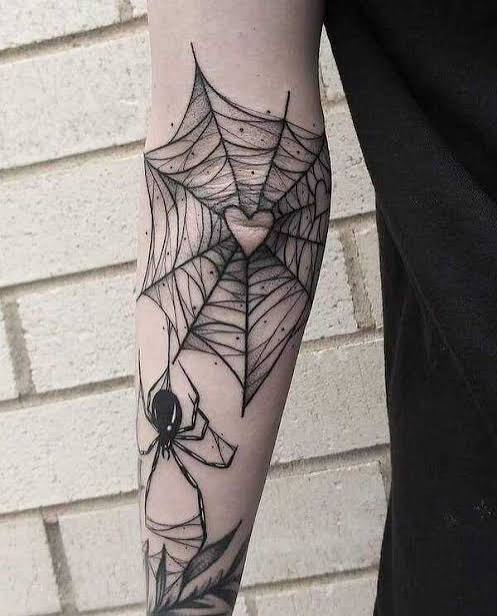
A blackwork spider and web combines a solid-filled spider body with fine radiating web lines, giving you contrast between bold shape and delicate structure in one piece. The web lines are usually done with a thinner needle than the spider itself, so the two elements feel intentional rather than mismatched. This suits the shoulder, side of the calf, or back of the hand for something more visible, sized around two to three inches so the web threads don’t crowd together. If you’re going for the hand or fingers, know upfront that these spots fade faster than fleshier areas and need more frequent touch-ups. Expect more sensitivity on bony areas like the hand or ankle. Healing on the hand specifically can take longer due to constant movement and washing. This design leans bold and works well as a statement piece rather than something subtle, and it’s a favorite for those wanting a slightly eerie, storybook-gothic feel. Let’s shift to architecture next.
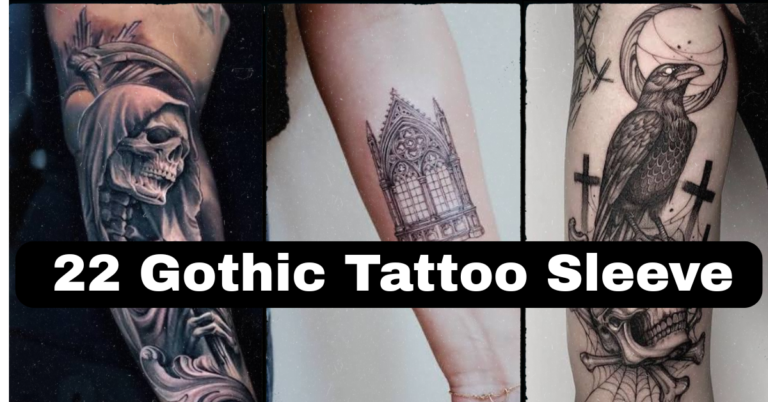
Fine-Line Gothic Arch Window
This design translates the pointed arch windows found in gothic cathedrals into a simple, single-needle outline, sometimes with basic tracery lines inside to suggest the window’s structure without heavy detail. It’s an architectural, almost minimalist take on gothic style. Best placed on the forearm, ribs, or upper back, sized around two to three inches to keep the arch’s proportions recognizable. Bring a reference photo of an actual cathedral window rather than a cartoon version, since real architectural references translate into more convincing linework. Rib and upper back placements tend to be more uncomfortable due to thinner skin and more nerve endings in those areas. Healing takes roughly two weeks for fine line work. This one’s a great pick if you love gothic aesthetics but want something more symbolic and less overtly dark, and it works well in a small cluster with other architectural elements. Next up, a bird with a longer symbolic history.
Dotwork Raven
A dotwork raven uses stippled shading to build feather texture and depth, giving the bird a soft, almost smoky look instead of the flat silhouette you’d get with blackwork. This technique is particularly good at rendering feather layering, since dots can be built up gradually to suggest where light and shadow fall. Best on the upper arm, shoulder, or thigh, at least three inches so the dot gradient has room to shift naturally across the wing and body. Ask your artist how they’ll handle the beak and eye detail, since these smaller elements need a slightly different dot density than the body to stay sharp. Pain is generally moderate and comparable to other dotwork sessions, with fleshier placements like the thigh typically more tolerable than bony ones. Healing takes about two weeks. Ravens carry heavy symbolic weight in gothic and literary tradition, which makes this a popular choice for something meaningful rather than purely decorative. Let’s go bolder with our next pick.
Bold Traditional Gothic Dagger
This design borrows from bold traditional tattooing, thick, confident outlines paired with limited, saturated color or solid black fill, applied to a dagger wrapped in thorns or a rose. The heavy linework is built to last, since thick lines resist the blur and fade that thinner styles are more prone to over time. Best on the upper arm, calf, or chest, at least three to four inches given how much visual weight bold traditional linework carries. If you want color saturation (deep reds or blacks), ask specifically about your artist’s healed color work, not just fresh photos, since saturation can shift as a tattoo settles. Chest and rib placements are typically more sensitive than the arm or calf. Healing runs two to three weeks, sometimes longer with color. This is one of the most durable styles on this list in terms of long-term appearance, making it a solid pick if longevity matters more to you than delicate detail. Next, we go from bold to subtle again.
Fine-Line Gargoyle
A fine-line gargoyle uses thin, precise linework to capture the creature’s exaggerated features, wings, claws, snarling expression, without heavy shading weighing down the design. The challenge with this one is proportion, since gargoyles have a lot of small details (claws, teeth, wing membranes) that need careful simplification to survive as a tattoo. Best on the forearm or upper arm, at least three inches so those details don’t merge together as the piece heals. Bring multiple reference angles, not just one photo, so your artist can simplify the pose into something that reads clearly from a normal viewing distance. Forearm placements are generally more tolerable pain-wise than ribs or joints. Healing takes about two weeks for fine line. This design suits people who want something distinctly gothic and slightly playful rather than purely somber, and it works well as a stand-alone statement piece. Let’s talk about a design tied to communication with the beyond.
Blackwork Ouija Planchette
A blackwork planchette, the pointer piece from a Ouija board, rendered in solid black with a simple negative-space eye or star cutout, is a compact, graphic way to reference gothic and occult imagery without anything overly literal. The solid fill makes this one of the more durable designs on the list. Best on the wrist, ankle, or back of the shoulder, around two inches, small enough to stay discreet but large enough that the negative-space details don’t fill in over time. Ask your artist to keep the negative-space lines slightly thicker than they look in the reference image, since very thin negative space can close up as skin heals and settles. Wrist and ankle placements tend to be more sensitive due to bone proximity. Healing takes roughly two weeks. This design is popular as a subtle nod to gothic and occult aesthetics without committing to something as visually loud as a full skull piece. Now, let’s return to architecture with a bit more detail.
Negative Space Gothic Rose Window
This design recreates the circular stained-glass rose windows found in gothic cathedrals using negative space, meaning the intricate geometric pattern is left as untouched skin surrounded by black fill. It’s one of the more technically demanding designs here because the geometry has to stay symmetrical as it wraps around the body’s natural curve. Best on the upper arm, shoulder blade, or calf, at least three inches in diameter to keep the geometric pattern legible. Ask your artist to do a stencil test on your actual placement before the session, since the curve of a shoulder or calf can distort a perfectly symmetrical design if it isn’t accounted for ahead of time. Expect moderate discomfort given the amount of solid fill involved, and healing typically takes two to three weeks. This is a striking choice for anyone who wants something more elaborate and architecture-inspired rather than a straightforward gothic symbol. Let’s move to something more organic next.
Single-Needle Thorned Vine
A thorned vine done in single-needle work is delicate, winding linework, thin, sketch-like thorns, that can wrap around a wrist, ankle, or finger. Because it’s so fine, it reads more as an accent than a standalone statement piece, which is part of its appeal. Best kept under two inches per section if wrapping a wrist or ankle, since single-needle work loses definition if stretched too thin over a larger area. Fingers and hands fade fastest of any placement due to constant washing and sun exposure, so budget for touch-ups every two to three years if you go that route. Pain is typically mild to moderate depending on placement, with fingers and wrists being more sensitive than fleshier spots. Healing takes about two weeks, longer on hands. This design works well as a subtle addition to an existing gothic-themed sleeve or as a delicate stand-alone piece for a first tattoo. Next, let’s look at one of the most recognizable gothic motifs.
Dotwork Memento Mori Skull
Memento mori (Latin for “remember you must die”) skulls are a classic gothic and Renaissance motif, and rendering one in dotwork gives it a soft, almost antique engraving look rather than a flat, cartoonish skull. Shadows are built up gradually with dot density, which lets the artist suggest bone structure without heavy black fill. Best on the forearm, upper arm, or thigh, at least three inches so the shading gradient has room to develop naturally. Ask to see healed dotwork specifically, not just fresh photos, since dot spacing can shift slightly as skin heals and this affects how smooth the shading looks long term. Pain is generally moderate, and fleshier areas like the thigh tend to be more comfortable than bony ones. Healing takes about two weeks. This design carries genuine philosophical weight for a lot of people, making it a meaningful choice rather than a purely aesthetic one, and it pairs well with script lettering if you want to add a phrase. Let’s close out the imagery-based designs with a full scene.
Gothic Cathedral Silhouette
This design renders an entire cathedral, spires, arched windows, buttresses, as a solid black silhouette against the skin, essentially a building reduced to pure shape. It’s one of the more graphic, statement-piece options on this list. Best on the back, side of the calf, or upper arm, at least four inches given how much detail needs to be legible at a glance. Bring a reference photo of a specific cathedral if you want accuracy, or a simplified sketch if you’re comfortable with a more abstract interpretation, since the artist’s approach changes quite a bit between the two. Larger solid-fill pieces like this one involve more needle time, so expect more overall discomfort and a longer healing window, often two to three weeks. This is a strong choice if you want a bold, unmistakably gothic piece rather than something subtle, and it works beautifully as a back piece anchor for future additions. Let’s finish with two more versatile ideas.
Blackwork Snake and Dagger
Pairing a coiled snake with a dagger in solid blackwork gives you a classic dark-academia motif with strong visual tension, the smooth curves of the snake against the straight, sharp lines of the blade. This combination has been used in traditional tattooing for decades because the contrast reads well even at a distance. Best on the forearm, calf, or upper arm, at least three inches so the snake’s coils don’t compress into an unreadable blob. Ask your artist how they’ll differentiate the snake’s scales from the dagger’s flat surfaces using line weight and small negative-space highlights, since that contrast is what makes the piece pop rather than reading as one solid shape. Forearm and calf placements are generally more tolerable than ribs or joints. Healing takes two to three weeks given the solid fill. This design suits people who want a bold gothic piece with some traditional tattoo history behind it, and it works well solo or as the anchor of a larger sleeve. One more design to go.
Fine-Line Gothic Chandelier
A gothic chandelier rendered in fine line captures the ornate ironwork and candle details using thin, precise outlines without any fill, giving it an elegant, almost architectural-drawing quality. This is one of the more detailed fine-line designs here, since chandeliers have a lot of small repeating elements (arms, candles, chain links) that need careful simplification. Best on the upper back, side ribs, or thigh, at least three inches to keep the smaller details from blurring together. Bring a photo of an actual antique chandelier rather than a cartoon rendering, since real hardware details translate into much more convincing linework. Rib placements are generally more sensitive due to thin skin and nerve density. Healing takes about two weeks for fine line. This design is a favorite for people who want something elegant and detailed rather than dark and heavy, and it works beautifully alongside a rose window or arch window for a cohesive gothic-architecture theme.
Fine Line vs. Blackwork vs. Dotwork: Knowing the Difference
Before you book anything, it helps to know exactly what you’re asking for.
Fine line / single needle: Thin, precise outlines with no shading or fill, done with a single needle or a tight liner. Best for delicate, detailed imagery, but fades faster than bolder styles and needs touch-ups sooner.
Blackwork: Solid black ink fill, sometimes combined with bold outlines. Extremely durable and high-contrast, but requires more needle time and a longer initial healing period.
Dotwork: Shading and texture built entirely from individual dots rather than continuous lines or solid fill. Good for soft gradients and depth, moderate durability, healing similar to fine line.
Best Placement Ideas
- Wrist or ankle: Highly visible, easy to conceal with clothing, but bony areas tend to be more sensitive and small designs here fade faster.
- Forearm: Good visibility, moderate pain, one of the easier spots to keep clean during healing.
- Ribs or side: More discreet, but generally one of the more uncomfortable placements due to thin skin and proximity to bone.
- Upper arm or shoulder: Easy to conceal with sleeves, moderate pain, plenty of flat space for larger designs.
- Back or shoulder blade: Great for large, detailed pieces, but harder to see healing progress yourself and may need help with aftercare.
- Hands or fingers: Highly visible and expressive, but fades fastest of any placement and needs frequent touch-ups.
Tips for Success
Start by looking at an artist’s healed work, not just fresh, glossy photos taken right after a session, since healed results tell you how their line weight and saturation actually hold up. Check whether their portfolio shows real range in the specific technique you want, fine line, blackwork, or dotwork, since not every artist specializes in all three. During a consultation, bring multiple reference images rather than one, be upfront about your pain tolerance and any skin conditions, and ask directly about their approach to negative space or solid fill if that’s part of your design. A good artist will ask you just as many questions back, about placement, sizing, and how the piece might interact with your skin tone and texture over time.
Common Mistakes and How to Avoid Them
- Going too small for the detail level: Intricate linework, lace, feathers, architectural detail, needs enough space to stay legible as it heals and settles. Talk sizing through with your artist before committing.
- Choosing a placement that fights the design’s linework: A design that wraps well around a calf might distort badly on a flat forearm, or vice versa. Ask your artist to mock it up directly on your skin.
- Skipping aftercare instructions: Following your specific artist’s aftercare sheet matters more than any general internet advice, since techniques and products vary.
- Copying a reference exactly without personalizing it: A completely unmodified copy of someone else’s tattoo can also raise ethical concerns if it was another client’s custom piece. Ask your artist to adjust proportions or details to fit your body and your reasons for getting it.
Similar Variations
Most of these designs can be resized down for a subtle accent piece or scaled up into a larger, more detailed centerpiece. A fine-line design can gain some visual weight with the addition of small solid-black accents, while a blackwork piece can be softened by incorporating dotwork shading at the edges instead of a hard line. Several of these ideas (arch windows, rose windows, chandeliers) were designed to combine into a larger architectural-gothic theme if you want to build toward a sleeve over multiple sessions rather than committing to everything at once.
Aftercare Basics
General aftercare typically involves keeping the area clean, avoiding direct sun exposure and soaking (pools, baths) during the initial healing period, and applying a thin layer of whatever product your artist recommends. Healing timelines vary by technique and individual, but most fine-line and dotwork pieces settle within two weeks, while larger blackwork or color pieces can take two to three weeks or longer. Always follow the specific aftercare sheet your artist gives you rather than general advice found online, since products and techniques differ between studios, and check with a licensed professional or dermatologist if you notice anything that seems outside normal healing.
Quick FAQ
How much does a goth tattoo stencil cost? Small fine-line or single-needle pieces often start in the $80 to $150 range depending on your region and artist experience, while larger blackwork or dotwork pieces with more detail can run several hundred dollars or more. Always get a direct quote from your chosen artist since pricing varies widely by studio and location.
How painful are these designs? Pain tolerance varies by individual, but generally, bony areas like the wrist, ankle, and ribs feel more intense than fleshier spots like the upper arm, calf, or thigh, regardless of which technique you choose.
How long does healing take? Fine-line and dotwork pieces typically settle within about two weeks, while larger blackwork pieces or anything with heavy solid fill can take two to three weeks or longer. Individual healing time varies, so follow your artist’s specific aftercare guidance.
Do these designs age well? Blackwork and bold traditional styles tend to hold their shape and saturation longest, while fine-line and single-needle work may need a touch-up within three to five years to stay crisp, since thinner lines are more prone to fading over time.
Finding Your Design
Goth tattoo stencils work best when the technique matches the imagery, solid blackwork for bold symbols, dotwork for texture and shadow, fine line for delicate detail. None of that matters more than finding a licensed, experienced artist whose healed portfolio matches the specific style you want, and being honest with them about placement, size, and how much detail you actually need.
Take your time picking both the design and the artist. A good goth tattoo stencil, done well and cared for properly, is something you’ll still be glad you chose years from now.