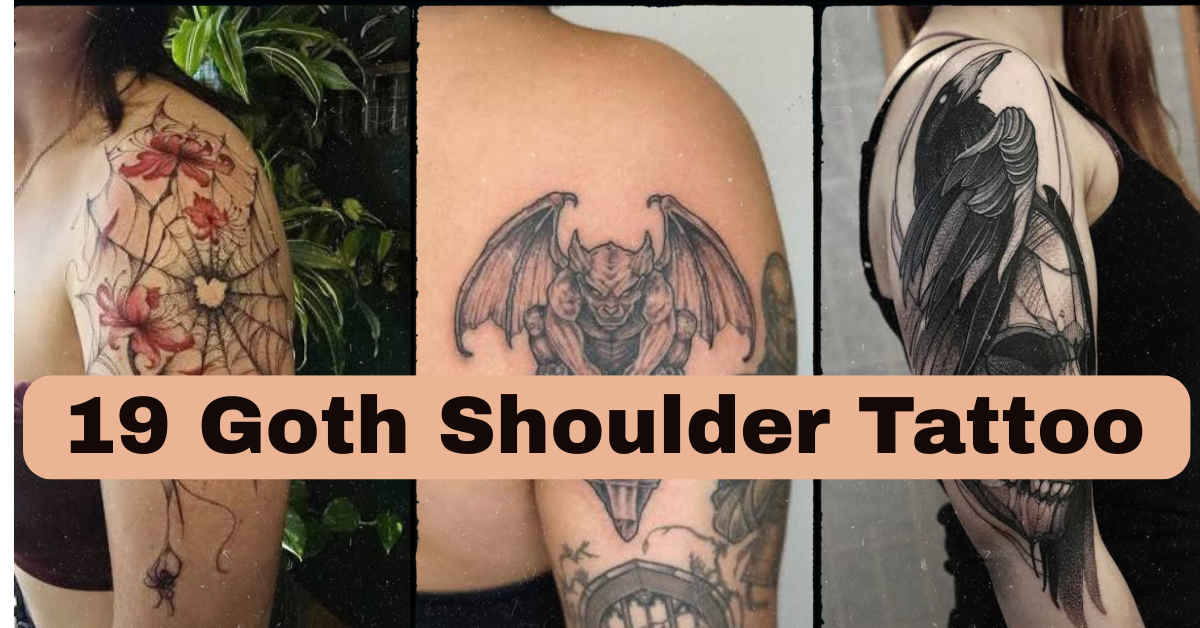
19 Goth Shoulder Tattoo Ideas That Actually Look Intentional
Worried a goth shoulder tattoo will end up looking more Halloween costume than genuine style? That’s a fair concern, and it’s exactly why so many people stall out at the “saving pictures on my phone” stage instead of actually booking. I’ve spent enough time around studios watching goth-leaning consultations happen to know that the difference between a design that reads as intentional and one that reads as a costume almost always comes down to technique choice, not the subject matter itself.
So what are the best goth shoulder tattoo ideas? Blackwork florals, fine-line occult symbols, and dotwork moth or skull motifs work especially well on the shoulder, since the curved, muscular surface holds bold black saturation and detailed shading without warping the design as the joint moves. Smaller single-needle pieces also work here if you want something subtler than a full sleeve-style piece.
Keep reading, because I’m covering 19 specific designs along with real placement tradeoffs, honest pain expectations, cost ranges, and how to actually brief an artist so the goth aesthetic you want comes through instead of getting flattened into generic “dark art.”
Why the Shoulder Works So Well for Goth Tattoo Designs
Goth tattoo work leans heavily on contrast: deep black saturation against bare skin, sharp linework, symbolic imagery that carries real weight rather than just decoration. The shoulder happens to be one of the best spots on the body to deliver that contrast well. It’s got enough flat, muscular surface area to hold a bold blackwork piece without distorting, plus the natural curve of the deltoid gives circular or radial designs, like mandalas, moons, or wreath-style florals, a shape to wrap around instead of sitting flat and stiff. It’s also one of the more flexible placements for visibility. Covered easily by a t-shirt sleeve for work, fully visible in a tank top on your own time. That flexibility matters a lot for anyone still figuring out how visible they want their goth aesthetic to be day to day.
1. Blackwork Wilted Rose Tattoo
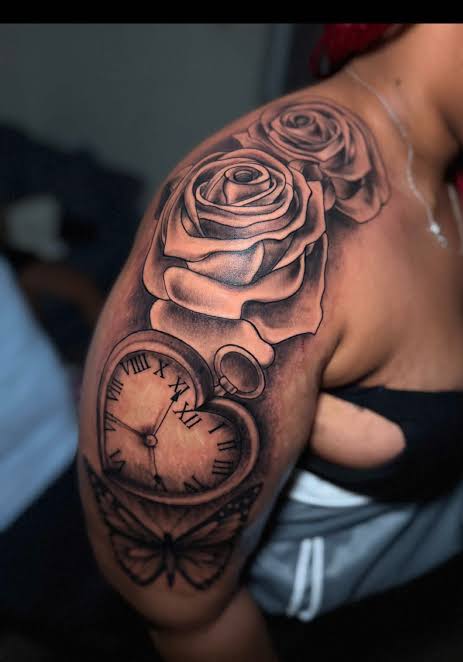
A wilted or dying rose, rendered in solid blackwork rather than the bright red traditional version, is one of the clearest ways to bring goth symbolism into a floral design without losing the floral shape itself. Blackwork means the artist fills large sections of the petals and stem in solid, saturated black ink instead of just outlining them, which gives the piece real visual weight. Best placed on the outer or front shoulder at 4 to 6 inches, where the curve of the deltoid helps the drooping petals sit naturally. Pain on the outer shoulder tends to be moderate, more noticeable than fleshier areas but manageable for most people. Tip: ask your artist to vary the black saturation slightly between petals rather than keeping it perfectly flat, it adds dimension and keeps the piece from reading as a solid sticker shape. This design works well as a statement piece and ages solidly since black holds up better over time than fine detail. It’s a strong choice for someone who already has some ink experience. Next, let’s look at a design built entirely from fine, delicate linework instead.
2. Fine-Line Moon Phase Tattoo
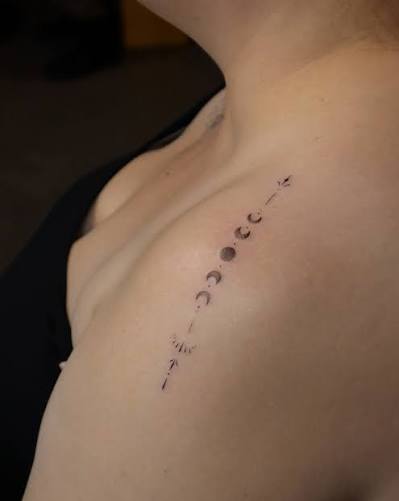
Fine line work uses a single thin, consistent needle line with no shading at all, which makes it perfect for a moon phase sequence, several small crescents through full circles arranged in a gentle arc across the shoulder. This design leans into goth aesthetics through subject matter rather than heavy technique, which makes it a good entry point if you’re new to the style but not ready for a bold blackwork piece. Best placed following the natural curve of the shoulder and upper arm, sized around 4 to 6 inches total for the full sequence. Fine line on the shoulder is generally one of the more tolerable pain experiences in this list. Tip: bring a reference showing the exact number of moon phases you want, six or eight is common, since spacing them evenly matters more than people expect. This design is workplace-friendly when covered and works well as a first tattoo. Now let’s move to something with heavier symbolic weight.
3. Dotwork Moth and Skull Tattoo
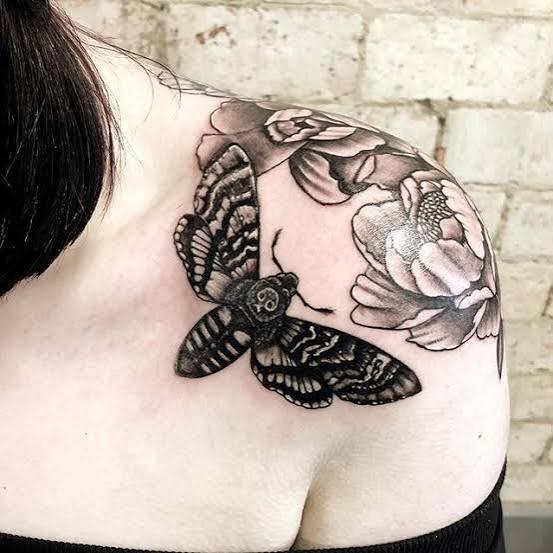
Dotwork builds an image from thousands of small individual dots rather than solid lines, creating a soft, stippled gradient that reads as more textured than flat blackwork. Pairing a moth with a small skull is one of the more classic goth combinations, leaning into memento mori symbolism, a reminder of mortality and transformation rather than pure decoration. Best sized 5 to 7 inches on the outer shoulder, giving both elements room to sit without crowding each other. Dotwork tends to take longer in the chair since each dot is placed individually, and pain is comparable to fine line, more of a buzzing sensation than sharp discomfort. Tip: ask to see healed dotwork specifically in your artist’s portfolio, since dot spacing that looks great on day one can blur together if it’s packed too loosely. This is a bolder, more visible design, so think about workplace coverage before booking. Let’s shift toward a design built on pure negative space next.
4. Negative Space Bat Tattoo
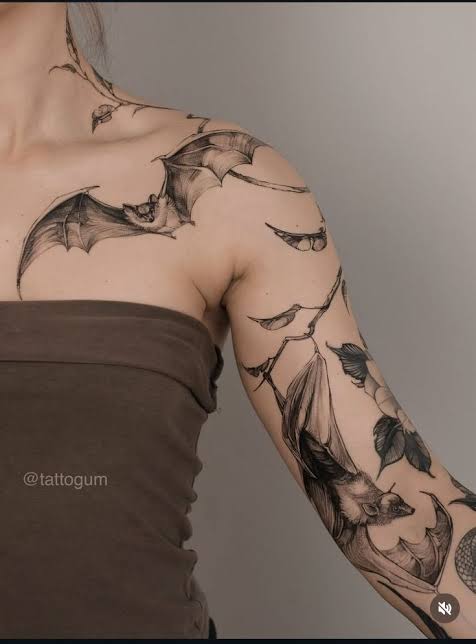
Negative space tattooing uses untouched skin as part of the actual image, typically a solid black background with the bat’s wing shape left bare, or a solid bat silhouette with negative-space vein lines cut through the wings. It’s a striking, modern technique, but genuinely one of the harder ones to execute cleanly, so portfolio-checking matters more here than with most other styles. Best on the outer shoulder at 4 to 6 inches, where there’s a flat enough surface for the contrast to read clearly. Pain runs moderate to higher given the solid black fill involved. Tip: ask specifically how your artist plans to keep the negative space channels crisp through the swelling of the first week of healing, since that’s where thin untouched lines are most at risk of blurring. This design ages best on skin that doesn’t stretch or move constantly, which the shoulder generally satisfies. Next, a much older, more traditional goth-adjacent motif done in a bold, graphic style.
5. Bold Traditional Raven Tattoo
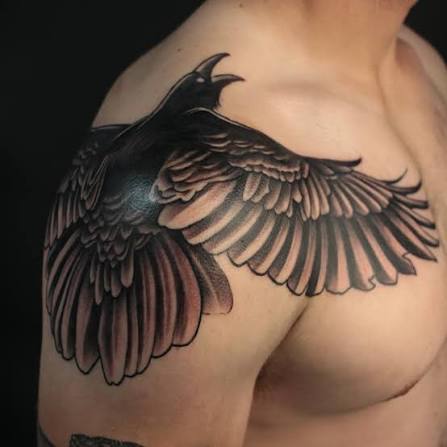
American traditional style uses thick, bold outlines and a limited but saturated color palette, most often black with maybe deep red or grey, prioritizing longevity over fine detail. A raven in this style trades photorealism for graphic punch, thick wing linework and flat color fills that are specifically known to hold up well over decades. Best at 5 to 7 inches on the shoulder cap where the bold lines have room to stay separated instead of muddying together. Pain is moderate, comparable to blackwork given the outline weight. Tip: trust your traditional artist’s proportion suggestions over your own reference photo if they recommend adjustments, thick linework needs specific spacing to avoid blending as it heals. This is a strong workplace-friendly option once healed, and it holds up better over decades than most fine-detail pieces. Let’s contrast that with a much more delicate version of a similar subject.
6. Single-Needle Spider and Web Tattoo
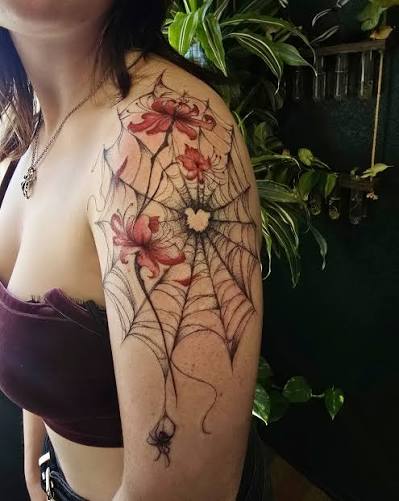
Single-needle work uses the finest needle configuration available, producing extremely thin, delicate lines suited to small, detailed designs. A tiny spider paired with a partial web, rather than a full sprawling web, keeps this design intimate and low-commitment while still carrying clear goth symbolism. Best under 3 inches on the upper shoulder or collarbone-adjacent area. Because the design is small, pain tends to be low given the shorter session time. Tip: keep the web partial rather than trying to fit a full symmetrical web pattern into a small space, overly ambitious tiny detail work tends to blur into a smudge within a few years. This is a solid, low-cost first-tattoo option and works well as a private, meaningful piece. It also makes a good matching design for two people who both lean into a subtler goth style. Now, a design that brings religious iconography into blackwork.
7. Blackwork Gothic Cross Tattoo
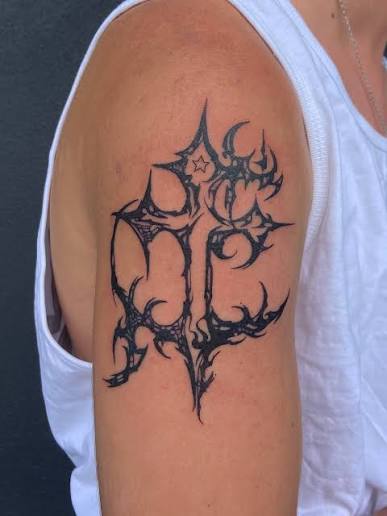
A gothic-style cross, angular, ornate, sometimes wrapped in thorns or vines, rendered in solid blackwork, is one of the more direct ways to bring architectural goth influence into a tattoo. The thick black fill against the cross’s sharp geometric lines creates strong visual contrast. Best sized 4 to 6 inches on the outer or front shoulder, where the flat surface keeps the geometric proportions accurate. Pain runs moderate given the black saturation involved. Tip: specify whether you want the cross rendered with sharp, straight edges or slightly hand-drawn, imperfect ones, since that single choice significantly changes the final feel of the piece. This design carries personal or symbolic weight for some people, so it’s worth being ready to explain that meaning if you’re asked, since it does draw questions in casual settings. Let’s move to a softer, more ornamental take on gothic architecture next.
8. Fine-Line Stained Glass Window Tattoo
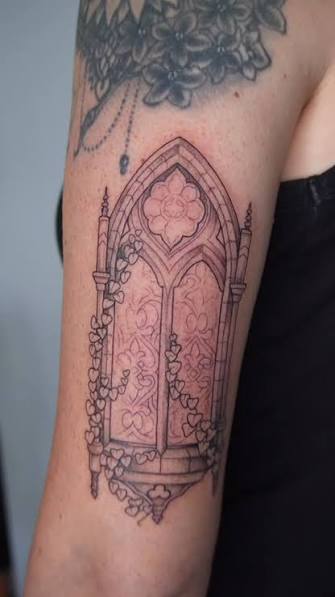
Borrowing the geometric paneling and symmetry of gothic cathedral windows, this design uses fine, precise linework to divide the shoulder into small sectioned “panes,” sometimes left blank, sometimes filled with tiny symbolic details like a moon or a rose. This is one of the more technically demanding fine-line designs since crooked paneling stands out immediately. Best at 5 to 7 inches on a flat section of the shoulder to keep the geometric lines straight. Pain is standard for fine line work in this area. Tip: ask if your artist uses a straightedge or ruler-guided stencil for the paneling rather than freehanding it, precision genuinely matters here. This design ages well since there’s minimal shading to soften over time, just clean architectural lines. It’s not the easiest first tattoo given the precision demands, but it’s a strong, distinctive choice for a second piece.
9. Dotwork Mandala with Skull Center Tattoo
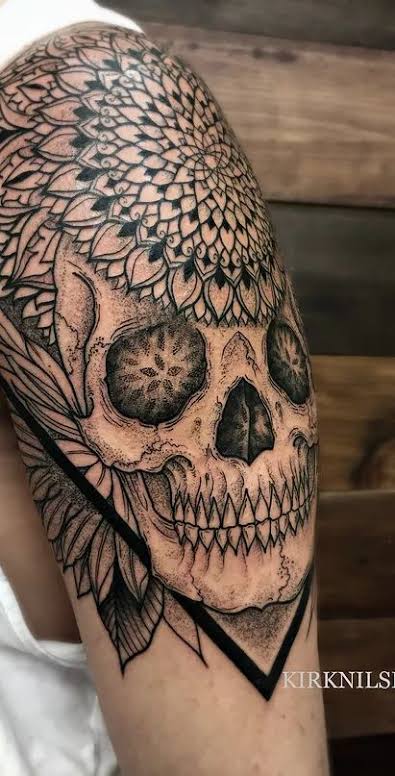
This design places a small, stylized skull at the center of a dotwork mandala, a symmetrical, radial pattern built from dots that mimics the framing of the stained glass idea but in a rounder, more organic shape. The shoulder’s natural curve suits circular mandala compositions particularly well. Best sized larger, 6 to 8 inches, on the shoulder cap where the full radial pattern has room to sit symmetrically. Pain runs moderate to higher given the detailed needlework spread across a wider area. Tip: ask your artist to sketch the mandala slightly asymmetrically on purpose, perfectly mirrored radial patterns are genuinely difficult to execute by hand, and small intentional variation usually looks more polished than an imperfect attempt at true symmetry. This is a statement piece rather than a subtle one, so factor visibility into your placement decision before booking. Next, let’s look at a design with almost no shading at all.
10. Minimalist Bat Silhouette Tattoo
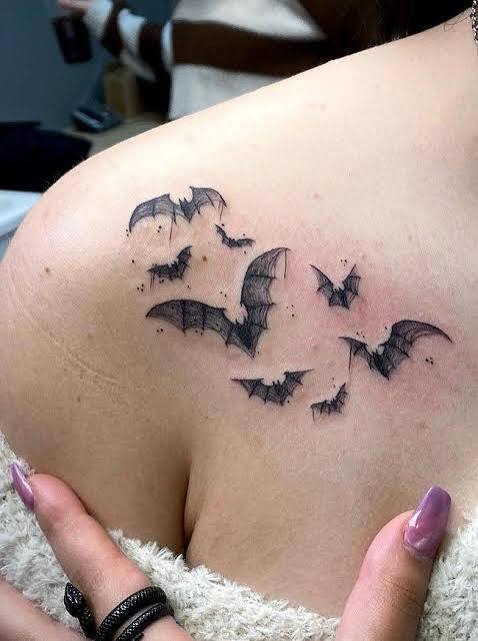
Sometimes the most effective goth tattoo is also the simplest: a clean, solid silhouette with no internal detail, wings spread, done as a single flat black shape. This minimalist approach relies entirely on proportion and shape rather than technique variety, and it’s genuinely one of the more forgiving designs to heal and age well. A 2 to 4 inch silhouette works on the shoulder cap or just below the collarbone depending on how visible you want it. This is about as low-pain as this style of tattoo gets. Tip: ask your artist to slightly exaggerate the wingspan curve when sketching, an overly geometric or stiff outline can start to look more like clip art than an intentional design. This is one of the strongest first-tattoo options on this entire list for both pain tolerance and cost, and it holds up well over time since there’s no fine detail to blur.
11. Blackwork Thorned Vine Wraparound Tattoo
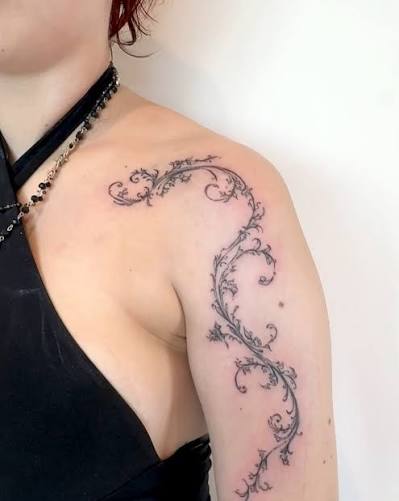
A thorned vine wrapping partway around the upper arm and shoulder, rendered in bold blackwork, is a design that uses the body’s natural curve as part of the composition rather than fighting against it. The thick, deliberate thorns break up the vine’s linework, adding visual texture without needing full shading. Best sized 6 to 9 inches to actually wrap meaningfully, placed starting at the shoulder cap and trailing down the upper arm. Pain runs moderate to higher given both the size and the black saturation in the thorns. Tip: ask your artist to plan the wrap using your actual arm’s muscle definition as a guide rather than a flat reference photo, vine tattoos that ignore the arm’s natural contour tend to look flat and stiff once healed. This is a bold, higher-commitment piece best suited to someone who’s ready for the visibility and session length involved. Let’s look at a quieter symbolic alternative next.
12. Fine-Line Ouija Planchette Tattoo
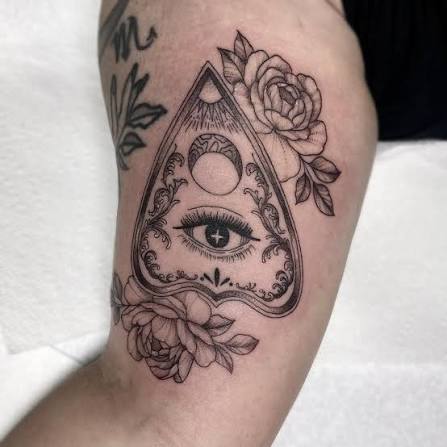
A small planchette, the pointer piece from a spirit board, rendered in fine line with just a hint of shading around its center hole, is a subtler nod to occult imagery without going as bold as a full board or pentagram design. Best under 3 inches on the front or outer shoulder. Pain is on the lower end given the fine, light needlework involved. Tip: ask your artist to keep the interior lettering, if you want any included, large enough to stay legible as the tattoo ages, tiny script inside small linework is one of the most common things that blurs first. This design works well as a private, meaningful piece and is a solid first-tattoo option for someone who wants clear occult symbolism without a large, highly visible piece. Now, let’s look at a bolder version of a related theme.
13. Blackwork Pentagram and Rose Tattoo
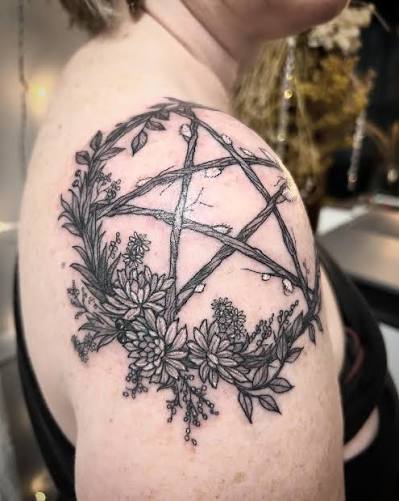
Combining a pentagram with a wrapped rose softens a symbol that can otherwise read as purely stark, adding a floral, more personal layer to the piece. Done in blackwork with the rose petals shaded solid and the pentagram’s lines kept crisp and geometric, this design leans on contrast between organic and geometric shapes. Best at 5 to 7 inches on the shoulder cap where there’s room for both elements to sit clearly. Pain runs moderate given the black saturation across both the flower and the star shape. Tip: be specific with your artist about proportion, some people want the pentagram dominant with the rose as an accent, others want it reversed, and that single decision changes the whole composition. This is a bolder, more visible piece, so think through workplace coverage and how much you want to discuss the symbolism casually. Let’s move to a design drawn from gothic Victorian mourning jewelry instead.
14. Fine-Line Mourning Jewelry Locket Tattoo
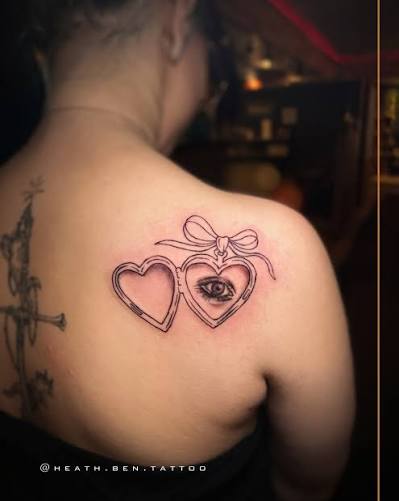
Victorian mourning jewelry, ornate lockets, often engraved with initials or small floral etching, translates beautifully into fine-line tattoo work, giving a goth aesthetic a more historical, romantic edge rather than a purely dark one. Best sized 3 to 5 inches on the front or outer shoulder where the locket’s oval shape sits naturally. Pain is standard for fine line work in this area. Tip: bring an actual reference photo of antique mourning jewelry rather than a modern illustration, the engraving style and proportions read very differently and your artist will need that historical reference to get the etching detail right. This design is workplace-friendly and reads as ornamental rather than overtly dark, which makes it a good option if you want goth aesthetics without inviting constant questions. It’s also a solid first-tattoo pick. Next, let’s bring color into the mix for the first time on this list.
15. Deep Purple and Black Gradient Moth Tattoo
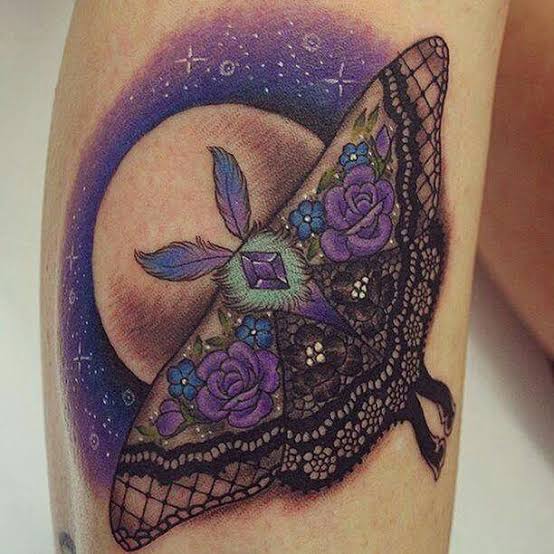
This design uses a limited, moody color palette, deep violet blending into black, to create a gradient effect across a moth’s wings rather than a bright multicolor approach. It’s typically done using color shading layered over a fine-line or blackwork base structure. Best at 5 to 7 inches on the outer shoulder where the gradient has room to shift gradually instead of banding awkwardly. Pain runs moderate to higher given the color and shading combined. Tip: ask specifically how your artist blends color transitions, some use a whip-shading technique for smoother gradients, which genuinely affects how evenly this design heals and ages over the following years. This is a visually rich, higher-commitment piece, so think through cost and future touch-up expectations before booking, since color pigment tends to soften faster than pure black ink. Let’s return to a simpler, more graphic design next.
16. Bold Blackwork Crow Skull Tattoo
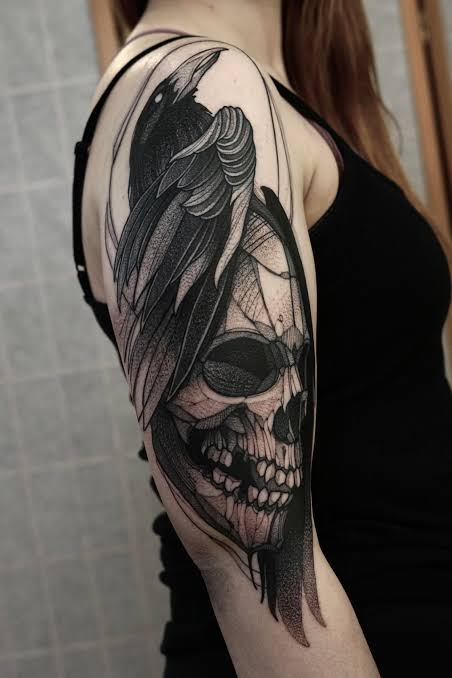
A stylized crow skull, simplified and graphic rather than photorealistic, rendered in bold blackwork with sharp negative-space highlights, makes for a striking, clearly goth-coded piece that isn’t overly complicated to execute well. Best sized 4 to 6 inches on the shoulder cap. Pain runs moderate to higher given the solid black saturation involved. Tip: ask your artist to keep the beak and eye socket shapes slightly stylized rather than anatomically precise, an overly literal skull illustration can look busier and less intentional than a clean, simplified graphic version. This design is bold and visible, better suited to someone comfortable with a statement piece rather than something subtle. It ages well since the bold black fill holds saturation better over time than fine detail. Now, a design pulling from architectural gargoyle imagery.
17. Fine-Line Gargoyle Silhouette Tattoo
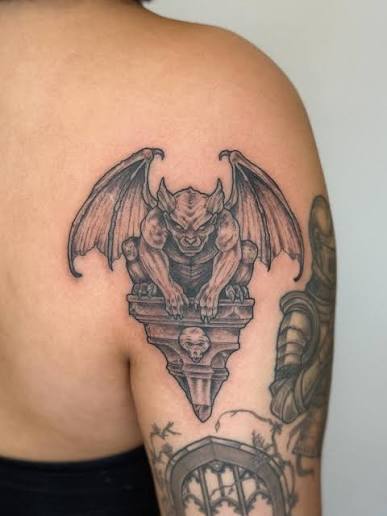
A small, perched gargoyle silhouette, drawn from gothic cathedral architecture, done in fine line with minimal interior detail, brings in a specific historical goth reference without needing heavy shading or a large canvas. Best under 4 inches on the front or outer shoulder. Pain is on the lower end given the linework-only approach. Tip: bring a specific architectural reference rather than a generic gargoyle clip art image, actual cathedral gargoyle carvings have distinct proportions and posture that read as more intentional and less cartoonish once tattooed. This design works well as a first tattoo and is workplace-friendly when covered, since the silhouette style reads as more artistic than overtly dark from a distance. Let’s close the design list with one more bold, high-commitment piece.
18. Blackwork Wreath of Dead Roses Tattoo
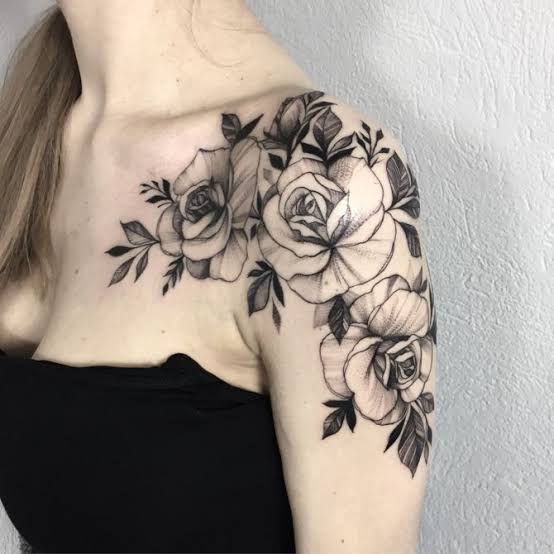
A full circular wreath made of wilted, drooping roses, rendered entirely in blackwork, wraps naturally around the curve of the shoulder cap, using the joint’s shape as part of the composition. This is a larger, more involved piece that benefits from the shoulder’s rounded surface in a way a flat placement wouldn’t. Best sized 6 to 8 inches to let the wreath’s full circle read clearly. Pain runs moderate to higher given the size and black saturation throughout. Tip: ask your artist to vary petal direction and droop angle around the wreath rather than keeping every rose identical, uniform repetition tends to look more like a printed pattern than a hand-illustrated piece. This is a statement design best suited to someone ready for a longer session and higher visibility. Last on the list, a quiet, symbolic closer.
19. Fine-Line Broken Chain Tattoo
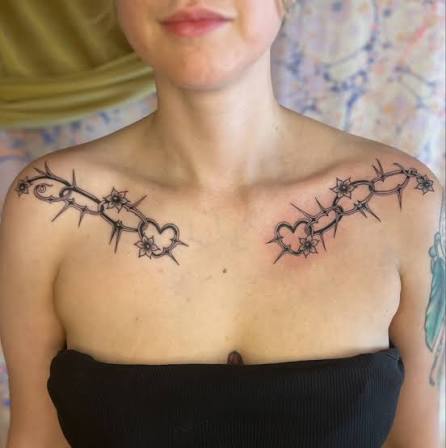
A short length of chain with one link deliberately broken, done in fine line with slightly thicker line weight than a typical delicate design to keep the metal links reading clearly, closes out this list with a subtle, symbolic piece about breaking free from something. Best sized 3 to 5 inches along the collarbone-adjacent shoulder area. Pain is low to moderate depending on exact placement. Tip: ask your artist to add subtle shading just inside each link to suggest metallic dimension, flat fine-line links without any shading at all can sometimes read as a flat cartoon rather than an illustrated chain. This design works well as a private, meaningful first tattoo and is easy to keep workplace-appropriate given its size and symbolism.
Best Placement Ideas
- Shoulder cap — the most versatile spot for goth shoulder tattoos; the curve suits circular and radial designs like mandalas and wreaths especially well.
- Outer shoulder — good flat surface for larger blackwork or fine-line pieces, moderate visibility depending on clothing.
- Front shoulder near the collarbone — better for smaller, more private designs; easy to cover with most necklines.
- Upper arm extending from the shoulder — best for larger wraparound pieces like vines or bold traditional designs that benefit from more surface area.
- Back of the shoulder — an option for larger pieces you’d rather keep less visible day to day, though it’s a harder angle for you to see for your own touch-ups.
Tips for Success
Finding the right artist matters more than finding the “perfect” reference image. Start by looking specifically for work in the technique you want, fine line, blackwork, or dotwork, since these require genuinely different skill sets, not just general talent. Look for healed photos in a portfolio, not just fresh ink, since that’s the real test of how a design ages. Bring reference photos that separate what you like about the subject matter from what you like about the composition style, since mixing several different references into one verbal description tends to cause miscommunication. And ask direct questions during your consultation: what needle configuration will they use, how many sessions do they expect for a larger piece, and how do they approach touch-ups if linework or color softens over the following year.
Common Mistakes and How to Avoid Them
- Sizing too small for the detail level. A design with fine interior linework or shading needs enough room to hold that detail through healing, cramming detailed work into a tiny space tends to blur within a few years.
- Choosing a placement that fights the design’s shape. A circular mandala or wreath generally needs the shoulder’s natural curve to work, while a flat geometric piece needs a flatter surface elsewhere on the shoulder.
- Skipping the aftercare instructions your specific artist gives you. Generic advice found online doesn’t always match the technique or ink used on your particular piece.
- Copying a reference design exactly without personalizing it. Small adjustments, a different flower, an added symbol, a resized element, make the piece genuinely yours instead of a direct copy of someone else’s tattoo.
Similar Variations
Most designs on this list can be adapted to fit different comfort levels. A larger blackwork wreath can be scaled down into a simplified single-needle version for lower commitment. A black-and-grey piece can be recolored into deep purples or muted greys for a softer palette. Two or three smaller designs from this list, a moth, a moon phase sequence, a small chain, can be combined into a layered composition across the shoulder and upper arm. And any of the symbolic pairings here, skull and moth, cross and thorns, pentagram and rose, can have their proportions flipped if the original balance doesn’t feel personal enough to you.
Aftercare Basics
Aftercare depends on your specific ink type, technique, and individual skin, so always follow the exact sheet your artist provides rather than generic internet advice. In general, expect to keep the area clean and moisturized, avoid direct sun exposure and swimming during the initial healing period, and avoid picking at any peeling skin as it heals. Healing timelines and reactions vary from person to person, so if anything seems unusual, it’s worth checking in with your artist or a licensed dermatologist rather than guessing on your own.
Quick FAQ
How much does a goth shoulder tattoo cost? Cost depends heavily on size, technique, and your artist’s experience level, but expect a wide range, roughly $150 for a small single-needle piece up to $700 or more for a large, multi-session blackwork design. Always get a direct quote during your consultation.
Does a goth shoulder tattoo hurt a lot? Pain tolerance varies a lot by individual, but the outer shoulder is generally considered a more moderate placement, more noticeable than fleshier areas of the body but manageable for most people compared to bonier spots like the collarbone or ribs.
How long does a goth shoulder tattoo take to heal? Surface healing typically takes a couple of weeks, though full healing underneath the skin can take longer. Healing time varies by individual and design size, so follow your artist’s specific aftercare guidance closely.
Do blackwork goth tattoos fade faster than fine-line ones? Generally, solid blackwork tends to hold its saturation better over time than very fine, thin linework, which is part of why some people schedule an occasional touch-up session for delicate fine-line pieces after several years.
Final Thoughts
Whatever direction you take, bold blackwork, delicate fine line, or something layered in between, a goth shoulder tattoo works because the shoulder itself gives the design room to hold contrast, curve, and detail all at once.
Take your time picking both the design and the artist, ask the questions covered here, and don’t be afraid to personalize any of these 19 goth shoulder tattoo ideas until it actually feels like yours. A piece meant to carry this much meaning is worth getting right the first time.
This article is for inspiration and general informational purposes only. Pain tolerance, healing time, and individual results vary. Always consult a licensed, professional tattoo artist, and a dermatologist if you have any skin concerns, before booking.