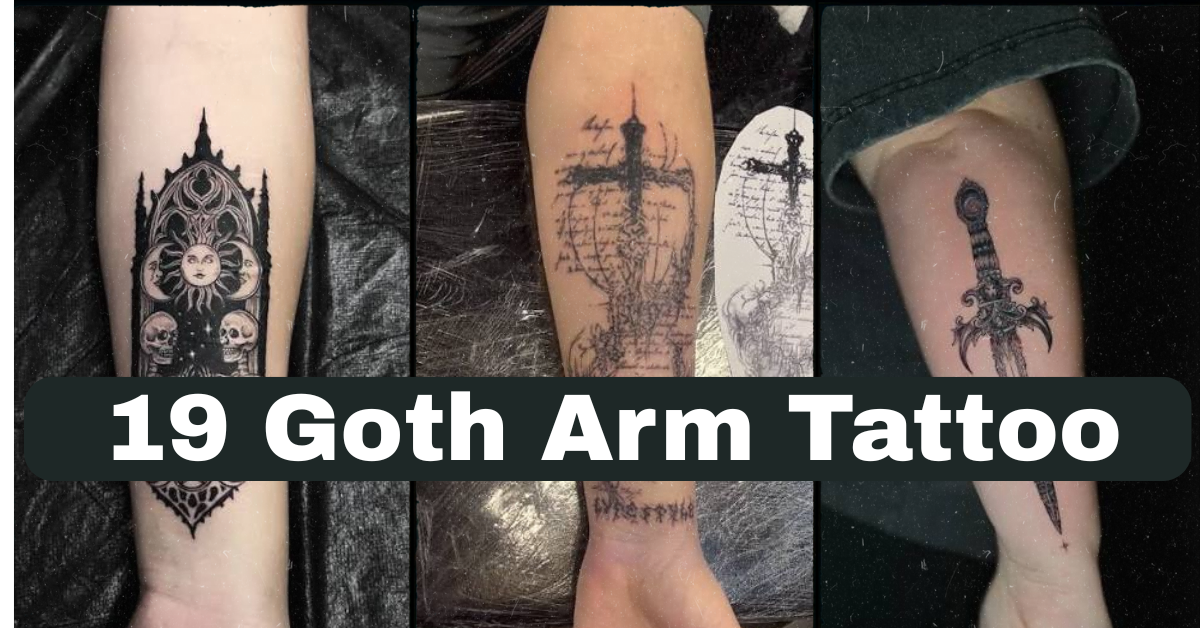
19 Goth Arm Tattoo Ideas That Actually Age Well (And Ones You Should Skip)
Nervous about committing to a goth arm tattoo you might regret when the ink settles in a few years? That’s a fair worry, and it’s exactly why I put this guide together after looking at what most “goth tattoo inspo” roundups leave out — real placement advice, honest pain notes, and what these designs actually look like five years down the road, not just fresh off the needle.
So what are the best goth arm tattoo ideas? The strongest options combine blackwork (solid black fill), fine-line detailing, and dotwork shading to create high-contrast gothic imagery — skulls, gothic script, cathedral motifs, and ornamental blackwork — that holds its shape on skin for a decade or more when placed correctly and sized with enough room for the linework to breathe.
Keep reading and I’ll walk you through placement tradeoffs, realistic pain levels by arm zone, what a fair price range looks like, and exactly how to brief your artist so the stencil you get matches the image in your head.
Why Goth Arm Tattoos Work So Well as a Design Category
Gothic tattoo design leans on strong contrast — deep black against bare skin, sharp linework against negative space (the untouched skin left intentionally blank to define shape). That contrast is part of why goth pieces tend to age better than delicate, low-contrast styles like soft watercolor washes. The arm is also one of the most forgiving canvases in tattooing because it has a mix of flat and curved surfaces, letting an artist wrap ornamental elements — chains, thorns, script — around the natural muscle lines instead of fighting them. I’ve noticed goth designs read as intentional rather than trendy, which matters if you want something that still feels right to look at in ten years.
Blackwork Gothic Cathedral Sleeve Panel
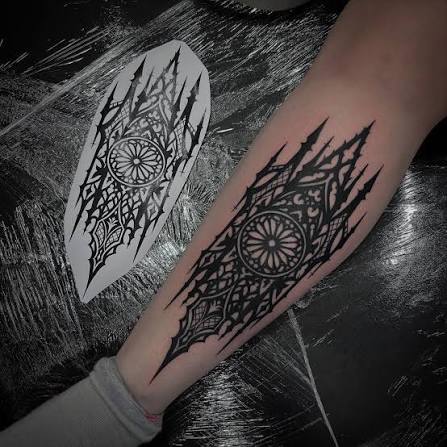
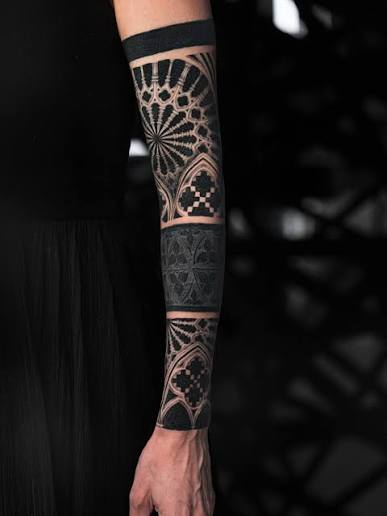
This design uses full blackwork — solid black ink with no shading gradient — to render a stained-glass cathedral window or arch shape along the upper or lower arm. The heavy black fill contrasts against untouched skin used as negative space to form the window panes and tracery lines. Best placed on the outer bicep or forearm where there’s enough flat surface for the geometric lines to stay symmetrical; aim for at least 4 inches tall so the panel detail doesn’t muddy as it heals. Bring a straight-on reference photo of an actual gothic window, not just a sketch, so your artist can translate proportions accurately. Solid black areas on fleshier zones like the bicep tend to be more tolerable than bony wrist work. This one reads well in professional settings if placed high enough to cover with a sleeve, and it ages into the next idea nicely.
Fine-Line Gothic Script Lettering
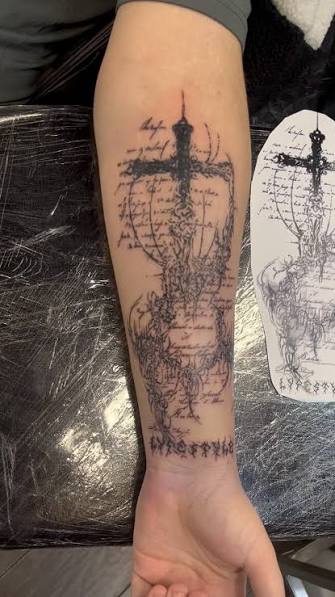
Fine-line work uses a thinner needle grouping to produce delicate, low-saturation lines — think handwriting rather than a bold stamp. A gothic-style script phrase running down the forearm or wrapping the wrist reads elegant instead of heavy, since there’s no shading, just clean linework. Keep lettering no smaller than half an inch tall per character, because fine lines blur first as skin ages and stretches. The inner forearm and wrist are common spots, though the wrist sits closer to bone, so expect more sensitivity there than on the meatier outer forearm. Ask your artist about a single-needle configuration and request a stencil proof in the actual font weight before the session, not just a digital mockup. This is a solid first-tattoo option for someone who wants gothic meaning without visual weight, and it pairs naturally with the imagery below.
Dotwork Skull Portrait
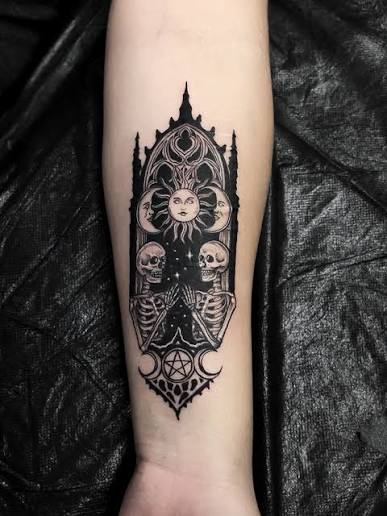
Dotwork builds shading and texture entirely from small individual dots instead of solid lines or gradients, giving a stippled, almost engraving-like finish. A dotwork skull on the shoulder or outer bicep gets soft shadow depth without looking flat or overly graphic, since the dot density controls how dark each area reads. This technique demands patience — sessions run long because the artist is placing thousands of individual points — and the outer arm handles that better than thin-skinned areas. Size it at minimum 3 inches across so the stippling has room to create gradient transitions. Bring reference images showing dot density you like, since “detailed” means different things to different artists. This design suits people who want symbolism (mortality, change) without going into bold traditional territory, and it leads naturally into negative-space framing.
Negative Space Bat Silhouette
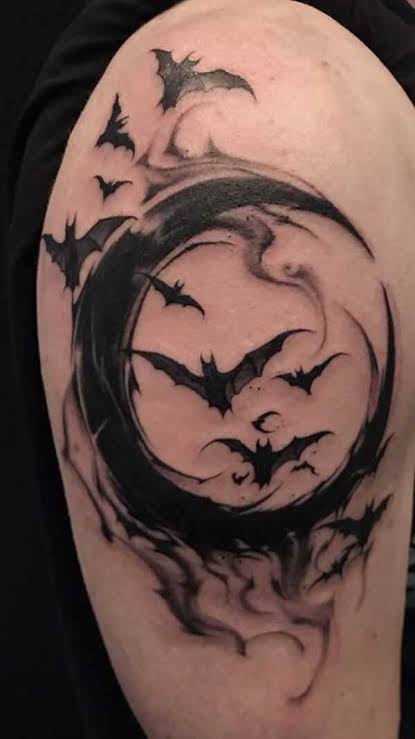
Negative space tattoos rely on what’s left unshaded as much as what’s inked — here, a bat shape is either fully black with a lighter background halo, or the reverse, with a black background and the bat’s shape carved out in bare skin. This technique demands precise line control since any wobble in the outline is immediately visible against the empty space. The outer forearm or upper arm works best because the flat plane keeps the silhouette from distorting. Keep it at least 2.5 inches wide; smaller sizes lose the crisp edge negative space depends on. Ask specifically for a “negative space” technique reference, since not every studio offers it as a standard option. It’s a strong pick for someone wanting bold visual impact without dense black coverage across a large area.
Traditional Bold Gothic Rose with Thorns
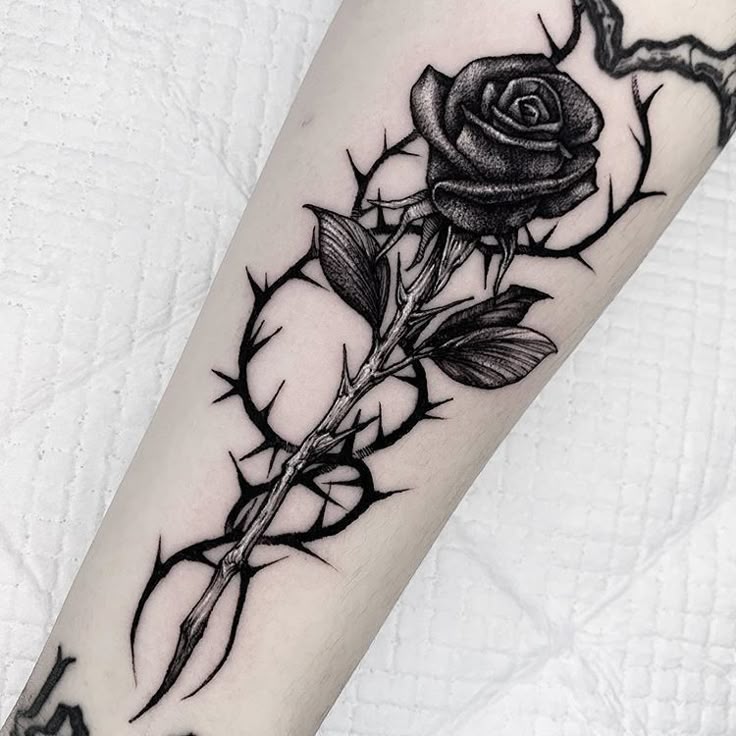
Bold traditional tattooing uses thick, confident outlines with limited color saturation — usually deep reds, blacks, and greens — and heavier shading blocks rather than fine gradients. A gothic rose with sharp thorns fits this style well, since the bold linework holds up visually for decades better than delicate detailing does. The upper arm or shoulder cap gives enough curve and space for the rose head and stem to flow naturally. Plan for 3 to 5 inches minimum so color saturation doesn’t clump during healing. This placement sits on fleshier tissue, generally making it more tolerable than forearm or elbow work. It’s an easy design to make part of a matching set with a friend by adjusting thorn count or rose angle, and it transitions well into the ornamental dagger piece next.
Blackwork Ornamental Dagger
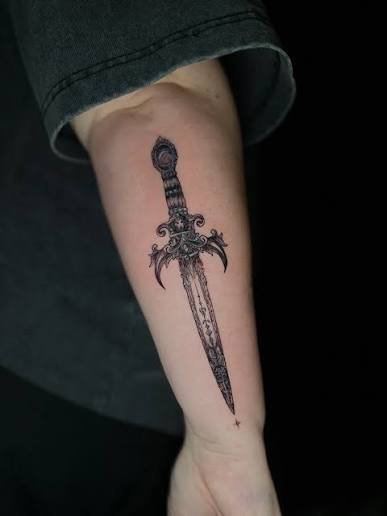
An ornamental dagger done in blackwork combines a solid black blade silhouette with fine decorative linework on the hilt — filigree, small chains, or engraved patterns. The contrast between heavy solid fill and delicate detail lines is what gives this piece visual depth without adding actual shading gradients. Running it vertically down the forearm follows the natural bone line and makes the composition feel intentional rather than randomly placed. Aim for 4+ inches in length to keep hilt detail legible. The forearm is moderately sensitive — expect more discomfort near the wrist end than near the elbow. Request a mock-up showing the dagger positioned on your actual arm photo before finalizing, since proportion errors are common with vertical designs. This piece works well solo or as an anchor point for a larger sleeve later.
Fine-Line Spider Web Elbow Piece
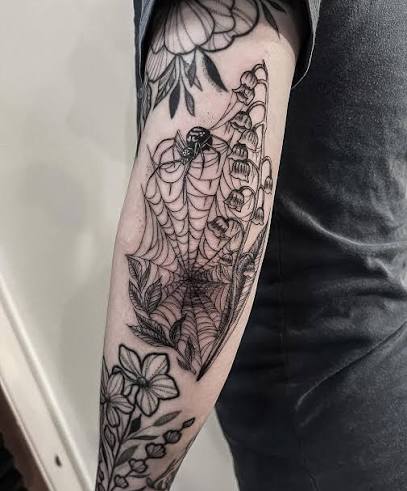
Spider webs done in fine line stretch across the elbow crease, using the joint’s natural fold as part of the design’s structure. This is a notoriously tricky placement — skin here moves constantly, which affects both healing and long-term crispness of thin lines. Because of that, I’d only recommend this spot to someone who’s already sat through at least one tattoo session and knows their pain tolerance, since the elbow is widely considered one of the more sensitive zones on the arm. Keep the web design simple, no more than 6–8 main strands, since fine lines on a high-movement joint blur faster than they would on the flat forearm. Ask your artist directly about their experience tattooing elbows specifically. If you want the imagery without the discomfort, the next design gives a similar mood on friendlier skin.
Dotwork Moth with Skull Detail
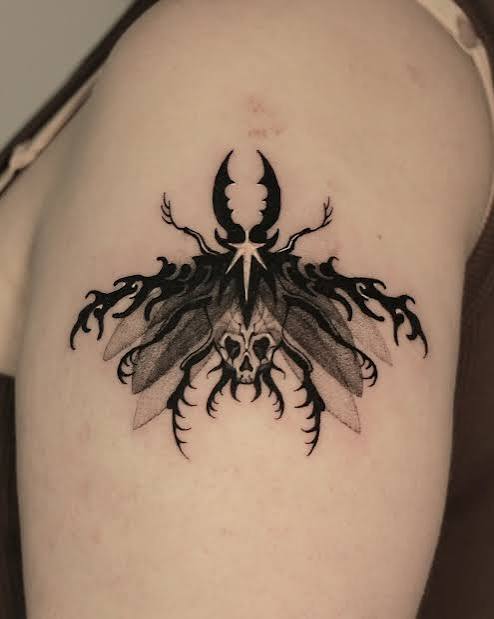
A moth rendered in dotwork, with a small skull worked into the thorax or wing pattern, gives you texture and symbolism in one composition. The stippling technique creates a soft gradient across the wings that mimics natural moth patterning far better than solid black fill would. This suits the upper arm or shoulder blade-adjacent area where there’s enough flat space for wing symmetry. Size it around 4 inches across at minimum, since wing detail gets lost below that. Dotwork sessions tend to run longer than linework of the same size, so ask about session length upfront. Outer arm placement here keeps discomfort moderate compared to inner-arm or joint spots. This design works nicely as a solo statement piece or as one panel within a larger themed sleeve.
Gothic Snake Wrap Around Forearm
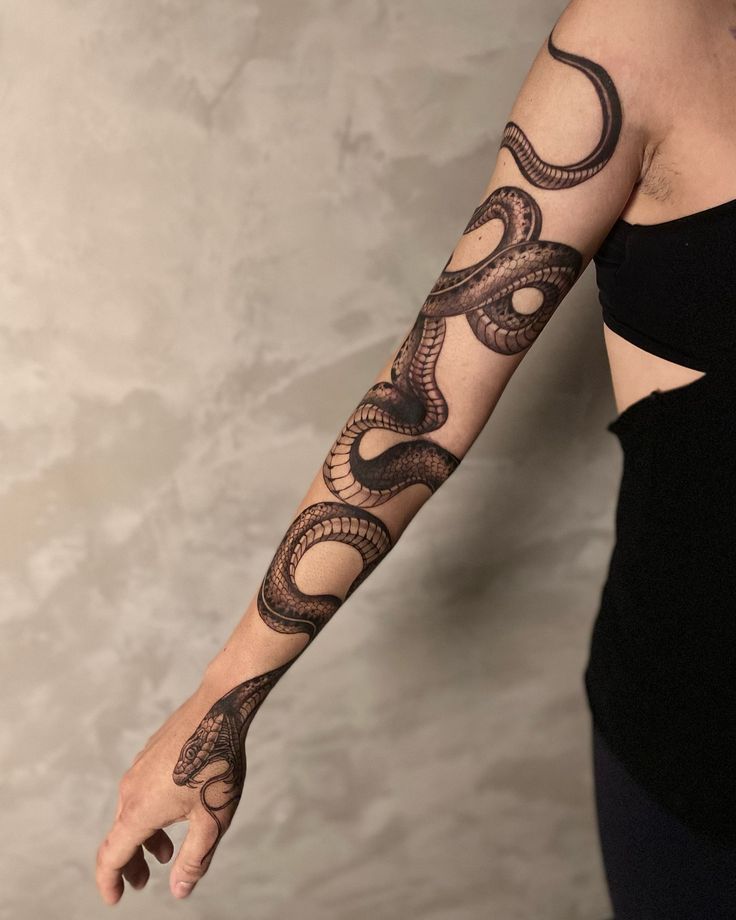
A snake wrapping the forearm uses the limb’s natural cylinder shape as the composition’s backbone, with blackwork scales and fine-line detailing on the head and eyes. The wraparound placement means the design reads differently depending on the angle you view it from, which a lot of clients like for versatility. Plan on 6+ inches of length to let the coil pattern look deliberate rather than cramped. Forearm skin is generally more tolerable than wrist or elbow, though the underside nearer the inner arm can feel more sensitive. Bring a photo of your actual arm’s dimensions so the artist can plan how many coils fit proportionally. This is a strong option if you want something bold that still reads well long-sleeve or short-sleeve, and it sets up well against structural pieces like the gargoyle below.
Bold Blackwork Gargoyle
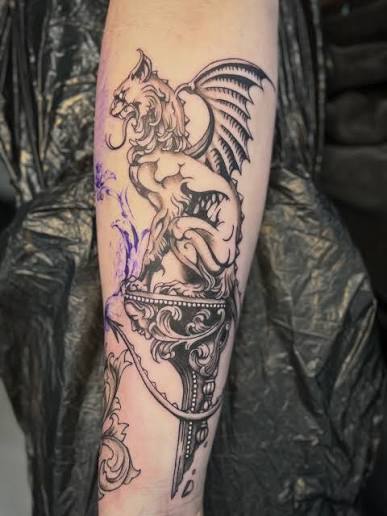
A gargoyle figure in bold blackwork uses thick outlines and solid black shadow blocks rather than gradient shading, giving it a carved, stone-like look on skin. This design carries more visual weight than most on this list, so it usually needs the shoulder or upper-arm’s flatter real estate to stay proportional. Size it 4 to 6 inches tall minimum — gargoyles have a lot of small anatomical detail (wings, claws, facial features) that gets muddy if compressed. This is a solid-fill-heavy piece, and larger solid black areas on the fleshier upper arm are typically more manageable than the same fill on bony areas. Ask your artist how they handle solid black saturation over multiple passes to avoid patchy healing. It’s a strong centerpiece tattoo, not a subtle add-on, and it pairs surprisingly well with the delicate chandelier design next.
Fine-Line Gothic Chandelier or Candelabra
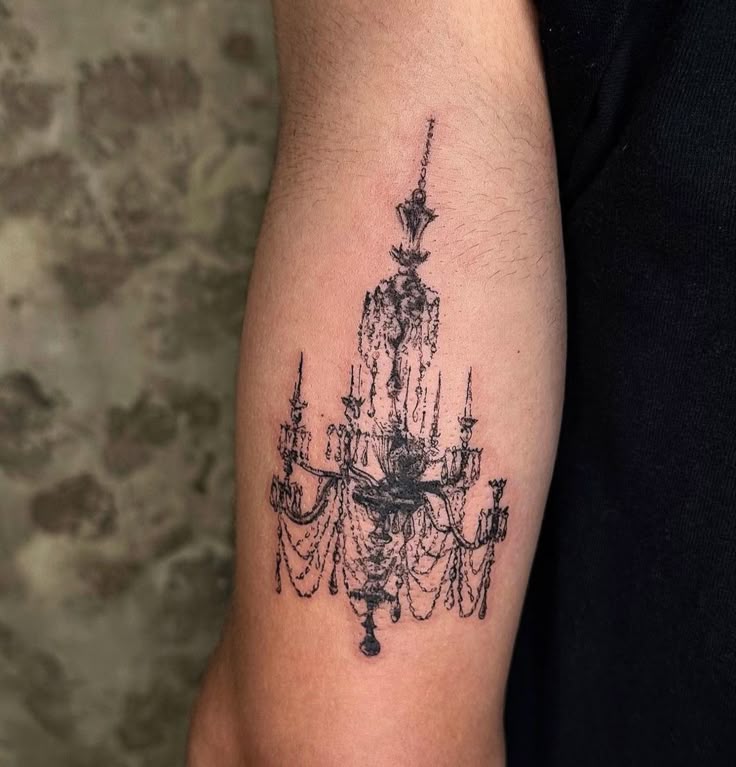
A gothic candelabra or chandelier in fine line brings ornate Victorian detail without heavy shading — just clean, thin outlines defining each candle, arm, and drip of wax. This works especially well on the inner or outer forearm where the vertical shape can stretch naturally along the limb. Keep the design at least 3 inches tall so individual candle arms don’t blend into a blob once healed. This is a good one to request as a custom design rather than pulling straight off a flash sheet, since chandelier proportions vary a lot and a custom stencil sized to your specific arm looks noticeably more polished. Pain-wise, the outer forearm is one of the milder spots on the arm. This piece works well for people wanting gothic elegance that still looks refined in professional settings.
Dotwork Raven Portrait
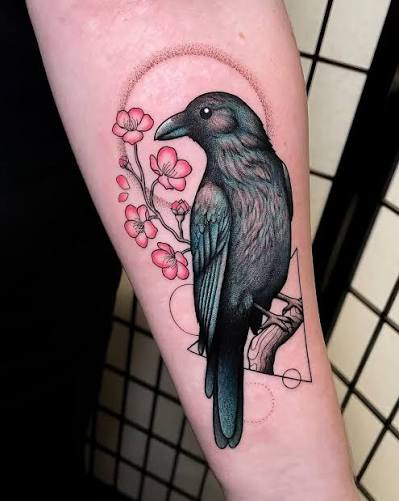
A raven portrait in dotwork uses layered stippling to build feather texture and shadow without a single traditional shading stroke. The result has a soft, almost photographic quality that solid blackwork can’t replicate. Place it on the shoulder or upper arm where the bird can be rendered at a natural, non-distorted angle. Give it 4+ inches of space; raven feather detail is dense, and shrinking it below that threshold usually means losing individual feather lines during healing. Dotwork on fleshier upper-arm skin tends to hold detail better long-term than the same technique over bony areas. Ask to see healed dotwork photos in your artist’s portfolio specifically, not just fresh photos, since stippling can look different once fully settled. This piece carries symbolic weight (ravens are tied to death, wisdom, and change across gothic folklore) without needing any text to explain it.
Negative Space Gothic Arch Window
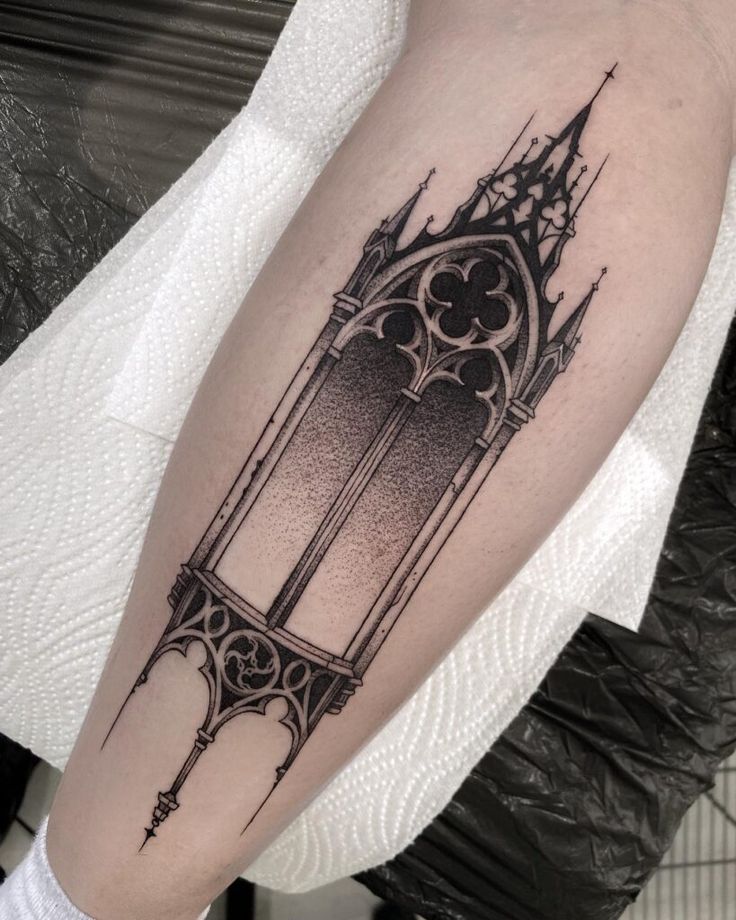
Similar in concept to the cathedral panel but smaller and more graphic, this design uses a single gothic arch shape with negative space carving out interior tracery instead of full stained-glass paneling. It reads as more minimal and works well at a smaller scale than the full cathedral piece — 2 to 3 inches is workable here. The outer forearm or wrist area suits this design since the clean architectural lines don’t need a lot of surrounding space to make sense. Wrist placement means more visible everyday exposure, so think about workplace norms before booking there. Ask your artist to keep line weight consistent throughout, since inconsistent thickness is the most common flaw in architectural negative-space work. This is a great “starter” gothic piece for someone easing into the aesthetic without going bold.
Ornamental Blackwork Rosary Wrap
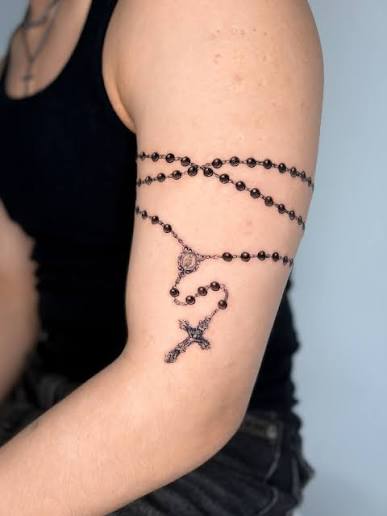
A rosary or chain-and-cross design wrapped around the wrist or lower forearm uses blackwork beads connected by fine linework chain segments. The repetition of bead shapes creates rhythm along the limb, and the solid black beads contrast cleanly against thin connecting lines. This placement sits closer to bone, so expect more sensitivity than you’d get on the meatier upper arm — it’s a commonly reported tender spot. Keep bead size consistent and at least a quarter-inch each so they don’t blur into a solid black band over time. This design is easy to personalize by adjusting bead count to fit your specific wrist circumference, which is worth mentioning to your artist during the consultation. It’s a popular matching-tattoo option among friend groups wanting a shared symbol without identical placement.
Fine-Line Gothic Typography Quote
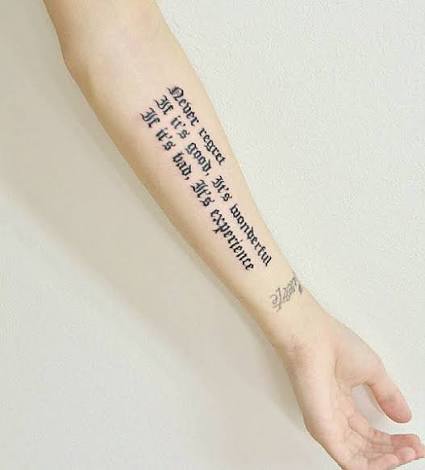
Beyond simple script, a full typographic quote in a blackletter-style gothic font makes a bigger visual statement while still using thin, controlled fine-line work. This needs more forearm real estate than a short script phrase — plan for at least 4 inches of length depending on quote size. Choose a flatter section of the forearm so letters stay level and legible; curved placement over muscle can distort longer lines of text. Bring a printed proof of the exact font and wording, since blackletter styles vary a lot between “readable” and “purely decorative.” Fine-line lettering on the forearm is moderately tolerable pain-wise compared to wrist or elbow text. This works for people who want a specific gothic literary or personal reference visible without needing bold imagery to carry the meaning.
Dotwork Mandala with Gothic Elements
Blending a traditional mandala’s radial symmetry with gothic elements — small skulls, crosses, or thorned borders — worked into the stippled pattern gives a design that’s both meditative and dark in tone. This needs a flat, circular canvas, so the shoulder cap or upper outer arm works best for keeping radial symmetry intact. Size matters a lot here: under 4 inches and the fine gothic details inside the mandala pattern get lost. Dotwork mandalas take longer to tattoo than linework of the same diameter, so budget extra session time. Ask for a printed stencil test on paper first to confirm symmetry before it goes on skin. This is a strong choice for someone wanting a large, detailed piece with spiritual undertones layered into the gothic aesthetic.
Bold Traditional Gothic Skull and Roses
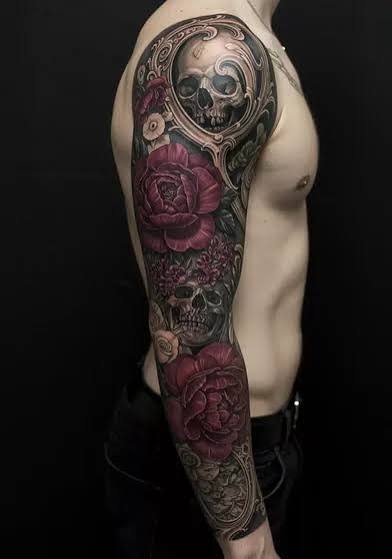
This classic pairing uses bold traditional line weight and limited, saturated color blocks (usually black, deep red, occasional gray shading) to combine a skull with a wreath or scatter of roses. It’s a heavier, more graphic piece than the fine-line rose earlier, and it needs the shoulder or upper arm’s flatter surface to hold the composition together. Plan for 5+ inches so both the skull’s facial detail and rose petal shading have room. Bold traditional work on fleshier upper-arm skin generally heals into cleaner, more solid black than the same design over thin skin. Ask your artist how they handle color saturation in the rose petals since overly light color tends to fade faster over the years. This design has been a gothic and traditional tattoo staple for decades because the bold style genuinely holds up over time.
Blackwork Ivy and Thorn Vine Wrap
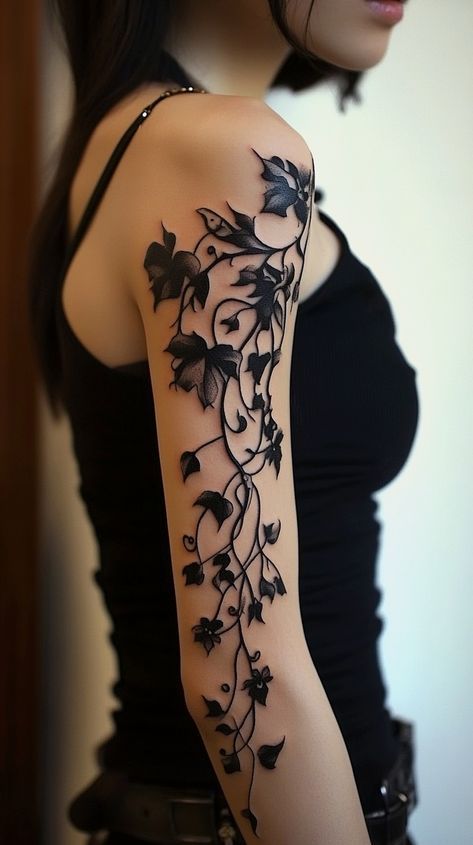
A thorned ivy vine wrapping the arm in solid blackwork creates continuous movement from shoulder to wrist or in a shorter segment on the forearm. The vine’s organic curves follow the arm’s natural shape better than rigid geometric designs do, which is part of why this ages well visually — it was designed with the limb’s movement in mind. Keep thorn spacing consistent and leave enough negative space between leaves so the piece doesn’t read as one solid black mass once healed. This is a great “add-on” design if you already have a smaller gothic piece and want to connect it into a cohesive arm composition. Discomfort is generally moderate on the outer forearm and increases if the wrap extends toward the inner elbow or wrist. It’s one of the more versatile pieces on this list since length and coverage are easy to adjust to your budget and pain tolerance.
Best Placement Ideas
Placement affects visibility, pain, and how well fine detail survives over the years. Here’s how the major arm zones stack up:
- Outer forearm — Moderate pain, high visibility, good for fine-line and blackwork detail since the skin stays relatively flat.
- Inner forearm — Slightly more sensitive, easier to conceal with long sleeves, decent surface for vertical designs.
- Upper arm/shoulder cap — Generally more tolerable pain-wise due to more tissue, ideal for larger bold or dotwork pieces.
- Elbow — More sensitive due to joint movement and thinner skin coverage; best for simple, low-detail designs only.
- Wrist — Closer to bone, tends to be more tender, high visibility, suited to smaller minimal designs.
Tips for Success
Look through an artist’s portfolio for healed photos, not just fresh ink — healed work shows you how their linework and shading actually settle. Ask specifically about their experience with the technique you want (dotwork, blackwork, fine line) since these require different needle setups and hand pacing. Bring reference images that show line weight and shading density you like, not just subject matter. During your consultation, ask direct questions about sizing recommendations for your chosen placement — a good artist will tell you honestly if your idea needs to be bigger to hold detail. Decide upfront whether you want a fully custom design or a flash piece (pre-drawn design available to multiple clients); custom work costs more and takes longer to schedule but fits your specific arm and vision.
Common Mistakes and How to Avoid Them
- Sizing too small for the detail level — fine dotwork and intricate blackwork both need adequate space, or details blur together as the tattoo heals and settles.
- Choosing a placement that fights the design’s shape — vertical pieces on horizontal muscle groups (or vice versa) often look distorted once healed.
- Skipping the artist’s aftercare instructions — following a generic online aftercare guide instead of your specific artist’s sheet can affect how cleanly the piece heals.
- Copying a design exactly from Pinterest or Instagram — tweaking proportions, adding a personal element, or adjusting placement makes the piece uniquely yours and avoids duplicate-design awkwardness.
- Booking a walk-in for a highly detailed custom piece — complex gothic designs usually deserve a proper consultation and custom stencil, not a rushed walk-in slot.
Similar Variations
Most of these designs scale up or down with a few adjustments. A dotwork raven can shrink to a 2-inch minimalist version for the wrist by simplifying feather detail. A bold traditional rose can drop the color and go pure blackwork for a more subdued look. Fine-line script can be resized into a larger typographic piece by switching to a bolder blackletter font. Several of these — the dagger, the rosary wrap, and the ivy vine — combine well into one connected forearm composition if you’re building toward a full sleeve over multiple sessions rather than committing to everything at once.
Aftercare Basics
General tattoo aftercare typically involves keeping the area clean, avoiding sun exposure and swimming pools while healing, and applying a thin layer of the ointment or lotion your artist recommends. Healing time varies by individual and by placement — areas with more movement, like the elbow or wrist, may take a bit longer to fully settle than flatter zones like the upper arm. Always follow the specific aftercare sheet given by your artist rather than generic advice found online, and check in with them or a licensed dermatologist if you notice anything that seems outside normal healing.
Quick FAQ
How much does a goth arm tattoo cost?
Pricing depends on size, detail, and your artist’s experience, but small fine-line pieces often start in the low hundreds, while larger blackwork or dotwork designs with several hours of session time can run considerably higher. Always ask for a quote during your consultation rather than assuming a flat rate.
Do these designs hurt more than other tattoo styles?
Pain tolerance varies by individual, but generally bony areas like the wrist and elbow are reported as more sensitive than fleshier zones like the upper arm or outer forearm, regardless of style.
How long does healing typically take?
Surface healing is often reported within a couple of weeks, though full settling underneath the skin can take longer and varies by person and placement — always follow your artist’s specific aftercare guidance.
Will fine-line gothic designs fade faster than bold blackwork?
Thinner lines can lose crispness over time more noticeably than solid bold fill, which is why placement, size, and touch-up planning matter more for fine-line pieces long term.
Choosing the right goth arm tattoo really comes down to matching the technique — fine line, blackwork, or dotwork — to a placement that supports it, and being honest with yourself about pain tolerance and long-term upkeep before you book. Take your time picking a qualified artist whose portfolio shows healed results in the style you want, not just fresh ink photos. Do that groundwork, and any one of these 19 goth arm tattoo ideas can turn into a piece you’re just as glad to have on your skin a decade from now.