16 Feminine Arm Sleeve Tattoo Design Ideas (With Real Placement, Pain, and Cost Guidance)
Feminine arm sleeve tattoos are one of the most requested styles in studios right now, and for good reason — they let you tell a personal story across a large canvas without sacrificing softness or elegance. I’ve spent enough time sitting in waiting rooms and scrolling through artist portfolios to know that most “inspiration” articles stop at pretty pictures. This one doesn’t. Every idea below comes with the details that actually change your booking decision: technique names, realistic pain levels, healing timelines, and how these designs hold up on skin ten years down the road.
So what are the best feminine arm sleeve tattoo ideas? Fine-line florals, watercolor botanicals, blackwork mandalas, and dotwork lace patterns top the list because they balance detail with softness and age gracefully. Negative-space and single-needle designs work well for smaller budgets or lower pain tolerance, since they need less needle time overall.
Keep scrolling and you’ll get placement breakdowns, a pain-level comparison by arm zone, a technique glossary so you can actually talk to your artist, and a mistakes list pulled from things I’ve seen go wrong in real consultations.
Why This Category of Tattoo Works So Well on the Arm
The arm is one of the most forgiving canvases on the body for a reason. It’s long, mostly flat, and curves gradually, which means linework doesn’t distort the way it can on ribs or thighs. Feminine sleeve concepts — think florals, fine script, delicate creatures, celestial imagery — tend to favor flowing composition over rigid symmetry, and the arm’s natural shape actually supports that movement. You also get to choose your commitment level. A quarter sleeve near the elbow reads differently than a full sleeve from shoulder to wrist, and you can always build toward a bigger piece later instead of committing everything in one sitting.
Fine-Line Floral Vine Sleeve
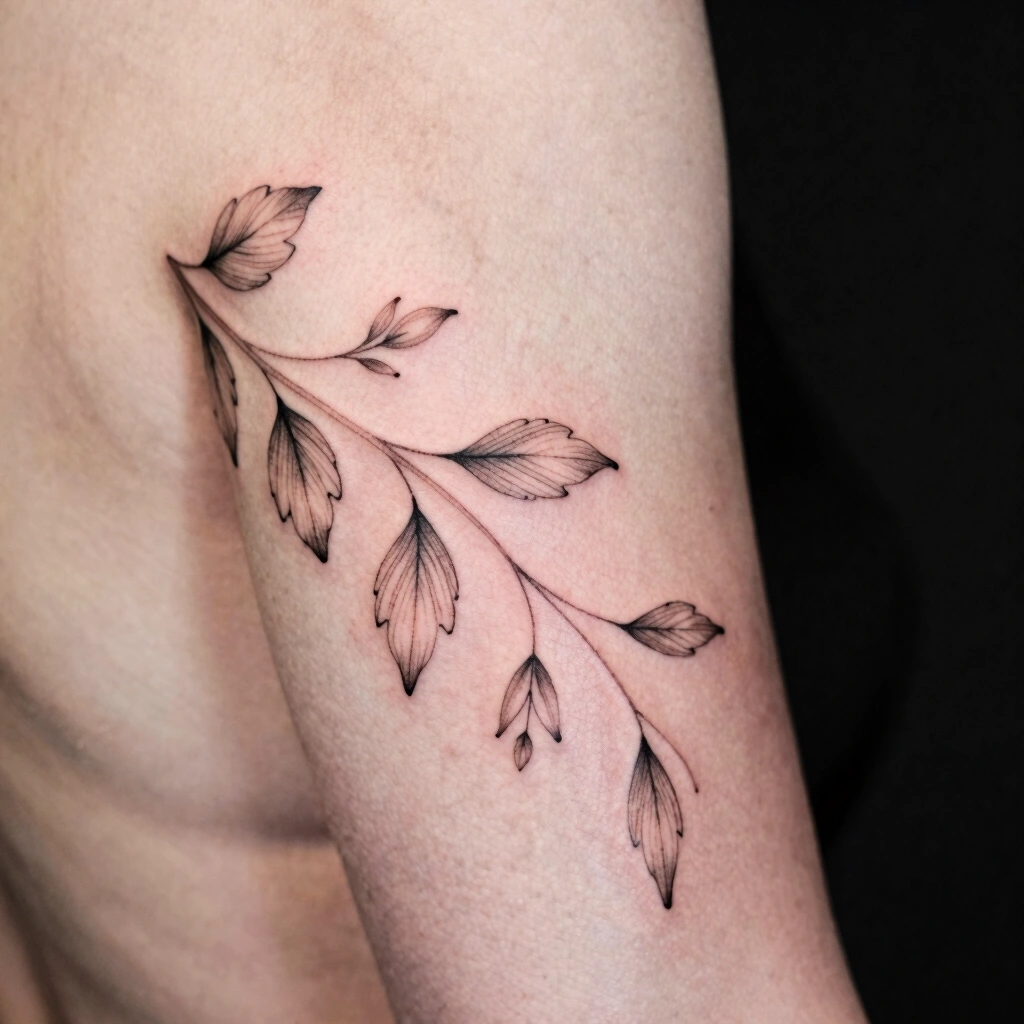
This design uses a single continuous needle line, usually between 0.5mm and 1mm thick, to trace vines, leaves, and small blossoms up the forearm or full arm. There’s little to no shading, so the visual interest comes entirely from line weight variation and negative space (the untouched skin that gives the design breathing room). It reads as delicate and airy rather than heavy. Best placement is the outer forearm or the back of the upper arm, where skin stays relatively flat during movement. Healing typically runs 10–14 days for the top layer, though full settling can take a month. Booking tip: bring reference photos of actual botanical illustrations, not just other people’s tattoos, so your artist can adapt the linework to your skin tone and arm shape. Pain here is moderate — thin skin over the inner elbow crease is more sensitive than the outer arm. This style photographs well for work settings since it can be styled as subtle or bold depending on coverage. Next, let’s look at what happens when you add color to that same botanical concept.
Watercolor Peony Bloom Sleeve
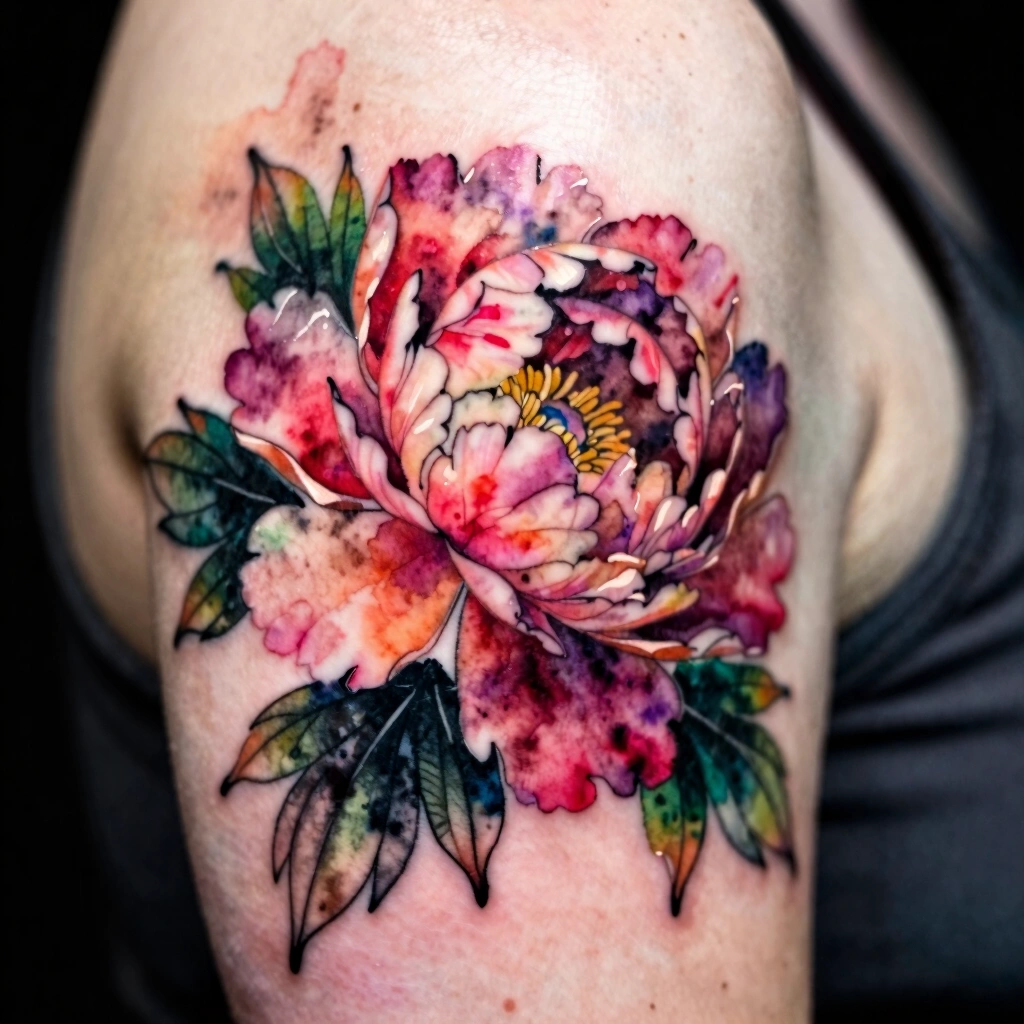
Watercolor tattoos layer diluted color pigment behind or around solid blackwork outlines to mimic paint bleeding on paper. For a peony sleeve, the artist typically outlines the flower in fine black line, then builds soft pink, coral, or lavender saturation around the edges without hard borders. It’s a technically demanding style — ask specifically for an artist who lists “watercolor” or “abstract color” in their portfolio, since not every shop offers it. Best placement is the upper arm or shoulder cap, where there’s enough flat space for color to spread convincingly. Expect a longer healing window, often three to four weeks, since color-saturated areas scab differently than pure linework. Pain is moderate to high because of the extended sitting time. This design ages less predictably than solid black tattoos — color can soften faster over 8–10 years, so budget mentally for a touch-up down the line.
It’s a strong choice if you want boldness without heavy blackwork coverage. From soft color, let’s swing toward something more graphic and structured.
Blackwork Mandala Sleeve
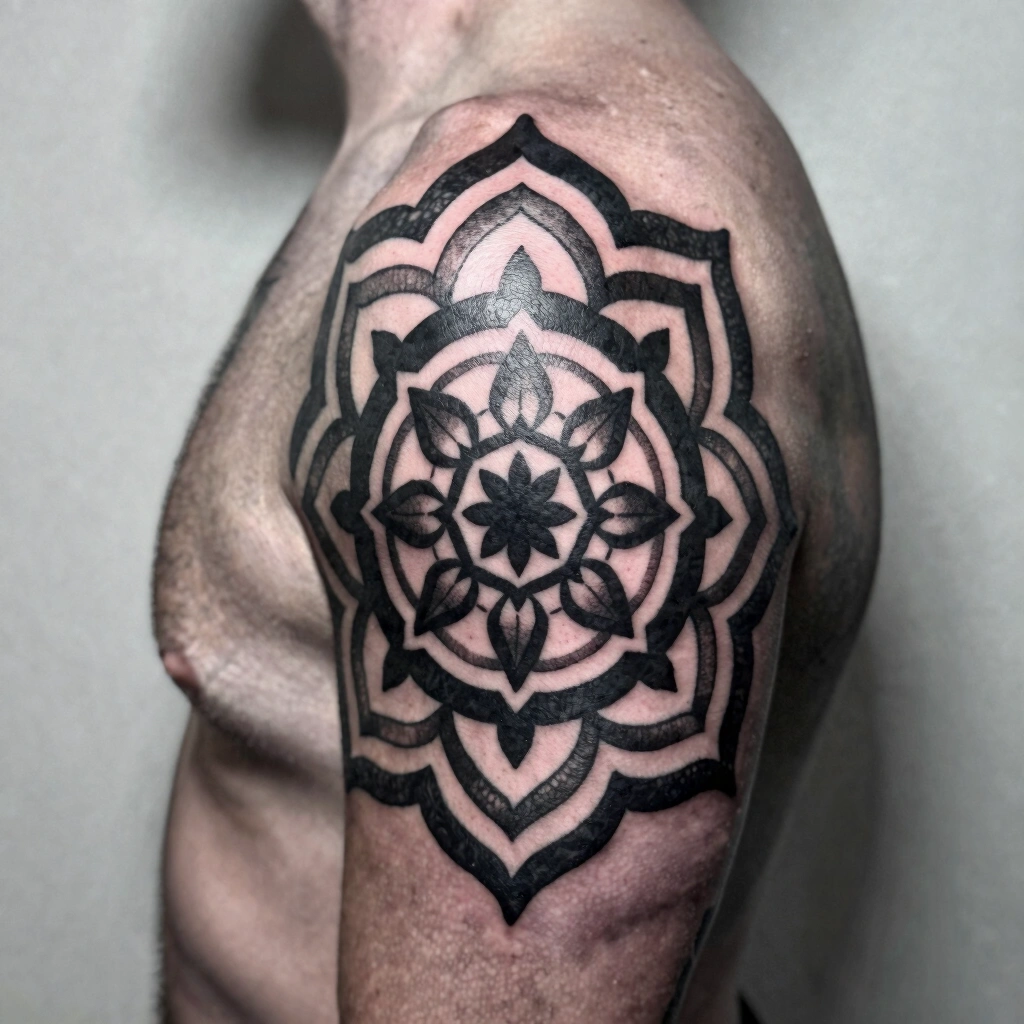
Blackwork uses solid, saturated black ink with almost no gradient, relying on geometric precision instead of shading for visual impact. A mandala sleeve typically wraps a circular, symmetrical pattern around the upper arm or elbow, sometimes extending into a half sleeve with radiating linework. This is a commitment piece — solid black coverage takes longer under the needle than line-only work, and touch-ups are less noticeable since there’s no fading gradient to protect. Best placement is the outer upper arm or shoulder, where the curve of the muscle helps the radial symmetry look intentional rather than warped. Healing takes about two weeks for the surface, with color settling fully by six weeks. Booking tip: ask to see healed photos, not just fresh ones, since blackwork can look different once it’s fully settled into the skin. Pain runs moderate to high due to sustained saturation work.
It’s a great option if you want something that reads as bold and geometric rather than purely floral or soft. Next, we’ll cover a technique that swaps solid black for tiny individual dots.
Dotwork Lace Sleeve
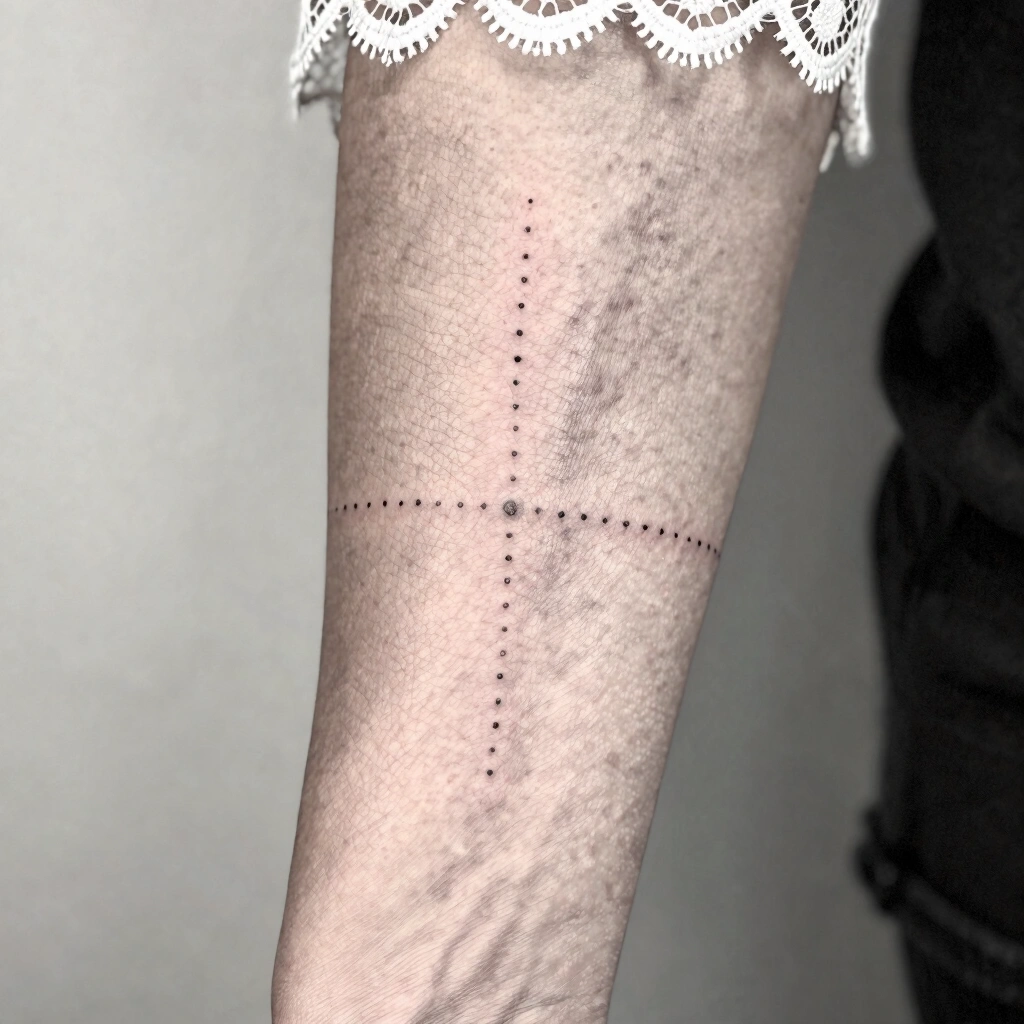
Dotwork builds an image entirely from small individual puncture points rather than continuous lines, creating a soft, almost textile-like gradient. For a feminine sleeve, this technique often mimics lace patterns, wrapping delicately around the wrist, forearm, or bicep like a sheer fabric overlay. The visual effect depends heavily on dot density — tighter spacing reads darker, looser spacing creates a fading, sheer look. This is one of the more time-intensive styles per square inch, so a forearm cuff might take multiple sessions. Best placement is anywhere with minimal hair and flat skin, since texture affects how evenly the dots read. Healing usually takes 10–14 days, though the fine detail means scabbing must be handled carefully to avoid losing dot definition. Pain is often described as a steady, buzzing sensation rather than sharp, since the needle doesn’t drag across skin the way linework does.
This design suits people who want texture and pattern without going fully solid black. Now let’s talk about a style that flips the whole concept — using un-tattooed skin as the design itself.
Negative-Space Botanical Sleeve
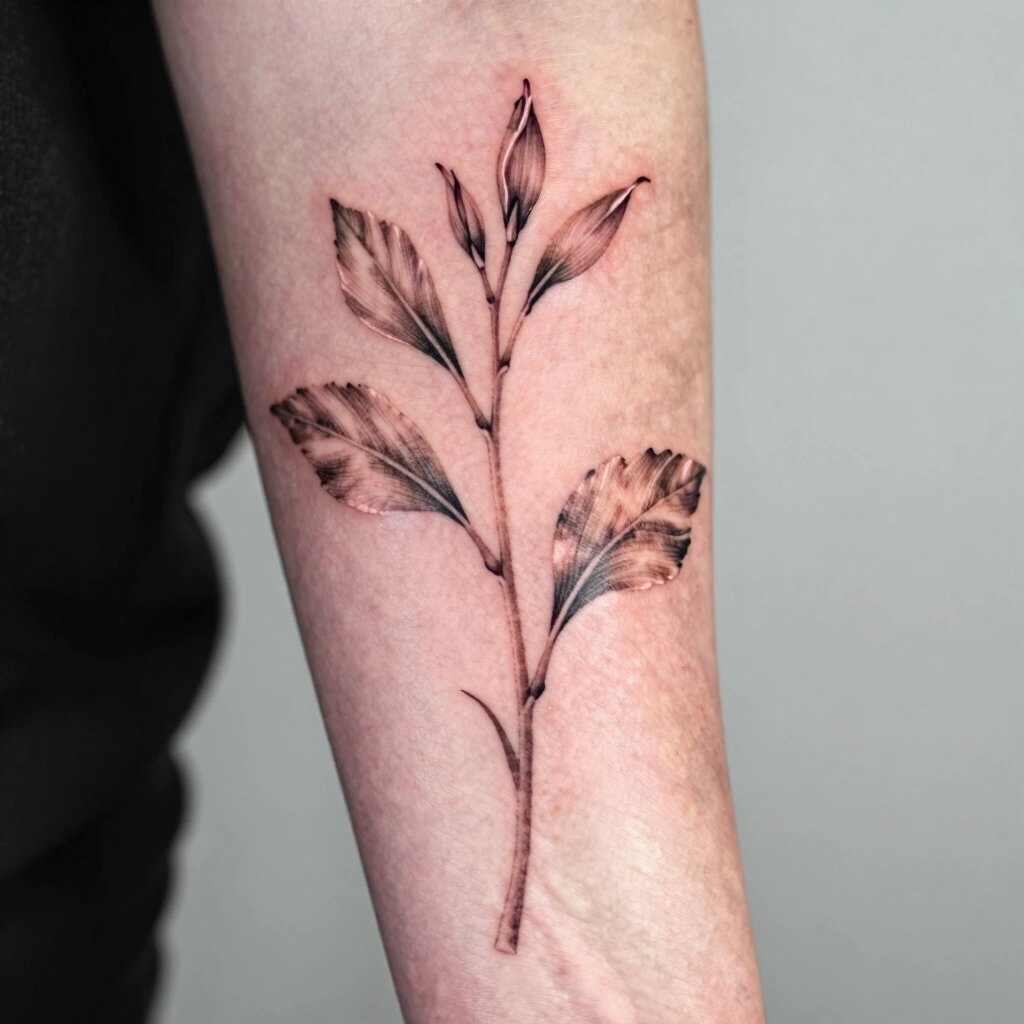
Negative-space tattoos use the untouched, natural skin tone as part of the design instead of just as background. A botanical version might outline a bold black leaf or flower shape, then carve fine white “veins” out of the solid black using the skin itself, rather than white ink. This creates strong visual contrast and works especially well on lighter to medium skin tones, where the difference between solid black and bare skin reads clearly. Best placement is the outer forearm, where the flat surface keeps the negative-space lines crisp. Because this style relies on solid black sections, sizing needs to be generous — cramming fine negative-space detail into a small area tends to blur together as it heals. Healing takes about two weeks, and touch-ups are more common here than with pure line tattoos, since solid black patches can show minor fading unevenly. Pain is moderate, comparable to blackwork.
This is a strong pick if you want something graphic and modern rather than traditionally romantic. Next up, a much quieter option for anyone easing into their first big piece.
Single-Needle Script and Symbol Sleeve
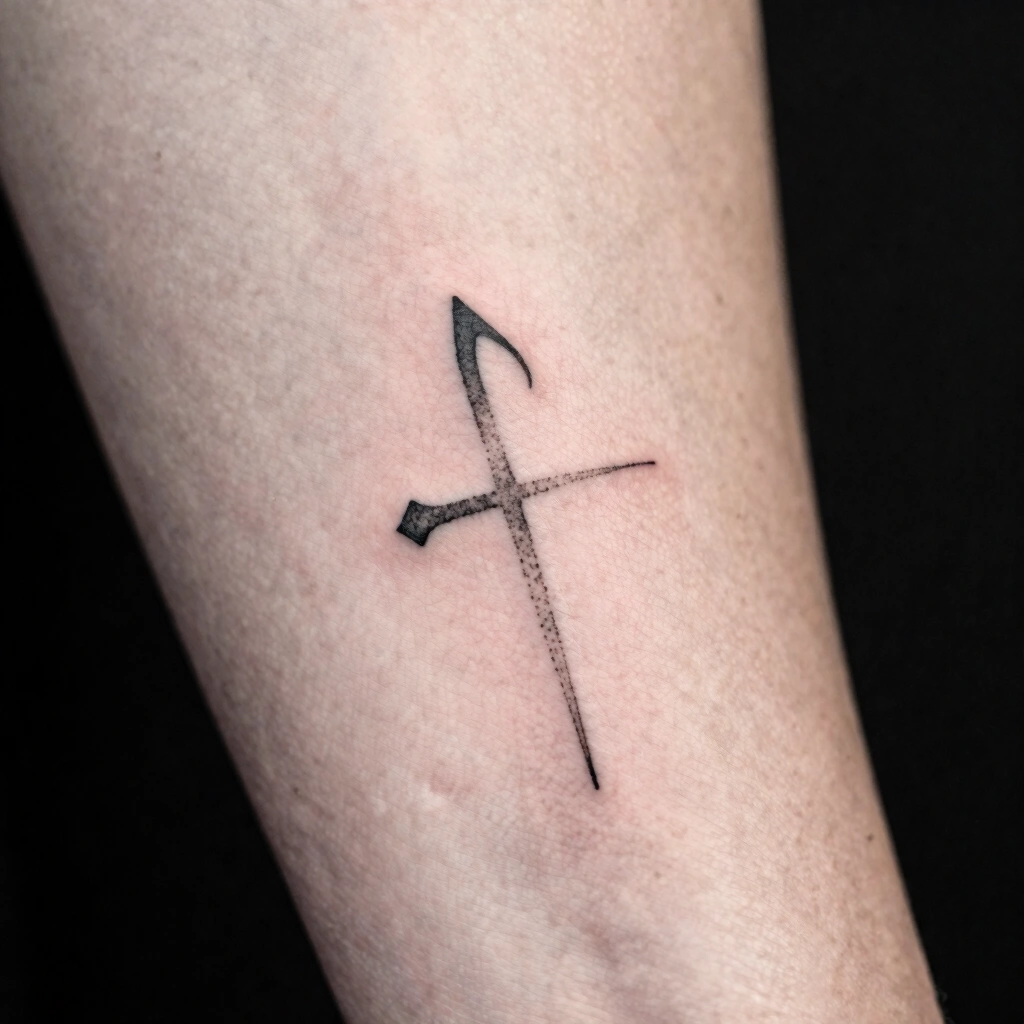
Single-needle work uses one very fine needle to create hair-thin lines, often for small script, symbols, or minimalist icons scattered along the arm rather than one large connected image. It’s popular for meaningful words, small constellations, or a scattered scrapbook-style sleeve built over multiple sessions. The trade-off is longevity — because the lines are so thin, single-needle tattoos are more prone to visible fading after 8–10 years, especially in sun-exposed areas. Best placement is the inner or outer forearm, where you can add pieces gradually over time. Healing is quick, usually about a week, since there’s minimal trauma to the skin per line. Booking tip: ask your artist whether they recommend a slightly heavier needle for text specifically, since very fine script can blur faster than icons. Pain is low to moderate, making this a solid choice for a first tattoo or for building confidence before committing to a bigger piece. This approach pairs naturally with matching tattoos too. Let’s move to a design built around actual seasonal imagery.
Cherry Blossom Cascade Sleeve
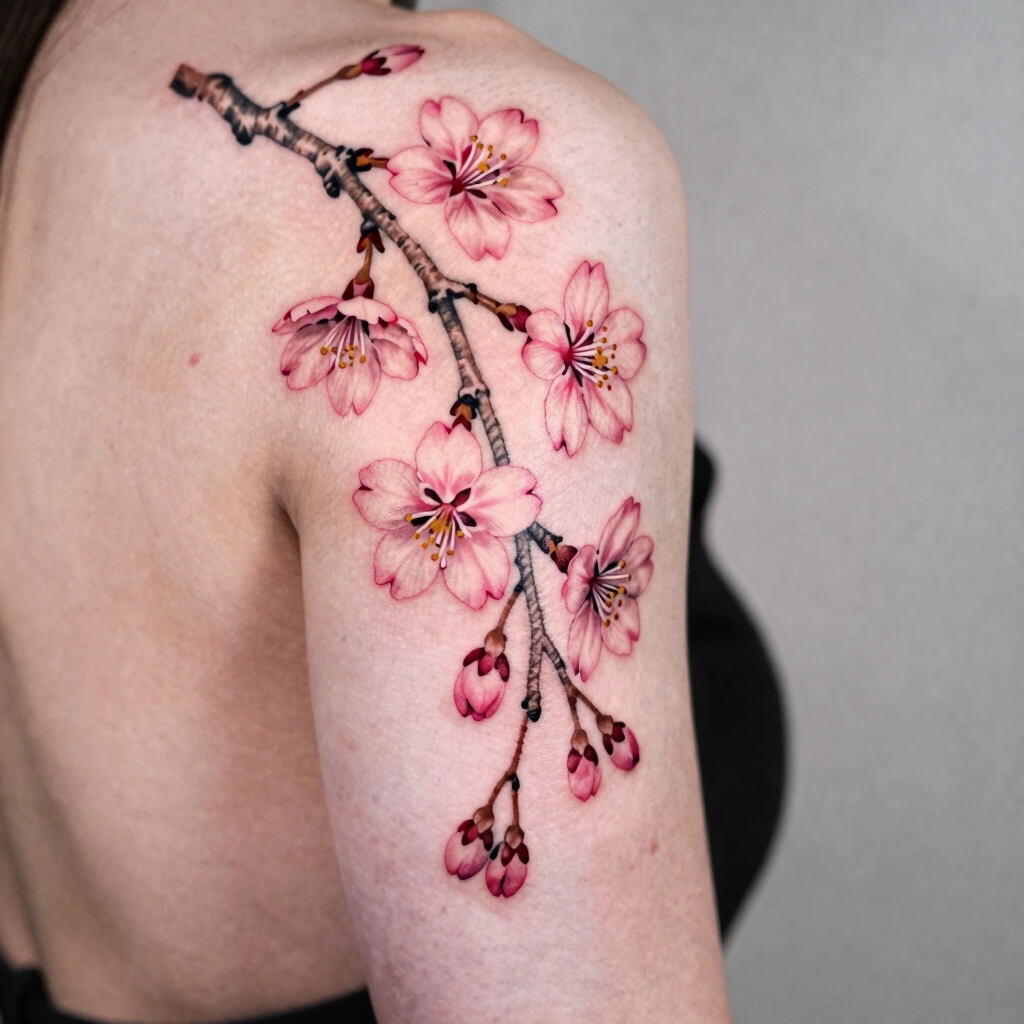
This design follows a branch of cherry blossoms cascading diagonally from shoulder to elbow or elbow to wrist, usually combining fine-line branch work with soft pink shading on the petals. Some artists use a light watercolor wash for the blossoms while keeping the branch and leaves in solid fine-line black, which creates contrast between structure and softness. Best placement follows the natural diagonal of the arm — shoulder-to-elbow placement lets the branch follow gravity convincingly. Size matters a lot here: petals smaller than a fingernail tend to blur together after healing, so don’t let an artist shrink the design too much to fit a smaller budget. Healing takes 2–3 weeks if color shading is included. Pain is moderate, with slightly more sensitivity near the inner elbow. This design works well as a first larger tattoo since the imagery is widely understood and easy to explain to an artist using simple reference photos. It also transitions naturally into a full sleeve later if you want to keep building. Now let’s look at a design built entirely around transformation imagery.
Butterfly Transformation Sleeve
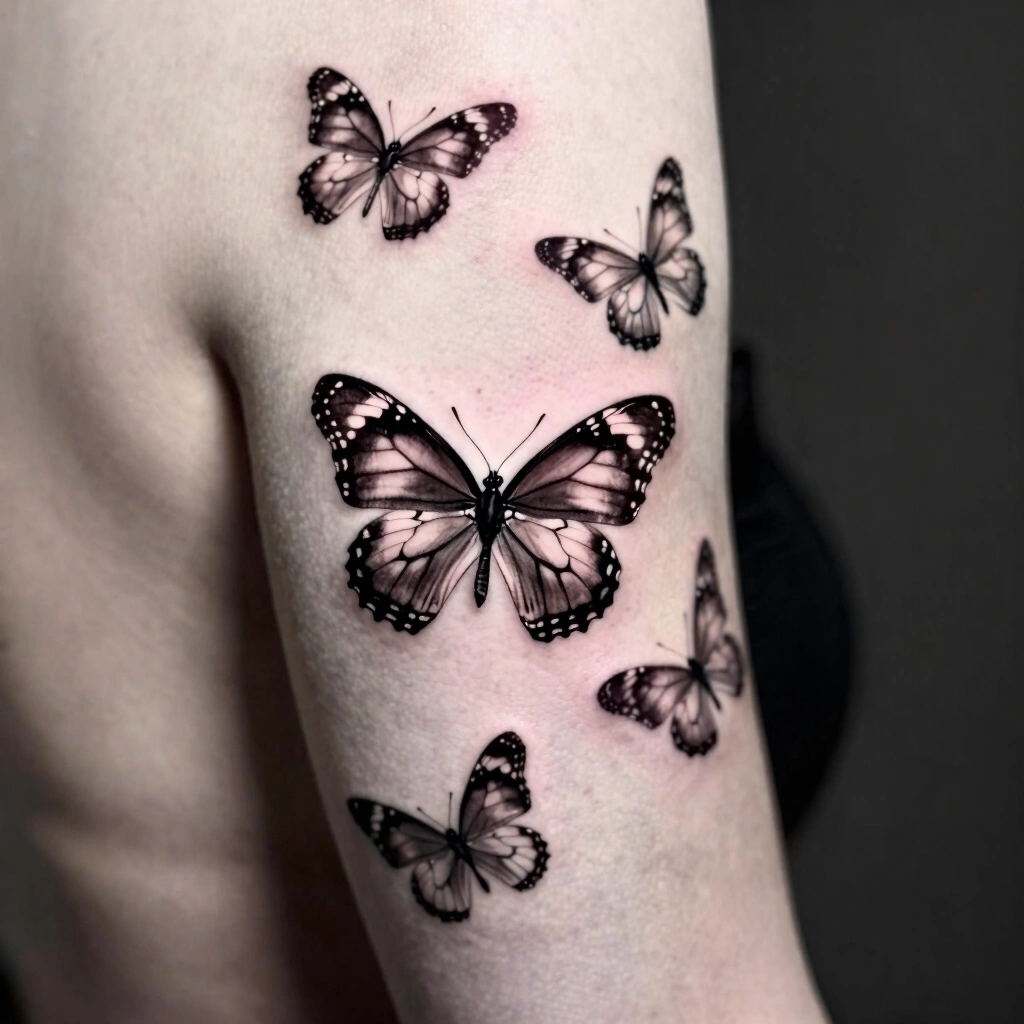
Rather than a single static butterfly, this concept shows a small sequence — often three to five butterflies increasing in size and detail as they move up the arm, sometimes paired with fine-line florals. Wings are usually done in fine line with light dot-shading for texture, avoiding heavy black fill so the design stays airy. Best placement is the outer arm, following the natural line from wrist to shoulder so the “sequence” reads clearly at a glance. Keep each butterfly at least two inches wide if you want visible wing detail — anything smaller tends to lose definition within a few years. Healing runs about two weeks. Pain is low to moderate since there’s minimal solid shading. Booking tip: bring a clear description of the “story” you want the sequence to tell, since a good artist will adjust wing position and size to create visual flow rather than just repeating the same image. This works well for a meaningful, symbolic piece without leaning on text. Let’s shift to a fuller floral composition next.
Fine-Line Wildflower Bouquet Sleeve
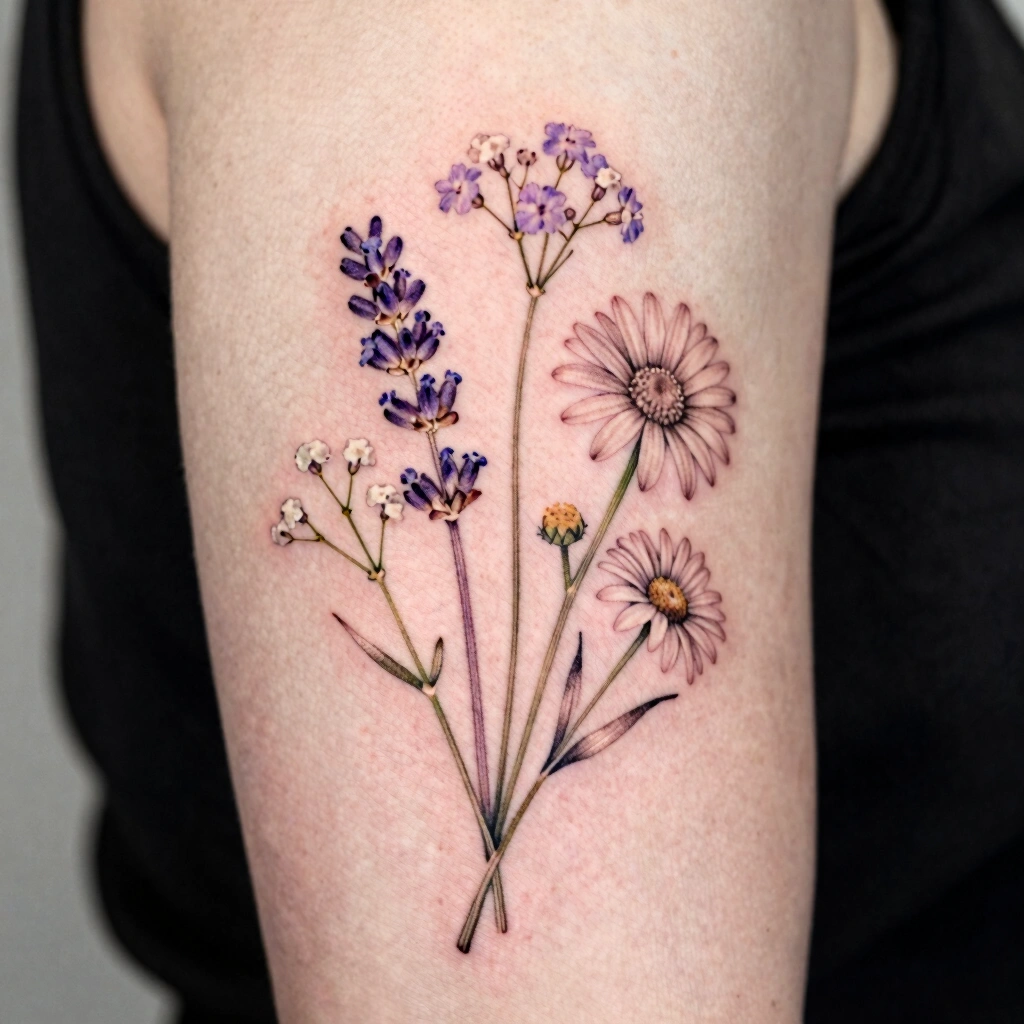
This design gathers several distinct wildflower types — think baby’s breath, lavender sprigs, daisies — into a loose, asymmetrical bouquet running along the forearm or upper arm. The technique stays in fine line throughout, with occasional light stippling (small dot clusters) to suggest texture on petals without full shading. Because it includes multiple flower types, this piece benefits from a slightly larger canvas; a full forearm gives each flower room to stay distinct instead of merging into a blur. Best placement is the outer forearm for visibility or the inner arm if you’d rather keep it more private. Healing takes about 10–14 days. Pain is low to moderate on the outer forearm, higher on the inner arm near the elbow. Booking tip: ask your artist to sketch a custom stencil rather than using a flash design off the wall, since bouquet compositions look best when balanced to your specific arm length. This design ages well because fine-line florals rarely go out of style. Now for something with more geometric structure mixed in.
Geometric Line Sleeve with Floral Accents
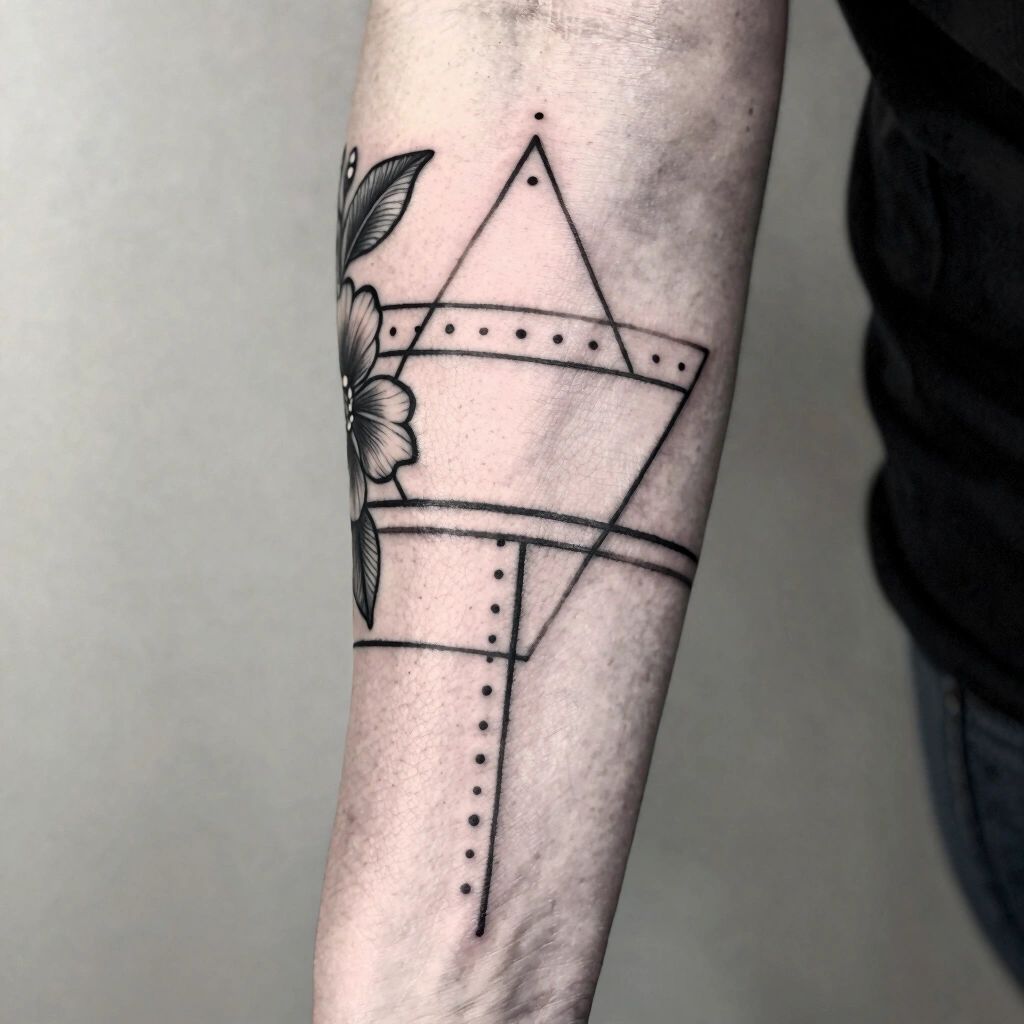
This hybrid design pairs straight, deliberate geometric shapes — triangles, dot-lined circles, straight bands — with soft floral elements tucked inside or around them. The geometric sections use bold, even linework with a slightly heavier needle for contrast, while the floral accents stay fine-line and delicate. The interplay between rigid and soft is what makes this design feel distinctly feminine without being purely decorative. Best placement is the upper arm or elbow, where straight geometric lines can follow the natural bend of the joint. Precision matters enormously here — even small asymmetries in geometric linework are noticeable, so this is not a design to book with a walk-in artist who hasn’t done geometric work before. Ask to see a portfolio specifically showing straight-line consistency. Healing takes about two weeks. Pain is moderate, slightly higher directly over the elbow. This style suits people who want a modern, structured look rather than something purely botanical. Let’s move skyward for the next idea.
Celestial Moon Phase Sleeve
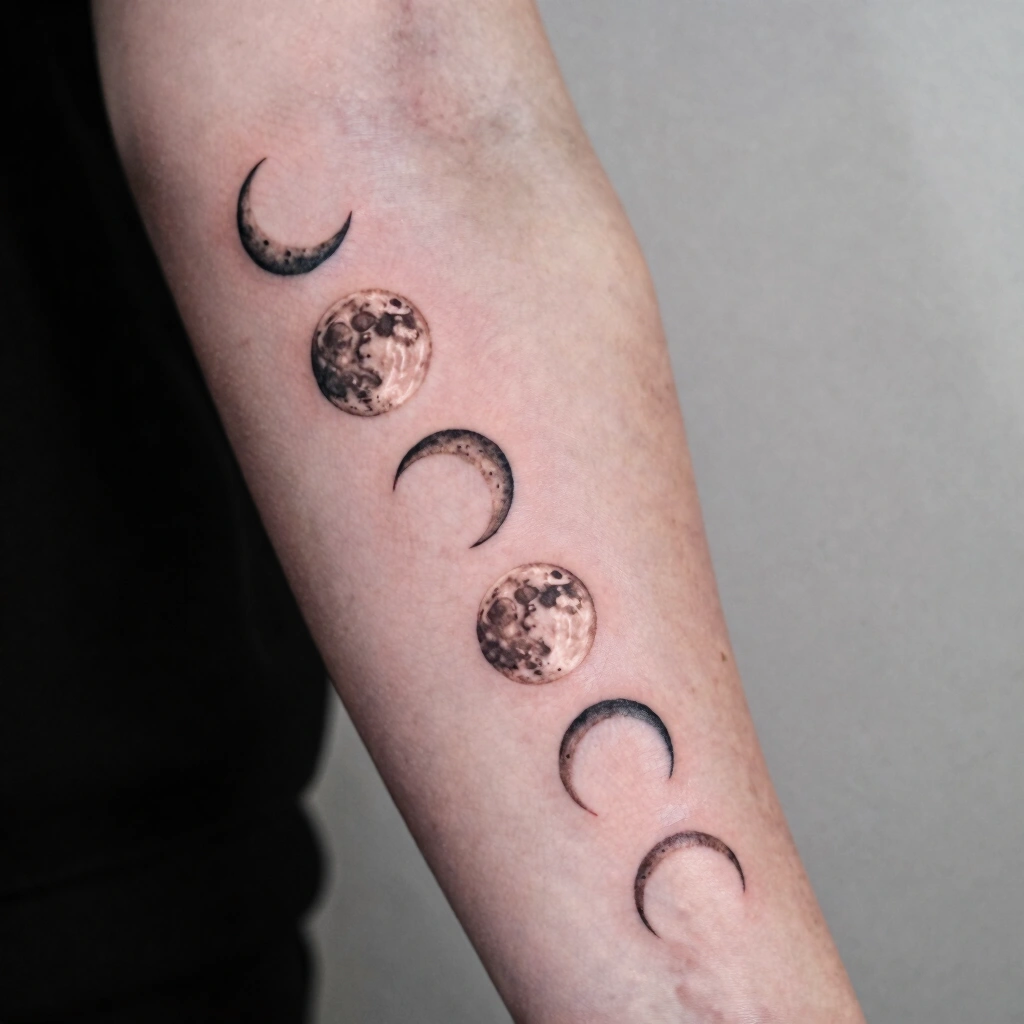
A moon phase sleeve tracks the lunar cycle in a curved or straight line of small moon icons — crescent, half, full, crescent again — usually rendered in fine-line or light dotwork shading. Some versions add tiny stars or constellations as filler between the moons using single-needle dot work. Best placement is a straight run along the outer forearm, since the sequential imagery needs a linear path to read clearly. Keep individual moons at least an inch wide if you want crescent shading to stay crisp over time. Healing takes about 10 days for line-only versions, slightly longer if dot-shading is added. Pain is low to moderate. Booking tip: decide in advance how many moon phases you want included, since adding more later can throw off the spacing of the original design. This piece works well as a symbolic, understated choice for someone who wants meaning without an obviously “loud” tattoo. It also pairs nicely with matching designs among friends who each choose a different phase. Next, let’s head toward the ocean.
Ocean Wave and Coral Sleeve
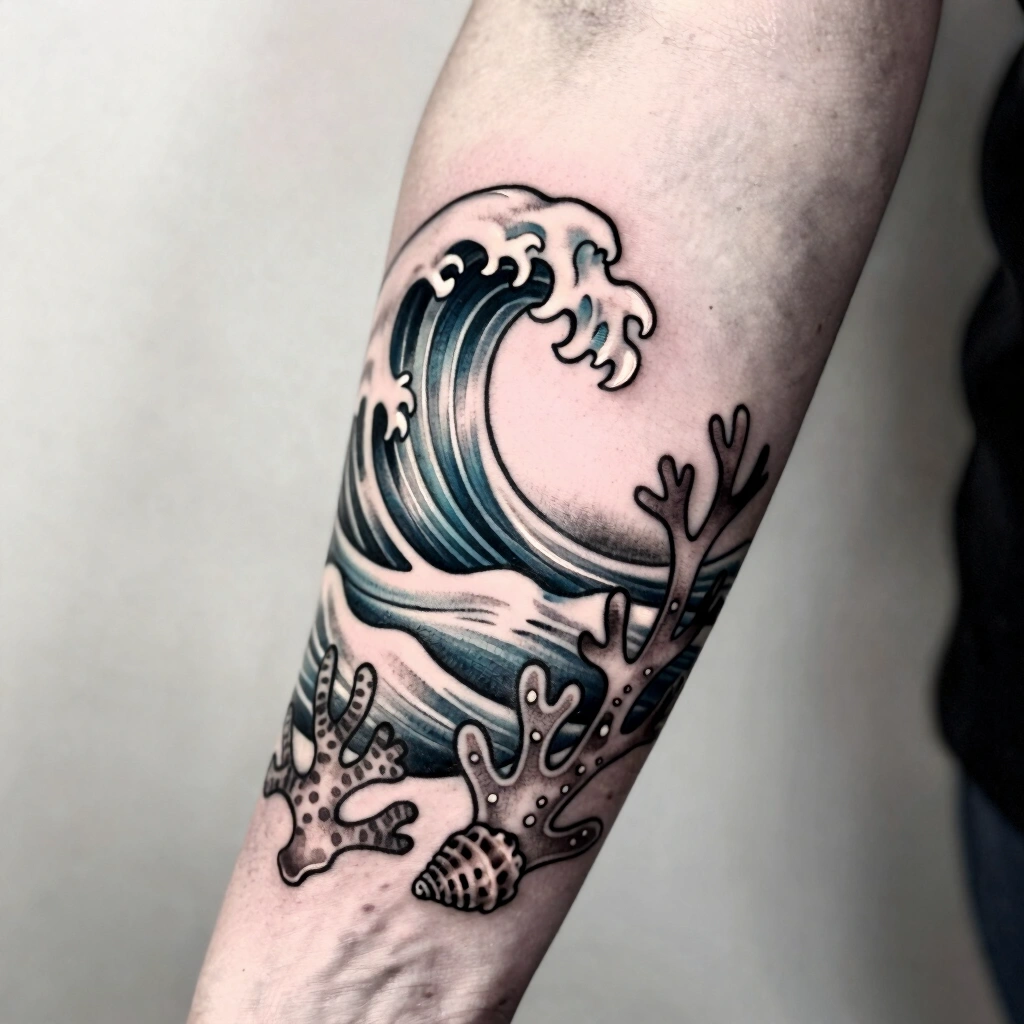
This design combines fine-line wave patterns with small coral branch or seashell accents, often wrapping around the wrist and forearm like the tide is moving up the arm. Waves are typically rendered in flowing single-line work, while coral pieces get light stippling for texture. Best placement is the wrist-to-forearm run, since the natural curve of the arm mimics a shoreline. Because the linework is delicate, avoid placing this directly over the inner wrist bone if you’re worried about faster fading in a high-friction area. Healing runs about two weeks. Pain is moderate on the forearm, higher directly on the wrist bone. Booking tip: bring reference photos showing water movement you actually like — swirling versus straight repeated lines change the whole feel of the piece. This design works for both a standalone statement piece and as one section within a larger nature-themed sleeve. It’s a good pick if you want something calming rather than bold. Let’s look at a classic reimagined next.
Trailing Rose Vine Sleeve
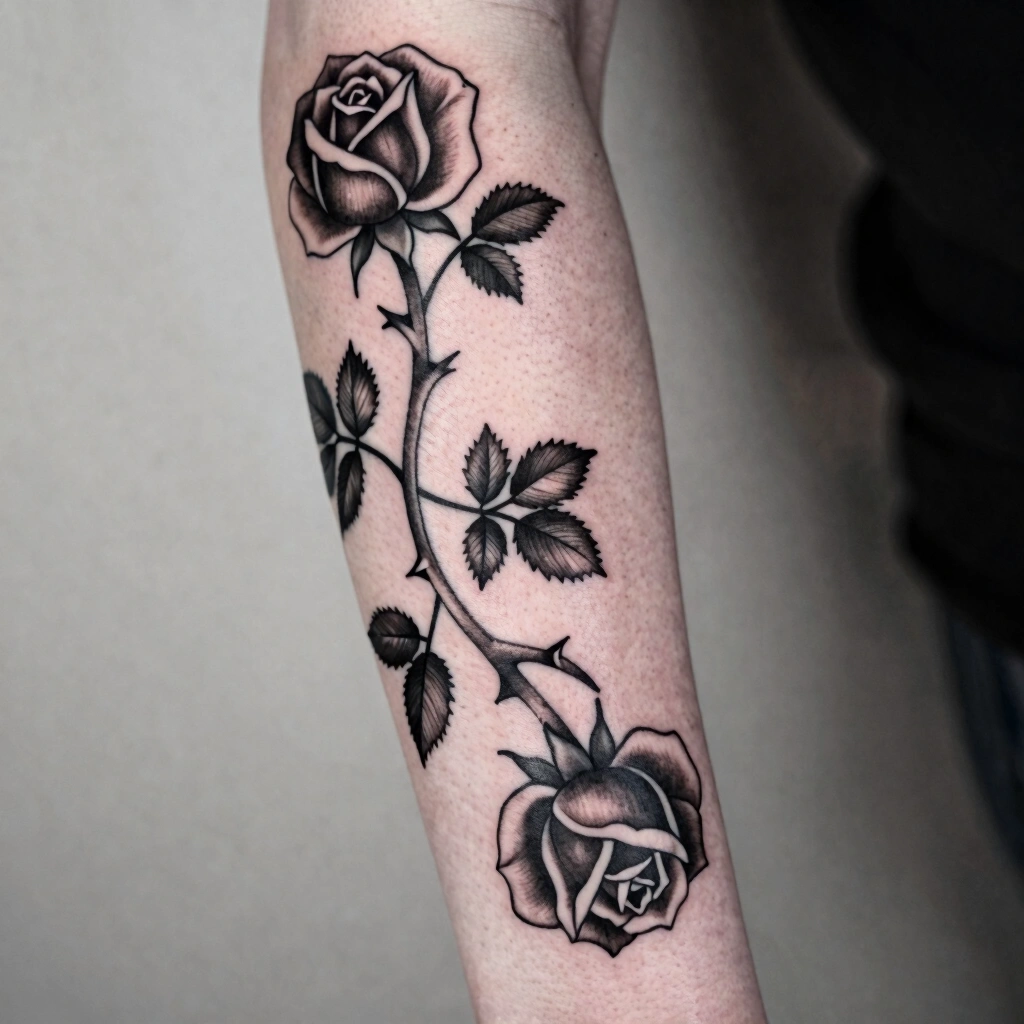
A trailing rose vine wraps diagonally or spirals around the arm, combining solid-black rose outlines with fine-line thorny stems and leaves. Shading inside the rose petals is usually done with light gray-wash gradients rather than flat black, giving the flowers dimension without heavy saturation. Best placement is a full or half sleeve from shoulder to wrist, since the spiral composition needs length to look intentional rather than cramped. Roses smaller than 1.5 inches tend to lose petal definition after a few years, so size generously if detail matters to you. Healing takes about two to three weeks depending on shading depth. Pain is moderate to high given the extended sitting time for a full trailing design. Booking tip: ask your artist how many sessions the piece will realistically take — most trailing vine sleeves aren’t finished in one sitting. This is a strong option if you want a bold, classic look that still reads as soft and traditionally feminine. Let’s move to something with more delicate wildlife imagery.
Fine-Line Hummingbird and Floral Sleeve
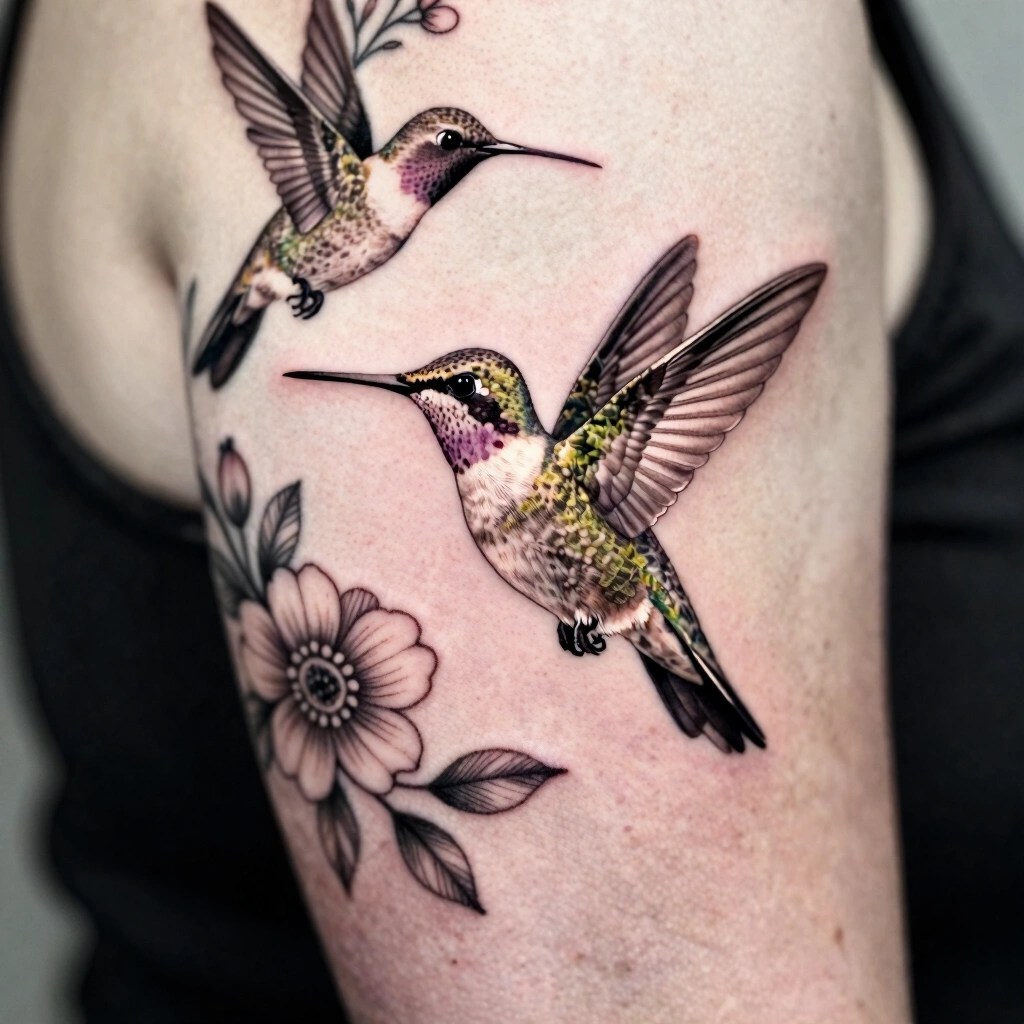
This design places one or two hummingbirds mid-flight among small florals, using fine-line detailing for feather texture and light dot-shading for wing movement. The hummingbird’s body usually stays mostly line-based, while the tail and wing tips get slightly heavier shading to suggest motion. Best placement is the upper arm or shoulder, giving the bird room to appear mid-flight rather than static. Keep the bird at least three inches long if you want feather detail to stay visible over time — feather texture is the first thing to blur if the design is sized too small. Healing takes about two weeks. Pain is low to moderate. Booking tip: ask for a “movement study” sketch before your session, since wing position dramatically changes how dynamic the final piece looks. This design works well as a meaningful memorial piece or simply as a nature-inspired standalone image. It also blends nicely into a larger floral sleeve later. Now for one more color-heavy option before we wrap the list.
Watercolor Galaxy Sleeve
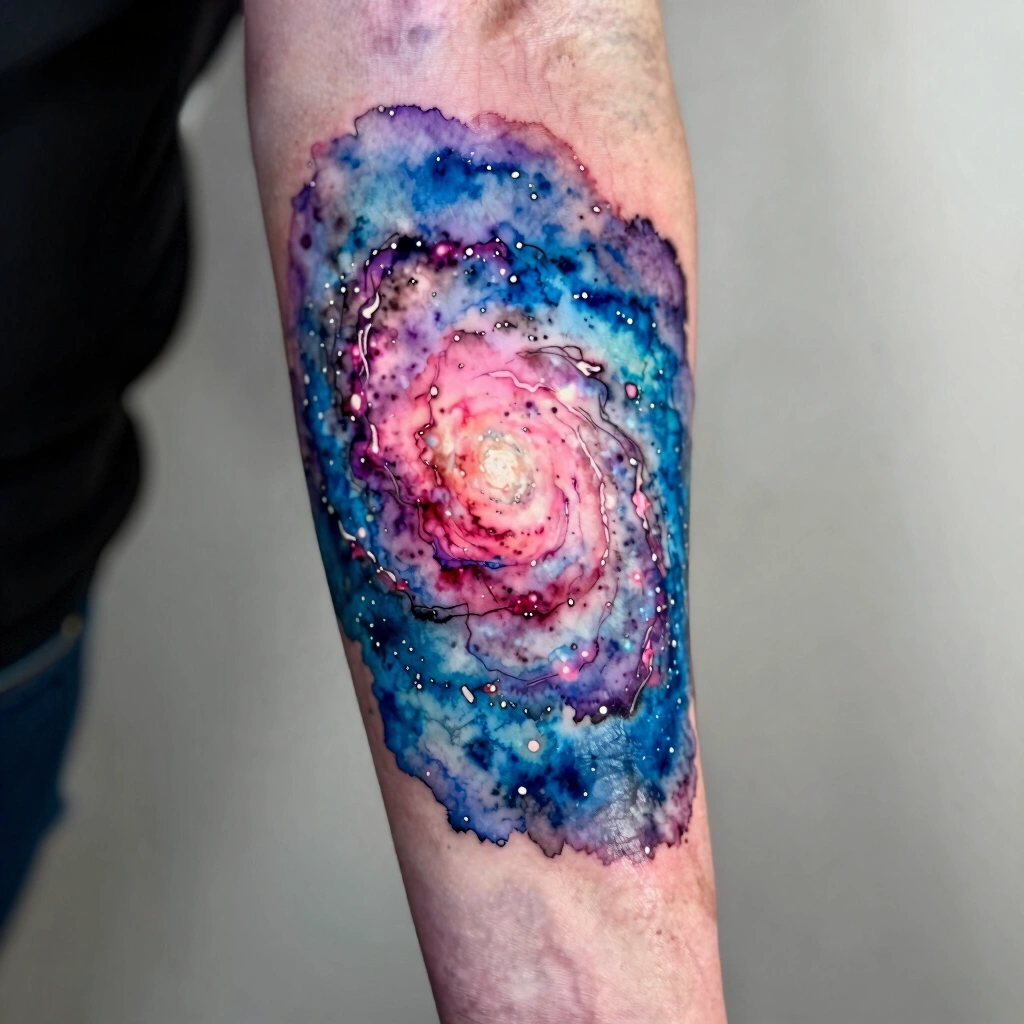
A galaxy sleeve uses layered blues, purples, and pinks blended in a watercolor wash, often combined with fine black-line stars, planets, or constellation dots scattered across the design. Unlike solid blackwork, this style depends on smooth color transitions, so it requires an artist experienced specifically in color blending and saturation control. Best placement is the upper arm or shoulder, where there’s enough flat space for color to spread evenly. Because color-heavy work fades faster than pure black linework over time, budget for a touch-up appointment around the 5–7 year mark. Healing takes three to four weeks given the color saturation. Pain is moderate to high due to longer sitting time. Booking tip: ask to see the artist’s healed color work, not just fresh photos, since color retention varies a lot by individual artist and ink brand. This design suits people who want something visually striking and less traditionally “soft,” while still keeping a feminine, dreamy quality. Last on our list is a quieter, nature-based finish.
Delicate Feather and Leaf Sleeve
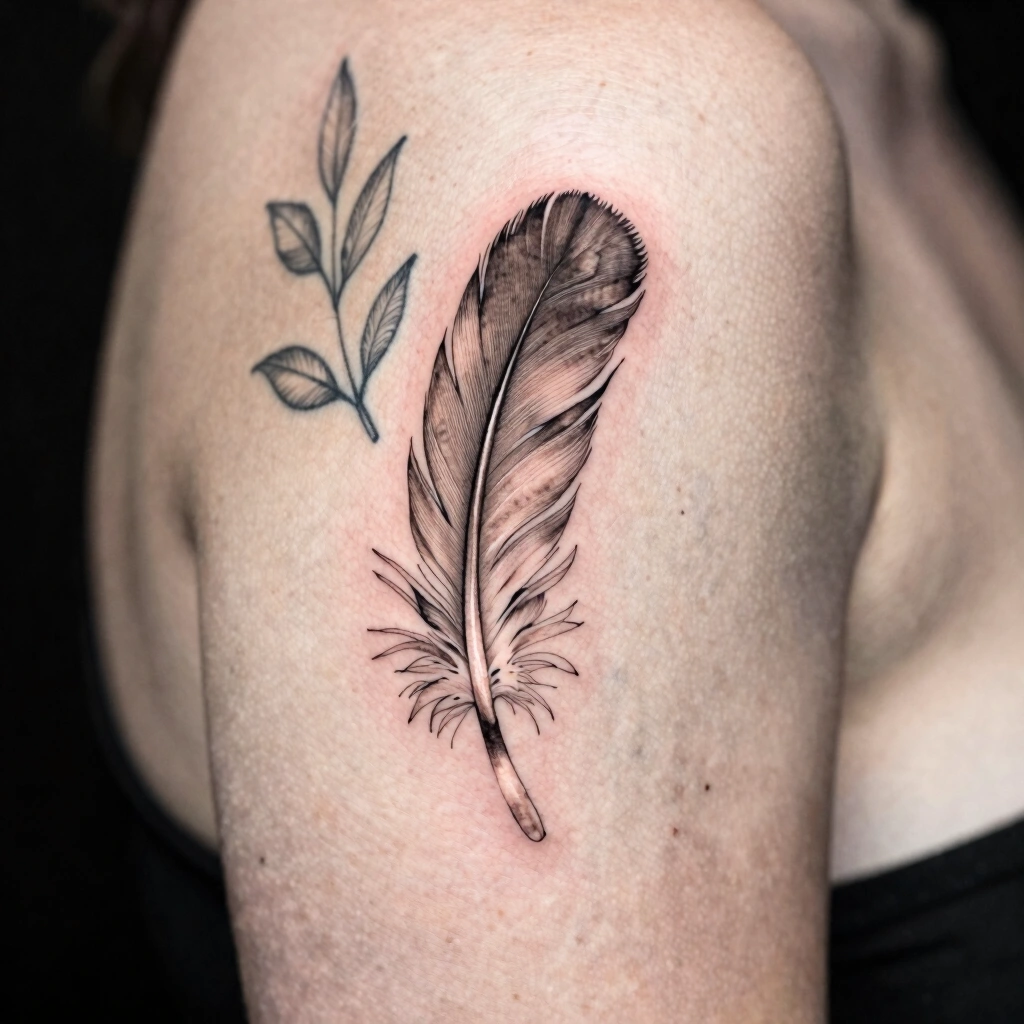
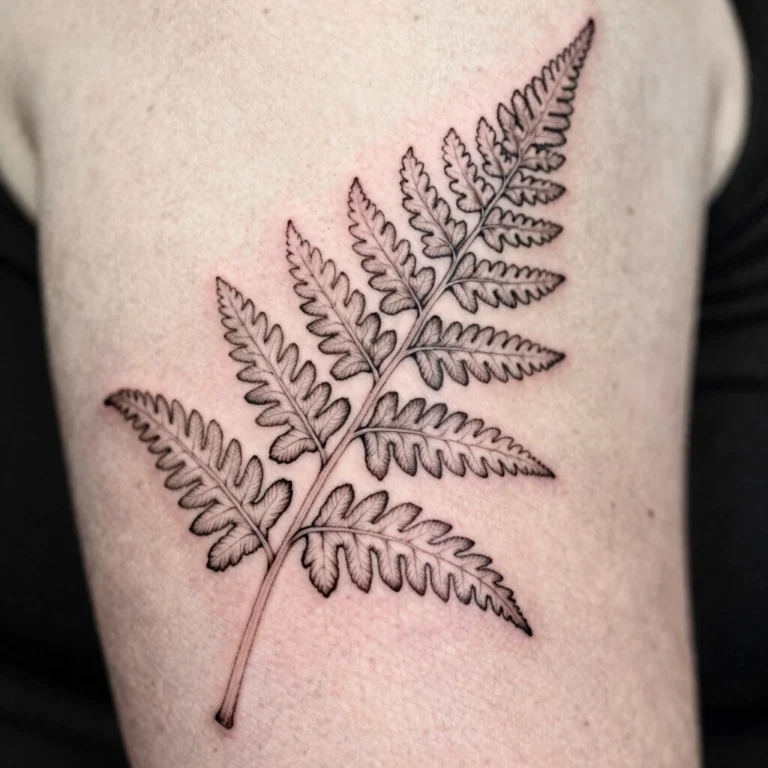
This closing design pairs a single trailing feather with small leaf clusters, done entirely in fine line with minimal shading — just enough gray-wash to suggest feather barbs without heavy black fill. It’s one of the simplest designs on this list technically, which makes it a smart choice for a first tattoo or for someone easing into a future full sleeve. Best placement is the outer forearm or upper arm, anywhere with enough flat space to keep the feather’s shape clean. Healing is quick, typically 7–10 days, since there’s minimal ink saturation. Pain is low to moderate. Booking tip: ask your artist to vary line thickness slightly from the feather’s spine to its edges — this small technical choice keeps the design from looking flat or overly uniform. This piece works well in professional settings since it can be sized small enough to stay discreet under a sleeve or short shirt. It’s also an easy entry point before committing to a bigger, more detailed sleeve concept.
Best Placement Ideas: Matching the Spot to Your Priorities
- Outer forearm — high visibility, moderate pain, easiest to photograph and show off, but also the most exposed to sun fading over time.
- Upper arm/shoulder cap — good for larger, bolder pieces like mandalas or watercolor work; easy to cover for work if needed.
- Inner forearm — more private, slightly more pain due to thinner skin, good for meaningful script or symbols.
- Wrist-to-forearm run — great for wave or vine designs that need a linear path, but higher friction area means more careful aftercare.
- Elbow area — trickiest for straight geometric lines since the joint bends constantly; expect more touch-up need here.
- Full sleeve (shoulder to wrist) — best for multi-session designs like trailing roses; requires the most time and budget commitment.
Tips for Success: Choosing the Right Artist and Booking Smart
Start by narrowing your search to artists whose portfolios already show the specific technique you want — fine line, watercolor, blackwork, or dotwork specialists tend to be genuinely better at their niche than a generalist attempting all styles. Look at healed photos, not just fresh ink, since swelling and redness can make any tattoo look sharper than it’ll actually settle. Bring two or three reference images to your consultation, plus a rough idea of your budget and pain tolerance, and be upfront about wanting a custom design rather than a direct copy of someone else’s flash art. Ask about their stencil process — a good artist will adjust the design to fit your specific arm length and muscle shape rather than slapping on a generic template. Finally, always confirm the studio follows standard sterilization and licensing practices; this matters more than any portfolio.
Common Mistakes and How to Avoid Them
- Sizing too small for the detail level. Fine-line florals and lace-style dotwork both need enough surface area to stay legible after healing. If in doubt, size up.
- Choosing a placement that fights the linework. Straight geometric lines struggle over joints like the elbow; flowing florals work better there instead.
- Skipping aftercare instructions. Ink settling and color retention depend heavily on how well you follow your artist’s specific aftercare sheet in the first few weeks.
- Copying a design exactly without personalizing it. A generic Pinterest image rarely fits your specific arm length or skin tone — ask your artist to adapt it.
- Booking a walk-in slot for a complex custom piece. Detailed sleeve work almost always benefits from a proper consultation and custom stencil first.
Similar Variations Worth Considering
Almost every idea above can be resized or recombined. A full peony bloom can shrink into a single-needle wrist accent. A blackwork mandala can lose its solid fill and become a dotwork version instead, for a softer overall look. Trailing rose vines can drop the color wash entirely and stay pure black-and-gray for a more subdued feel. Mixing two techniques — say, fine-line botanicals with a small negative-space accent — is increasingly common and gives your piece a more custom, one-of-a-kind feel instead of matching a flash sheet exactly.
Technique Glossary: Know What You’re Actually Asking For
Fine line
: Thin, precise linework done with a single small needle, typically under 1mm, used for delicate detail and minimal shading.
Blackwork
: Solid, saturated black ink applied in bold shapes or patterns with little to no gradient, often used for geometric or graphic designs.
Dotwork
: An image built from clusters of small individual dots rather than continuous lines, creating texture and soft gradients.
Watercolor
: A style that mimics painted color bleeding on paper, using diluted pigment layered around or without hard black outlines.
Negative space
: A technique that uses untouched, natural skin as part of the visual design, rather than filling every area with ink.
Single needle
: A specific fine-line approach using one very thin needle for extremely delicate, hairline detail work, often for script or tiny icons.
Aftercare Basics
General dermatological consensus recommends keeping a fresh tattoo clean, moisturized with a fragrance-free product, and protected from direct sun exposure during the healing window, which typically runs one to three weeks depending on design size and ink saturation. Avoid soaking the area in pools, baths, or open water until it’s fully healed, and resist picking at any scabbing, since that can pull out ink unevenly. Every studio provides its own specific aftercare sheet based on the products they use — always follow that document over generic advice you find online, and check in with your artist or a dermatologist if you notice unusual redness, swelling, or discharge.
Quick FAQ
How much does a feminine arm sleeve tattoo cost?
Costs vary widely by region, artist experience, and size, but a small single-design piece might run a few hundred dollars, while a full custom sleeve built over multiple sessions can run into the thousands. Ask for a written quote before booking.
How painful is an arm sleeve tattoo?
Pain tolerance is individual, but generally, fleshier areas like the outer upper arm feel less intense than bony spots like the inner elbow or wrist. Fine-line and dotwork tend to feel less intense than dense blackwork or long color sessions.
How long does an arm sleeve tattoo take to heal?
Surface healing usually takes 10–14 days for line-only work and up to three or four weeks for heavily shaded or color-saturated pieces. Full settling under the skin can take a couple months.
Do these designs fade or need touch-ups over time?
Yes — all tattoos fade gradually, especially in sun-exposed areas like the forearm. Fine-line and single-needle work tends to soften faster than solid blackwork, so a touch-up every several years is common and normal.
Final Thoughts
Choosing among feminine arm sleeve tattoos really comes down to matching the technique to how much detail, color, and commitment you actually want long-term. Fine line and single-needle designs suit a lower-pain, lower-cost entry point, while blackwork, watercolor, and full trailing pieces ask for more time, budget, and a specialist artist — but reward you with a bolder, more lasting statement. Whatever direction you land on, talk through placement, sizing, and pain expectations honestly with a licensed professional before you book, since those details matter more to how the piece looks in ten years than the design itself. Take your time, look at healed portfolio work, and trust that the right feminine arm sleeve tattoo is one built specifically around your skin, your story, and your comfort level — not just a trend you saw once and liked.