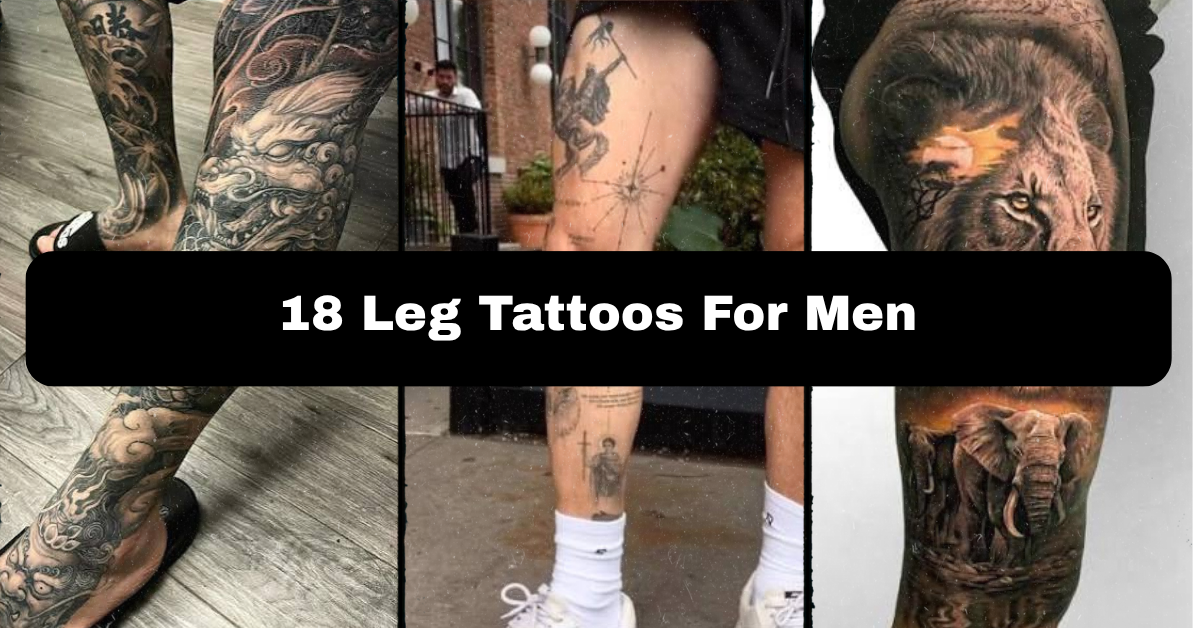
18 Leg Tattoos For Men: A Real Guide Before You Book
Leg tattoos for men have become one of the most requested categories in shops right now, and for good reason — the leg offers space, shape, and privacy options that arms and chests just can’t match. This guide comes from paying attention to what actually works on skin over time, not just what looks good in a single Instagram post.
So what are the best leg tattoos for men? The strongest options are large-scale blackwork, Japanese-style pieces, bold traditional designs, and fine-line geometric work, since the leg’s flat, spacious canvas holds detail well and ages better than small designs cramped onto curved or bony areas. Calves and thighs give the most room for shading and complex linework.
Stick around, because I’m going to walk you through pain levels by placement, what things actually cost, how to talk to an artist so you get what you pictured, and the mistakes that lead to regret.
Why The Leg Works So Well For Bigger, Bolder Ideas
The leg is basically a gift to tattoo artists. You’ve got the calf, the shin, the thigh, and the ankle — four distinct zones, each with different muscle coverage, skin tightness, and visibility. That means a design can wrap, flow, or sit flat depending on what you want. Bigger pieces especially benefit here because there’s enough real estate to let linework breathe instead of feeling squeezed. If you’re weighing your first tattoo or your fifth, the leg gives you room to think in terms of composition, not just a single image slapped on skin.
1. Blackwork Tribal Calf Band
Blackwork means solid, saturated black ink applied in bold shapes rather than fine detail — think heavy silhouette work instead of delicate outlines. A tribal-inspired band wrapping the calf uses thick curved lines and negative space (the untouched skin that forms part of the design) to create movement around the muscle. This works best on the calf because the curve of the muscle gives the band natural flow. Aim for a width of 3-5 inches for visual impact. Healing typically runs 2-3 weeks for solid black saturation. Bring reference images showing the exact line thickness you want — “thin” and “thick” mean different things to different artists. Pain here is moderate; calves have more muscle padding than shins. This design ages well because solid black holds its edges longer than gray shading.
2. Fine-Line Geometric Shin Piece
Fine-line work uses a thinner needle configuration to create delicate, precise lines with less ink saturation than bold traditional work. A geometric design on the shin — triangles, hexagons, or interlocking shapes — reads clean and modern. The shin is bonier with thinner skin, so expect a sharper sensation during the session, and know that fine lines here can blur slightly faster over the years than on fleshier areas. Keep the design under 6 inches for the linework to stay crisp long-term. Ask your artist about single-needle technique if you want ultra-thin lines. This suits guys who want something visible when wearing shorts but still understated at work. It transitions nicely into thigh work if you want to expand later.
3. Japanese-Style Dragon Leg Piece
Traditional Japanese tattooing (sometimes called irezumi-influenced work) uses bold outlines, dramatic shading, and background elements like waves or clouds to build a scene rather than an isolated image. A dragon wrapping from calf to thigh uses this full narrative approach. The thigh gives room for the body of the dragon while the calf holds the tail or claws. This is a multi-session commitment — expect 15-40+ hours depending on detail and color work. Bring a mood board of color palettes since saturation choices (muted vs. vibrant) drastically change the final look. Pain builds with session length more than placement here. This is not a first-tattoo pick for most people; it’s better suited to someone already comfortable with the process.
4. Realistic Lion Portrait on Thigh
Realism tattoos rely on smooth gradient shading, built through layered needle passes, to mimic photographic depth. A lion portrait on the outer thigh uses this shading to create fur texture and shadow around the eyes. The thigh’s flat, fleshy surface is ideal because realism needs an even canvas — curves distort gradients. Size matters a lot here; anything under 5 inches loses the shading detail that makes realism work. Bring a high-resolution reference photo, not a cartoon or drawing, since your artist needs to study actual light and shadow. Pain is generally moderate on the thigh due to more cushioning. Realism holds up well for 8-10 years before a touch-up is worth considering, since gradients soften slightly over time.
5. Dotwork Mandala On Calf
Dotwork builds an image entirely from tiny, controlled dots rather than continuous lines, creating texture and subtle shading through density. A mandala — a symmetrical, radial pattern — on the calf takes advantage of the muscle’s curve to make the radial design pop. This technique demands a steady-handed, experienced artist since even spacing is everything. A 4-6 inch mandala usually takes one 3-4 hour session. Ask specifically if your artist has a dotwork portfolio; not every blackwork artist does dots well. Pain tends to feel like a persistent buzzing rather than sharp pain, and many people find longer sessions more mentally tiring than physically painful. This design works great as a centerpiece with smaller geometric accents added later.
6. Traditional Bold Anchor And Rope
Bold traditional tattooing — sometimes called American traditional — uses thick black outlines, limited color palettes (usually red, green, yellow, black), and minimal shading. An anchor and rope design on the calf is a classic that’s stood the test of decades because the bold lines age exceptionally well; they don’t blur the way fine detail does. Keep the design between 4-7 inches so the thick lines have room to sit clearly. Tell your artist you want “heavy outline weight” if you want that authentic old-school look. Pain is moderate on the calf. This is a strong first-tattoo option because bold traditional forgives minor fading better than delicate styles, and it reads well at a distance in professional settings.
7. Negative Space Wave Design
Negative space tattooing uses the untouched skin itself as part of the image, letting shape emerge from what’s not inked rather than what is. A wave design on the calf might use solid black water with a curling negative-space crest. This creates a striking, almost sculptural look. It requires precise planning since the “empty” areas need clean edges to look intentional rather than incomplete. A 5-6 inch design is a good starting size. Ask to see healed (not just fresh) examples of your artist’s negative space work, since these designs can look different once swelling goes down. Pain is similar to standard blackwork. This suits someone who wants something visually unique rather than a common template design.
8. Script Quote Down The Shin
Script tattoos use lettering, usually in a script or serif font, to display a word or phrase. Running text vertically down the shin follows the bone’s natural line, which keeps the words readable rather than distorted. Fine-line script under an inch tall reads clean initially but can blur within 5-7 years, so most artists recommend slightly thicker line weight for lettering meant to last. Bring your exact wording written out — spelling errors happen more than people think. The shin is one of the more sensitive leg zones because there’s less muscle to cushion the needle. This works for meaningful dates, names, or short phrases, and is a common choice for a low-key first tattoo.
9. Blackout Ankle Band
“Blackout” refers to solid, dense black coverage over an area, sometimes wrapping the entire ankle like a wide band or bracelet. This creates high contrast against the leg and reads well at any distance. Because the ankle has thinner skin and more bone close to the surface, expect this one to be on the more uncomfortable end of the leg pain scale. A 2-3 inch wide band is standard. Ask your artist about “saturation passes” — full blackout usually needs the area gone over more than once to avoid patchy healing. This is a bold, minimal-meaning design that works well paired with a longer calf piece above it, creating a visual break between two design zones.
10. Biomechanical Knee Piece
Biomechanical designs blend mechanical elements — gears, metal panels, wiring — with organic textures like muscle or torn skin, often using heavy shading and sharp contrast. The knee is a genuinely tricky, high-motion area, so ask your artist directly about their experience tattooing joints, since skin movement here affects both the process and long-term line integrity. Expect a longer healing window, often 3-4 weeks, because joint skin flexes constantly. Bring multiple reference angles since biomechanical work needs to follow the knee’s natural contours. Pain is on the higher end here due to thin skin over bone and cartilage. This is not typically a first-tattoo placement; it suits someone already familiar with tattoo pain who wants a genuinely showstopping piece.
11. Fine-Line Botanical Vine
A single vine with small leaves, done in fine-line technique, can wind up the calf or along the shin in a thin, continuous line. This works because botanical (plant-based) linework relies on organic curves that follow the leg’s natural shape rather than fighting it. Keep line weight consistent throughout — ask your artist to avoid tapering too thin at the tips, since ultra-fine points fade fastest. A vine running 8-10 inches looks proportionate on most calves. This is genuinely one of the more first-tattoo-friendly options on this list because of the lower ink saturation and shorter sit time. Pain is mild to moderate. It also works beautifully as a matching design between friends or family members, scaled slightly differently for each person.
12. Skull And Snake Blackwork
This combines bold blackwork outlines with selective shading to create depth around the skull’s eye sockets and the snake’s coiled body. The thigh is the better placement here since it gives enough flat space for the two elements to interact without looking cramped. A 6-8 inch design typically takes one longer session or two shorter ones. Ask your artist how they plan to separate the skull and snake visually — usually through varying line thickness or a thin negative-space gap. Pain on the thigh tends to be more tolerable than shin or ankle placements. This design carries strong symbolic weight (mortality, transformation) and suits guys wanting something with visual weight and personal meaning rather than pure decoration.
13. Watercolor-Style Compass
Watercolor-style tattooing mimics paint bleeding and blending, using soft color transitions without the heavy black outlines typical of traditional work. A compass design done this way on the calf combines a solid linear compass shape with a soft, splashed color background. Be aware that watercolor-style pieces generally show more visible fading within 5-8 years since the technique relies on lighter saturation. Ask your artist about a “guideline” thin black outline underneath the color, which helps the design hold shape as it ages. A 5-inch design is a manageable size. Pain is comparable to standard color tattoo work. This suits someone who wants a distinctive, artistic look and doesn’t mind more frequent touch-ups down the line.
14. Full Leg Sleeve Japanese Koi
A koi fish sleeve, often paired with water elements and maybe cherry blossoms, wraps the entire leg from ankle to thigh. This is a serious, multi-month project done in several sessions, using bold outlines and heavy shading consistent with traditional Japanese tattooing. Expect a real financial and time commitment — full leg sleeves commonly run into dozens of hours total. Bring a clear idea of your preferred color saturation, since koi designs range from soft pastel scales to deep, vivid color blocking. Pain accumulates with session length more than any single spot being unbearable. This is a long-term style commitment, not a casual weekend decision, and it’s best approached only after you’ve sat through smaller sessions comfortably first.
15. Single-Needle Portrait Tribute
Single-needle tattooing uses one fine needle to produce extremely delicate, almost sketch-like linework, often used for small portraits or tribute pieces. Placed on the calf or upper shin, a small single-needle portrait — maybe 3-4 inches — captures a likeness without heavy shading. Because the linework is so thin, this style shows visible softening sooner than bold work, sometimes within 3-5 years, so ask about touch-up scheduling upfront. Bring a clear, well-lit reference photo. Pain is generally mild since the needle depth is shallow. This design carries emotional weight for memorial or family tribute pieces and works well as a smaller, quieter addition alongside a bigger leg piece.
16. Celtic Knotwork Calf Piece
Celtic knot designs use continuous, interwoven lines with no clear beginning or end, symbolizing continuity. Bold, even line weight is essential here — inconsistent thickness makes the interweaving pattern look messy rather than intentional. The calf’s curve helps a circular knot design wrap naturally. A 4-6 inch piece keeps the knotwork legible; too small and the crossing lines merge into a blur. Ask your artist to draw the stencil (a transferable outline guide) at full scale first so you can check spacing before it’s inked. Pain is moderate. This design has stayed genuinely popular for decades because bold linework like this ages more gracefully than fine detail, making it a solid long-term choice.
17. Abstract Linework Thigh Design
Abstract linework skips recognizable imagery entirely, using flowing, asymmetric lines and shapes purely for visual composition. The thigh’s flat space is ideal for this since the design can spread out without curving awkwardly around muscle. Line weight often varies deliberately here — thick in some areas, thin in others — to create rhythm across the piece. Ask your artist to sketch a few placement options directly on your skin before committing to the stencil position, since abstract work depends heavily on how it sits relative to your body’s natural shape. Pain is generally moderate on the thigh. This suits guys who want something visually interesting without symbolic meaning attached — pure design for design’s sake.
18. Minimalist Mountain Range Ankle
Minimalist tattoos use the fewest lines possible to suggest an image, relying on simplicity rather than detail. A small mountain range silhouette on the ankle, maybe 2-3 inches wide, uses just a few angled lines to read clearly as peaks. Because the ankle has thinner skin, keep this design small and simple — trying to cram detail here usually backfires as lines blur together over time. This is one of the most beginner-friendly options on this whole list, both for pain tolerance and commitment level. Ask your artist about slightly thicker outlines than typical minimalist work, since ankle skin sees more friction from socks and shoes, which can accelerate visible softening.
Best Placement Ideas
- Calf — Good visibility, moderate pain, holds detail well due to muscle definition and curve
- Shin — More visible when seated, higher pain due to less padding over bone, best for bold or medium-sized designs
- Thigh — Easy to conceal, most comfortable pain-wise, best for large or detailed pieces needing flat space
- Ankle — Highly visible in shorts/sandals, higher pain due to thin skin, best kept small and simple
- Knee — Advanced placement, high pain due to joint movement and thin skin, requires an artist experienced with joints
Tips For Success
Look for an artist whose portfolio shows multiple healed photos, not just fresh ink — swelling and redness hide a lot of flaws. Book a real consultation instead of a rushed walk-in if your design involves detail, shading, or custom sizing. Bring 2-3 reference images instead of one, so your artist understands your preferred line weight and style rather than guessing. Ask directly about their experience with your chosen technique, whether that’s dotwork, realism, or blackwork — specialization matters more than general skill. Trust your gut if a consultation feels rushed; a good artist should ask you questions, not just nod along.
Common Mistakes And How To Avoid Them
- Going too small for detailed styles — realism and fine dotwork need enough space or the detail disappears within a few years
- Choosing bony placements for delicate linework — fine lines on shins or ankles fade faster than on fleshier areas
- Skipping the stencil check — always view the stencil on your actual skin before the needle touches it
- Copying a design exactly — personalize proportions, color, or small details so your piece isn’t identical to someone else’s
- Ignoring aftercare instructions — poor healing affects how sharp linework looks long-term
Similar Variations
Almost every design on this list can shift dramatically with small changes. Take the blackwork tribal band and swap solid black for dotwork shading, and you get a completely different texture. Resize the koi sleeve down to just the calf for a lower commitment version. Add color to the Celtic knotwork for a more decorative feel, or strip color from the watercolor compass down to pure black linework for something bolder and longer-lasting. Combining two smaller designs — say, the mountain range and a thin script line — creates a personalized composition instead of a single stock image.
Aftercare Basics
Aftercare varies by studio, but general dermatological consensus supports keeping a fresh tattoo clean, moisturized, and away from direct sun, swimming, and tight clothing during the initial healing window. Most artists recommend gentle washing with mild, unscented soap and a thin layer of recommended ointment or lotion for the first couple of weeks. Everyone heals differently, so always follow the specific aftercare sheet your artist gives you rather than generic internet advice, and check in with them or a dermatologist if anything looks unusual.
Quick FAQ
How much do leg tattoos for men typically cost?
Smaller pieces (under 4 inches) often start around $80-150, while larger calf, thigh, or sleeve work can run several hundred to a few thousand dollars depending on detail, color, and session count. Always get a direct quote from your artist since regional pricing varies widely.
How painful are leg tattoos?
Pain varies by individual and placement — thighs and calves tend to be more tolerable due to muscle padding, while shins, ankles, and knees are generally more sensitive due to thinner skin and bone proximity.
How long does healing take?
Surface healing usually takes about 2-3 weeks, though full healing beneath the skin can take longer. Healing time depends on placement, design size, and how well aftercare instructions are followed.
Do leg tattoos fade faster than other placements?
Not inherently, but ankles and shins see more friction from clothing and footwear, which can affect long-term appearance. Thighs and calves generally hold ink well over time with proper care.
Fine Line vs. Blackwork vs. Dotwork: A Quick Breakdown
- Fine line — Thin, delicate lines with minimal shading; best for subtle, detailed designs but softens faster over time
- Blackwork — Bold, solid black areas with heavy saturation; ages well and reads clearly from a distance
- Dotwork — Images built from dots rather than lines, creating texture and gradient shading through density; requires a highly skilled, steady-handed artist
Leg tattoos for men give you room to think big, whether that means a detailed Japanese sleeve or a single quiet line of script down the shin. The real key is matching the technique to the placement, being honest with yourself about pain tolerance and commitment level, and choosing an artist whose portfolio actually backs up the style you want. Take your time, ask real questions at your consultation, and you’ll walk out with leg tattoos for men that still look sharp years down the road.